Ukraine Opens New Front in Drone Warfare With Sea-Launched FPV Strike
AI Analysis
Ukraine's 40th Separate Marine Brigade conducted a novel operation using Barracuda unmanned surface vessels to launch FPV drones against Russian positions near Zaliznyi Port, Kherson. Despite losing one USV to four Russian Lancet loitering munitions, the mission successfully struck Russian troops, equipment, and logistics. The operation highlights Ukraine's evolving multi-layered unmanned systems approach, combining naval drones, aerial reconnaissance, and FPV strike drones.
Key Takeaways
- Ukraine used Barracuda USVs as launch platforms for FPV drones in a sea-to-land strike.
- Russian forces destroyed one Barracuda with four Lancet loitering munitions.
- Remaining USVs reached launch point and FPV drones hit Russian troops, equipment, and logistics.
- The 40th Separate Marine Brigade released footage of the strikes.
- Ukraine's Navy previously showcased Barracuda in kamikaze and rocket-equipped roles.
- Ukraine is developing naval drones for interdiction, boarding, and escort missions under international law.
- The Katran drone is being upgraded with machine guns, surface-to-air missiles, and future boarding capabilities.
Why It Matters
This operation demonstrates a new tactical dimension in drone warfare: using naval drones as mobile launch platforms for aerial FPV strikes, extending reach behind enemy lines. It also underscores the growing threat of loitering munitions like Lancet against USVs, while Ukraine's push for multi-purpose naval drones signals a shift from kamikaze to more versatile maritime interdiction capabilities.
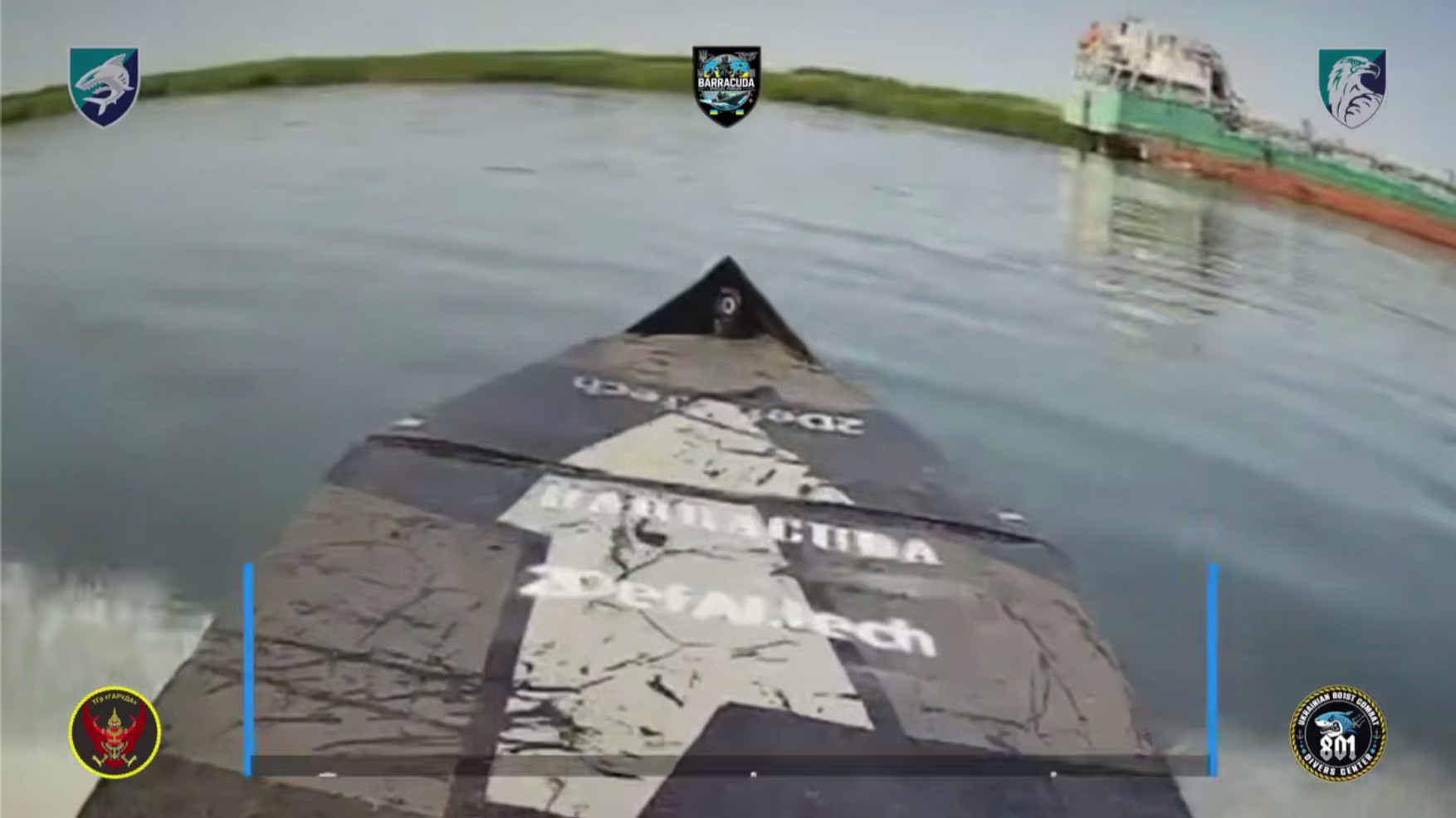
Ukrainian marines used first-person view (FPV) drones launched from Barracuda unmanned surface vessels (USVs) to strike Russian military positions near the occupied settlement of Zaliznyi Port in the Kherson region.
According to the 40th Separate Marine Brigade on Sunday, the operation combined naval drones, aerial reconnaissance, and FPV strike drones to target Russian positions behind the front line.
Follow our coverage of the war on the @Kyivpost_official.
However, during the mission, the Barracuda USVs came under heavy Russian fire. The brigade said Russian forces launched four Lancet loitering munitions at one of the vessels, destroying it. Despite the loss, the remaining USVs successfully reached their designated launch point.
After conducting additional aerial reconnaissance, operators launched FPV drones that struck multiple Russian targets near occupied Zaliznyi Port, including:
The brigade also released footage of the operation showing the strikes from drone cameras. Kyiv Post could not independently verify the time or location of the video.
The operation comes days after Ukraine’s Navy publicly showcased the Barracuda maritime drone for the first time on July 14.
Video released by the Navy showed a Barracuda kamikaze USV approaching an abandoned vessel reportedly being used by Russian forces as an observation post before striking it.
The footage also showed another unmanned surface vessel equipped with an unguided rocket module attacking Russian positions along the shoreline.
In the final stage of the operation, a drone-carrying USV launched reconnaissance and FPV drones, which identified camouflaged Russian positions for precision strikes.
The Navy said combining several types of unmanned systems significantly improves the ability to detect and engage enemy forces.
“See how Barracuda’s multi-layered strike system works,” the Navy said.
Ukraine is also developing new capabilities for its naval drones beyond conventional strike missions.
In late June, a commander from Ukraine’s Main Intelligence Directorate (HUR), known by the callsign “Devyatuy,” [Ninth] told Business Insider that Ukraine is developing systems allowing naval drones to intercept, detain, and escort sanctioned vessels in the Black Sea instead of destroying them.
According to him, the upgraded drones could intercept ships suspected of transporting stolen goods, weapons, or sanctioned Russian oil and escort them to port for confiscation under international law.
“If they comply with the request, they will be escorted to a designated port where the vessel and cargo can be confiscated in accordance with international law. If they refuse, other measures may be taken,” he said.
The concept would expand the role of Ukraine’s multi-purpose Katran naval drone, originally designed as an explosive-laden kamikaze vessel against Russia’s Black Sea Fleet, but later upgraded with machine guns and surface-to-air missiles.
HUR expects future variants to be capable of boarding vessels, temporarily detaining crews, and conducting maritime interdiction operations, while other drones provide aerial cover.
Kyiv Post is Ukraine’s first and oldest English news organization, reporting since 1995. Its international reach – 97% of readers are outside of Ukraine – make it truly Ukraine’s global voice.