Russian Forces Shift to Low-Altitude, Manually Controlled Drone Strikes to Evade Air Defenses
AI Analysis
Russian forces are shifting from mass drone swarms to isolated, manually controlled low-altitude strikes to evade Ukrainian air defenses, as demonstrated by a Shahed drone descending to 22 meters. Despite this tactical change, Russia continues large-scale aerial assaults, with 90 drones and seven missiles launched on July 18, of which Ukrainian defenses destroyed 69 drones and one missile. The adaptation requires rapid countermeasure development as civilian infrastructure and personnel remain under threat.
Key Takeaways
- Russian operators are manually guiding drones at altitudes as low as 22 meters to avoid radar and interceptor drones.
- Ukrainian Presidential Advisor Serhiy Beskrestnov confirmed the tactical shift and released video evidence of the low-altitude Shahed strike.
- On July 18, Russia launched 90 drones (including jet-powered Shahed variants) and seven missiles (Iskander, Oniks, Kh-59/69); 69 UAVs and one missile were intercepted.
- Civilian casualties continue: a drone attack in Kherson injured five, including a 14-year-old boy; an FPV drone in Dnipropetrovsk killed one and injured eight.
- The tactical shift follows widespread strikes on port and logistics infrastructure, including damage to a Marshall Islands-flagged vessel in Odesa.
- Ukrainian forces neutralized the specific low-altitude threat in the recorded instance but emphasize the need for rapid adaptation of countermeasures.
Why It Matters
This tactical evolution from mass swarms to precise, low-altitude manual control challenges existing counter-UAS systems designed for higher-altitude or autonomous threats. It underscores the need for adaptive air defense strategies, including enhanced low-altitude radar and electronic warfare, to protect both military assets and civilian infrastructure. The continued civilian casualties highlight the persistent asymmetric threat drones pose in modern conflict.
Russian forces are increasingly transitioning from mass drone swarms to isolated, complex, manually controlled strikes using low altitudes to evade Ukrainian air defenses, a Ukrainian official reported on Saturday, July 18.
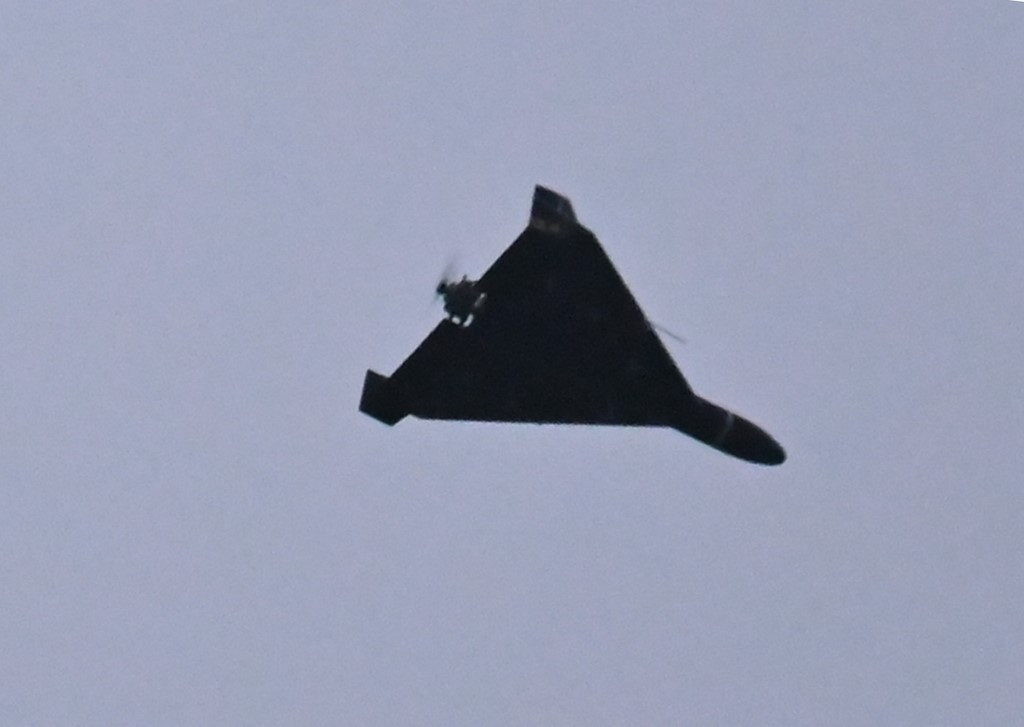
Serhiy Beskrestnov, presidential advisor on the development of technological defense areas, stated that Russian operators are manually guiding drones to minimize detection. He released video footage showing a Shahed strike drone descending to an altitude of 22 meters to avoid radar stations and interceptor drones.
Follow our coverage of the war on the @Kyivpost_official.
Beskrestnov noted that Ukrainian forces neutralized the threat in the recorded instance but emphasized that the ongoing shifts in Russian tactics require rapid adaptation of countermeasures.
The tactical shift coincides with continued large-scale aerial assaults. Early Saturday morning, July 18, Russian forces launched an attack on Ukraine utilizing 90 drones, including jet-powered Shahed variants, alongside seven missiles consisting of Iskander, Oniks, and Kh-59/69 types.
Ukrainian air defense systems intercepted and destroyed 69 unmanned aerial vehicles (UAVs) and one missile.
The latest aerial assault follows a series of Russian strikes targeting civilian and logistics infrastructure across southern and central Ukraine.
On the morning of July 18, a Russian drone attacked a civilian vehicle in the Korabelnyi district of Kherson. The strike injured five individuals, including a 14-year-old boy, two men aged 48 and 45, and two women aged 37 and 52. Medical personnel diagnosed the victims with blast injuries, concussions, and closed craniocerebral trauma. The two men also sustained shrapnel wounds to their extremities.
These incidents follow widespread attacks on Friday, July 17. Russian forces targeted port facilities in the Odesa region, damaging a Marshall Islands-flagged civilian vessel and injuring four crew members. In the Dnipropetrovsk region, a first-person view (FPV) drone struck an agricultural company bus in Marhanets, killing a 48-year-old man and injuring eight other employees.
Additionally, Russian strikes on July 17 across the Kharkiv and Chernihiv regions resulted in one civilian death and at least 21 injuries, including eight children. In Kharkiv, a missile strike on the Shevchenkivskyi district killed a 40-year-old man and damaged an educational institution, an administrative building, and commercial infrastructure.
Kyiv Post is Ukraine’s first and oldest English news organization, reporting since 1995. Its international reach – 97% of readers are outside of Ukraine – make it truly Ukraine’s global voice.