Finland Restricts Maritime and Air Traffic in Gulf of Finland Over Drone Threat
AI Analysis
Finland temporarily suspended maritime and air traffic in the eastern Gulf of Finland on July 18 due to a potential drone threat, implementing precautionary measures to ensure civilian safety and prepare for possible interceptions. No drones entered Finnish territory, but the incident follows a pattern of unidentified aerial activity near the Russian border amid heightened NATO-Russia tensions.
Key Takeaways
- Finland restricted maritime and air traffic in the Gulf of Finland on July 18 from 5:45 a.m. to ~9:00 a.m. local time.
- The Finnish Defense Forces stated the measures were preventative to ensure civilian safety and allow for potential drone interceptions.
- No drones crossed into Finnish territory during the incident.
- This follows a pattern of unidentified drone activity near the Russian border, with five such incidents reported in recent months.
- The restrictions occur amid heightened tensions on NATO’s eastern flank after Finland joined the alliance in 2023.
Why It Matters
This incident highlights the growing challenge of drone incursions near NATO borders, particularly in the Baltic region. Finland’s proactive response—closing air and sea space—demonstrates evolving counter-UAS tactics and underscores the need for integrated air defense systems. The pattern of unidentified aerial activity suggests potential reconnaissance or probing by adversaries, raising strategic concerns for NATO’s eastern flank.
Finland temporarily restricted maritime and air traffic in the eastern Gulf of Finland on Saturday, July 18, implementing precautionary measures in response to a potential drone threat, the Finnish broadcaster Yle reported.
The maritime restrictions were enforced from 05:45 a.m. and lifted at approximately 09:00 a.m. local time. The Finnish Defense Forces subsequently confirmed that airspace use in the area was also temporarily restricted during the same timeframe.
Follow our coverage of the war on the @Kyivpost_official.
According to military officials, the restrictions were a preventative measure designed to ensure civilian safety and create operational conditions for potential drone interceptions. The Defense Forces confirmed that no drones crossed into Finnish territory during the incident.
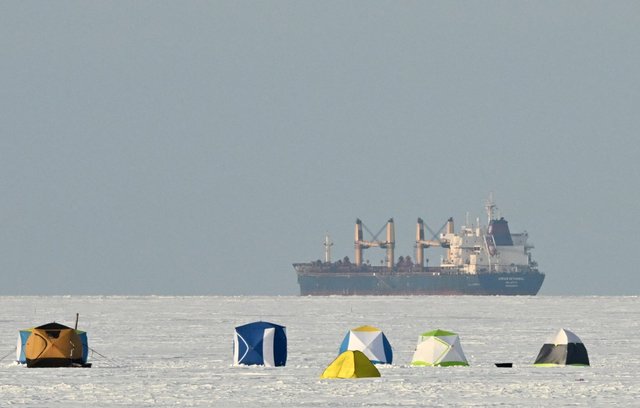
As part of the measures, the traffic management company Fintraffic temporarily closed shipping lanes near the southeastern coastal city of Kotka. The Defense Forces concurrently reinforced local air defenses, and residents in the southeastern part of the country reported hearing fighter jets conducting regular airspace patrols.
The incident follows a pattern of unidentified aerial activity in the region. In May, an unknown drone was detected in Finland near the Russian border, marking the fifth such incident recorded by local media in recent months.
The heightened security measures in the Gulf of Finland occur amid escalating tensions along NATO’s eastern flank and a reduction in diplomatic and transport ties between Russia and its European neighbors.
On July 1, the Russian government temporarily suspended all railway border crossings with Finland, Estonia, and Latvia. According to a government decree cited by Russian state media, seven checkpoints along the northwestern frontier were closed to the movement of persons, vehicles, and cargo.
The closures affected five checkpoints on the Russian-Finnish border – Vyborg and Svetogorsk in the Leningrad region, Vyartsilya and Lyuttya in Karelia, and St. Petersburg-Finlyandsky – as well as the Pechory-Pskovskiye checkpoint on the Estonian border and the Pytalovo checkpoint on the Latvian border. The suspension severed one of the few remaining direct land transport links between Russia and the EU.
Security concerns have steadily increased since Finland and Sweden joined the NATO alliance in 2023 and 2024. Swedish military intelligence recently issued warnings regarding the expansion of Russian military infrastructure near NATO’s eastern borders.
Airspace security has also become a prominent issue. In April, Russia accused the Baltic states of allowing Ukrainian drones to transit their airspace, threatening retaliation. Subsequently, in May, a Russian attack drone crossed into the airspace of NATO-member Romania during an overnight strike on Ukraine, crashing into an apartment building in Galați and injuring two civilians.
Kyiv Post is Ukraine’s first and oldest English news organization, reporting since 1995. Its international reach – 97% of readers are outside of Ukraine – make it truly Ukraine’s global voice.