Russian Superyacht Relocates to Murmansk as Submarines Receive Anti-Drone Defenses
AI Analysis
Russia is actively bolstering defenses against UAS threats, evidenced by the installation of anti-drone netting on a yacht linked to Putin and protective cages on Kilo-class submarines in Novorossiysk. These measures follow recent Ukrainian drone strikes on Russian naval infrastructure and demonstrate a heightened concern for asset protection. Simultaneously, the FSO, responsible for Putin's security, has been expanded.
Key Takeaways
- A $135 million superyacht ('Kosatka', formerly 'Graceful') associated with Putin is relocating to Murmansk, escorted by Russian naval vessels, and is equipped with anti-drone netting.
- The UK MoD reports Russia is installing anti-drone cages on Kilo-class submarines based in Novorossiysk, covering conning towers.
- These defensive measures are a direct response to Ukraine’s increasing ability to strike Russian assets with UAS deep behind the front lines.
- The Federal Protective Service (FSO), responsible for Putin's security, has increased its personnel by 27, indicating heightened security concerns.
- The yacht’s AIS signal was deactivated in the North Sea, suggesting an attempt to conceal its movements.
Why It Matters
The deployment of anti-drone measures on both naval assets and a high-value individual’s yacht signals a recognition of the growing threat posed by UAS. This indicates a shift in Russian defensive priorities and resource allocation towards countering this threat, and a perceived vulnerability of previously secure assets. The expansion of the FSO suggests concerns about the personal safety of high-ranking officials.
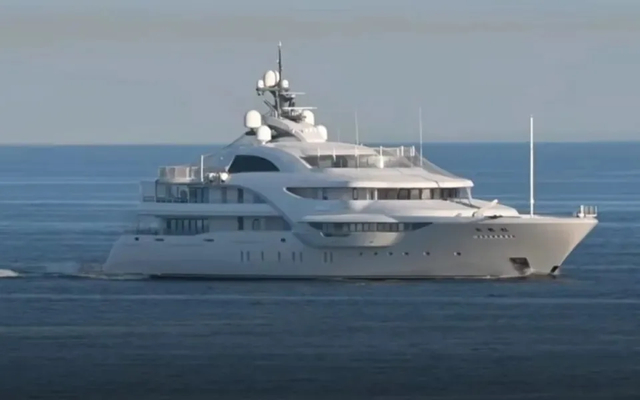
A $135 million superyacht linked to Russian President Vladimir Putin is reportedly leaving European waters for the northern Russian port of Murmansk, coinciding with new intelligence indicating the Russian military is installing anti-drone defenses on its submarines.
According to The Telegraph, the 82-meter yacht, formerly named “Graceful” and now operating under the name “Kosatka,” is currently navigating along the Norwegian coast. The vessel is being escorted by two Russian Navy ships and its transit is being monitored by NATO. Notably, the yacht’s deck has been covered with specialized anti-drone netting.
Follow our coverage of the war on the @Kyivpost_official.
The vessel was previously relocated from a shipyard in Hamburg, Germany, to the Russian exclave of Kaliningrad in February 2022, 17 days before Russia’s full-scale invasion of Ukraine. It was sanctioned by the US four months later.
The yacht’s Automatic Identification System (AIS) recently recorded its passage through the Danish straits before the signal was deactivated in the North Sea.
John Forman, a former UK military attaché in Moscow, suggested the relocation to Murmansk is a precautionary measure following recent Ukrainian drone strikes on the Russian naval base in Kronstadt. “They don’t want to take any risks,” Forman stated, noting that the yacht is being moved as far away as possible from potential strike zones.
In parallel, the UK Ministry of Defence (MoD) reported that the Russian military command has begun installing anti-drone cages on submarines based in the Black Sea port of Novorossiysk.
An intelligence review of satellite imagery captured between June 6 and June 9 revealed protective screens covering the conning towers of three Kilo-class submarines. The UK MoD assessed that a fourth submarine currently at the base will likely receive similar modifications in the near future.
Western analysts indicate these measures are a direct response to Ukraine’s growing capacity to target military assets deep behind the front lines using unmanned aerial vehicles. The Russian Defense Ministry and the Russian Embassy in the US have not responded to requests for comment regarding the intelligence assessments.
The naval security adaptations align with broader enhancements to the Russian President’s personal security apparatus. Putin recently issued a decree expanding the central administration of the Federal Protective Service (FSO) – the agency responsible for his safety – for the fourth time since the start of the 2022 invasion.
The latest decree, which went into effect on July 1, increases the maximum personnel in the FSO’s central apparatus from 785 to 812. The FSO handles a wide range of security functions, including the protection of state properties, high-ranking officials, and the control of the nuclear briefcase.
International intelligence assessments suggest these internal expansions and the curtailment of the Russian president’s travel schedule reflect heightened concerns regarding his personal security and potential threats.
Kyiv Post is Ukraine’s first and oldest English news organization, reporting since 1995. Its international reach – 97% of readers are outside of Ukraine – make it truly Ukraine’s global voice.