No Safe Hangars: SBU Smashes Russian Air Bases in Crimea, Hits Jets and Shaheds
AI Analysis
The SBU conducted successful drone strikes against Russian airbases at Saky and Gvardiyske in Crimea, damaging or destroying at least seven aircraft and impacting Shahed drone storage. This is part of a sustained 40-day campaign targeting Russian military infrastructure. Russian military exercises recently simulated a Ukrainian operation to retake Crimea, focusing on drone warfare tactics.
Key Takeaways
- SBU targeted Saky and Gvardiyske airbases with drones, hitting aircraft and drone storage hangars.
- Aircraft damaged/destroyed include Su-30SM, Su-30, and Su-24 models, valued at $30-50 million each.
- Russian aircraft are often stored in vulnerable, lightly protected hangars.
- The attacks are part of a broader Ukrainian campaign to degrade Russian military capabilities.
- Russian forces conducted exercises simulating a Ukrainian offensive, emphasizing drone and precision weapon tactics.
Why It Matters
These strikes demonstrate Ukraine’s increasing ability to strike deep within Russian-controlled territory using drones, challenging Russia’s air superiority and logistical capabilities. The vulnerability of Russian air assets highlights a significant weakness in their force protection measures. The focus on drone warfare in Russian exercises suggests they recognize this emerging threat and are attempting to adapt.
Security Service of Ukraine (SBU) drones struck Russian military airfields in occupied Crimea for the second time in a week, targeting aircraft and drone infrastructure at the Saky Air Base and Gvardiyske Air Base.
According to Friday’s statement posted by the SBU on Telegram, the operation was carried out as part of the 40-day campaign approved by President Volodymyr Zelensky aimed at increasing pressure on Russia.
Follow our coverage of the war on the @Kyivpost_official.
Earlier, Zelensky said the campaign was designed to expand sustained pressure on Russian military infrastructure, including targets in occupied territories and deep inside Russia. He added that Ukraine will continue expanding such operations.
The SBU said seven hangars storing aviation equipment were hit at Saky airfield. This marks the second SBU strike on Saky airfield this week.
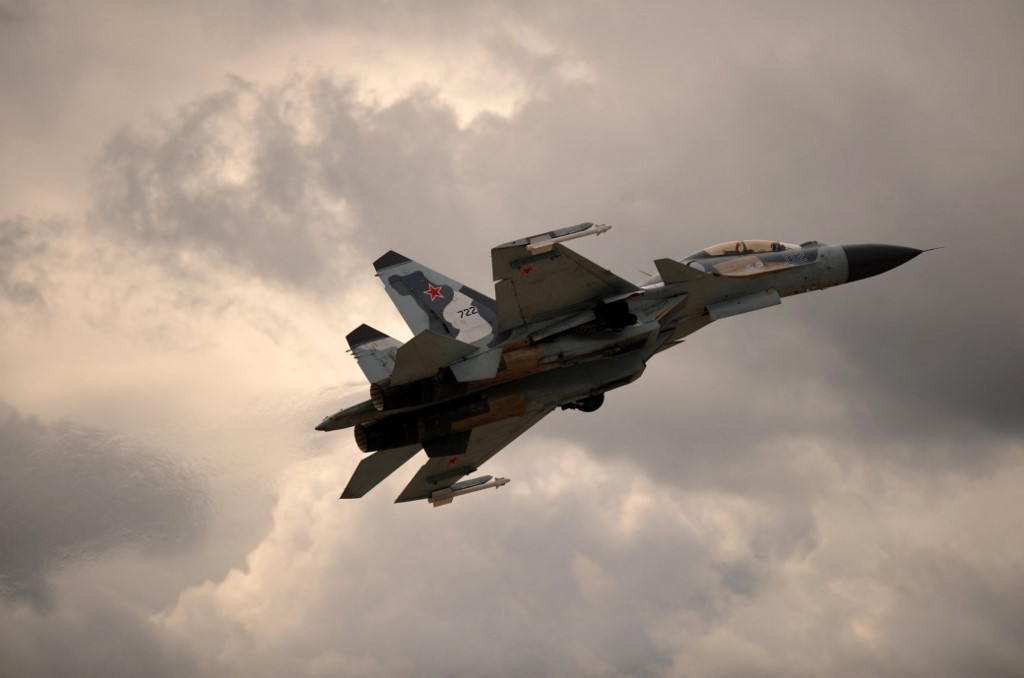
The hangars reportedly housed Sukhoi Su-30SM, Sukhoi Su-30, and Sukhoi Su-24 aircraft. According to preliminary data, at least seven aircraft were destroyed or damaged.
The agency also reported strikes on two hangars at Gvardiyske airfield, where Shahed drones and other aviation equipment were stored.
According to the SBU, both Saky and Gvardiyske are key Russian air bases in Crimea, regularly used by tactical aircraft to launch missile and bomb strikes against Ukraine and support Russian operations in the south.
“The SBU continues to carry out the tasks set by the president and systematically reduce Russia’s military potential. Each of our special operations means fewer enemy aircraft, logistics hubs, warehouses, and infrastructure supporting Russian aggression,” the agency said.
The SBU added that it will continue targeting Russian military assets both on the front line and deep in the rear.
Previously, SBU struck hangars housing Russian fighters at the Saky Air Base military airfield on Wednesday, with drones scoring five confirmed hits on aircraft hangars at the air base, targeting infrastructure used by Russia’s aviation forces.
Preliminary data indicated two of the hangars housed Su-30 and Su-30SM fighter jets at the time of the strike. A fire later broke out inside the hangar where a Su-30SM was reportedly parked, suggesting the attack hit its target.
The SBU estimated each aircraft’s value at $30 to $50 million.
Unlike many modern frontline air forces that protect aircraft in hardened shelters, Russia often keeps aircraft in open or lightly protected hangars, making them more vulnerable to drone strikes.
Russia has not publicly commented on the attack.
Notably, Russian forces in Crimea recently held command-post exercises simulating a potential Ukrainian operation to retake the peninsula.
According to the Russian outlet The Insider, reserve Col. Viktor Murakhovsky took part in the drill, dubbed “Crimean Wake-Up,” which modeled possible Ukrainian attack scenarios.
The exercise reportedly simulated advances toward Crimea from the Odesa sector and the northwestern Black Sea, with Russian forces defending key positions around Sevastopol, northern and eastern Crimea, and the Kerch Strait.
According to the report, the scenario focused not on a traditional amphibious landing, but on modern warfare using drones, long-range precision weapons, and fast attack boats.
Kyiv Post is Ukraine’s first and oldest English news organization, reporting since 1995. Its international reach – 97% of readers are outside of Ukraine – make it truly Ukraine’s global voice.