US and Iran Trade Strikes Over Gulf Shipping as Ceasefire Frays
AI Analysis
Escalating tensions between the US and Iran in the Gulf of Hormuz have led to reciprocal strikes targeting military infrastructure, including drone storage and air defense systems. Iran retaliated with missile and drone attacks on US facilities in Bahrain and Kuwait, while the US targeted Iranian surveillance, communication, and naval capabilities. The recent ceasefire agreement appears increasingly fragile, with both sides issuing strong warnings.
Key Takeaways
- US strikes targeted Iranian drone storage sites, air defense positions, surveillance, communication systems, and naval mine-laying facilities near the Strait of Hormuz.
- Iran responded with missile and drone strikes against US facilities in Bahrain and Kuwait, reportedly causing no US casualties.
- The exchange of fire follows Iranian attacks on commercial vessels M/V Ever Lovely and M/T Kiku.
- The US accuses Iran of violating the June 17 ceasefire memorandum, while Iran claims the US is in violation.
- Ukraine secured the release of four sailors previously detained by Iran after the seizure of the container ship Epimonidas.
Why It Matters
This escalation significantly increases the risk of a wider conflict in the Middle East, potentially disrupting global shipping through the Strait of Hormuz – a critical chokepoint for oil and gas. The demonstrated use of drones in attacks highlights the growing threat posed by this technology and the need for robust counter-UAS capabilities. The fragility of the ceasefire suggests continued instability and the potential for further military engagements.
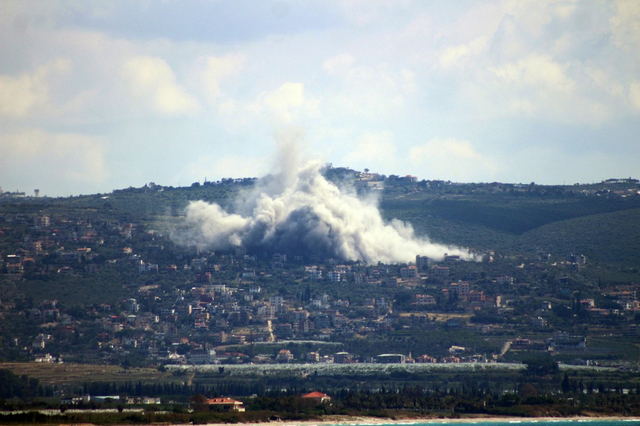
The US military has launched new strikes against Iranian military facilities near the Strait of Hormuz, prompting swift retaliatory attacks from Tehran and raising serious concerns about the viability of the recently signed ceasefire agreement.
The US Central Command (CENTCOM) announced that American aircraft targeted a range of Iranian military infrastructure. According to the statement, the strikes successfully hit surveillance and communication systems, air defense positions, drone storage sites, and naval mine-laying facilities.
Follow our coverage of the war on the @Kyivpost_official.
Washington stated the operation was a direct response to Tehran’s ongoing aggression against commercial shipping. CENTCOM detailed that Iranian drones attacked the cargo ship M/V Ever Lovely on June 25, followed by a strike on the Panama-flagged tanker M/T Kiku the next day.
Tehran strongly condemned the American operation, accusing the United States of blatantly violating the framework memorandum for peace signed on June 17, CNN reported.
In response, Iran’s Islamic Revolutionary Guard Corps (IRGC) announced it had launched retaliatory missile and drone strikes targeting American military facilities located in allied Middle Eastern nations, specifically Bahrain and Kuwait. Despite the barrage, an unnamed US official told Reuters that there were no American casualties resulting from the nighttime Iranian strikes.
The exchange of fire highlights the fragility of the recent peace efforts. Earlier, US President Donald Trump denounced what he described as an Iranian drone strike on a commercial vessel, calling it a “foolish violation of our ceasefire agreement.” Vice President JD Vance issued a warning on X, stating that “violence will be met with violence” if Iran carries out further attacks.
Bahrain’s foreign ministry confirmed the drone incursions on its territory, condemning the attacks and accusing Tehran of “sabotaging peace efforts.”
Later, Trump stated on Truth Social, that US aircraft just struck Iranian missile and drone storage locations, and coastal radar sites.
“It is very possible that they will never learn! There may come a point when we are no longer able to be reasonable, and will be forced to militarily complete the job that we very successfully started. If that happens, the Islamic Republic of Iran will no longer exist!”, said Trump.
The escalation in the Strait of Hormuz coincides with the resolution of a previous shipping incident involving Ukrainian citizens.
On June 24, Ukrainian Foreign Ministry spokesperson Heorhii Tykhyi announced the return of four Ukrainian sailors who had been detained by Iranian authorities since April. The sailors were crew members aboard the container ship Epimonidas, which was seized by the IRGC in the Strait of Hormuz earlier this year.
Following months of diplomatic coordination involving Ukraine’s Embassy in Greece, the Greek shipowner, and other stakeholders, the sailors were released.
“We are pleased to report that these efforts have produced a positive result. Four Ukrainian citizens have already left Iran. They are now safe with their families,” Tykhyi stated, adding that their health condition is satisfactory.
The unraveling situation in the Gulf stands in contrast to diplomatic progress on other fronts. Israel and Lebanon recently hailed a trilateral agreement signed with the US aimed at paving the way toward peace. The framework includes a pilot effort where Lebanese soldiers will take control of two areas currently occupied by Israel, alongside a process to disarm Hezbollah.
However, Iran-backed Hezbollah supporters protested the agreement in Beirut, and Iran continues to argue that the Lebanon front is inseparable from the wider war.
Furthermore, the UN nuclear watchdog continues to express concerns over a final US-Iran settlement. International Atomic Energy Agency (IAEA) chief Rafael Grossi warned that any permanent agreement must include strong safeguards and a robust verification system to ensure Tehran does not develop a nuclear weapon, despite Iran’s declarations to the contrary.
Kyiv Post is Ukraine’s first and oldest English news organization, reporting since 1995. Its international reach – 97% of readers are outside of Ukraine – make it truly Ukraine’s global voice.