German Counter-drone startup Tytan eyes 3,000 interceptors per month in new factory
AI Analysis
Tytan Technologies, a German counter-drone startup, is expanding production with a new factory capable of producing 3,000 interceptor drones monthly, starting in August. Their interceptors are reportedly effective and cost-efficient, seeing significant use in Ukraine and adoption by Germany, the Baltic States, and potentially Poland/Hungary. The company emphasizes a shift towards scalable, software-driven counter-UAS solutions.
Key Takeaways
- Tytan Technologies is opening a new factory in Germany with a production capacity of 3,000 interceptor drones per month.
- The company’s interceptor drones (EOS & METIS) are being used in Ukraine and are gaining traction with NATO allies.
- Tytan's approach focuses on AI-powered, autonomous interceptors as a cost-effective alternative to traditional, expensive air defense systems.
- EOS is a short-range interceptor targeting NATO Class I drones, while METIS targets NATO Class II drones.
- The company is exploring further expansion into Poland and Hungary, leveraging the German factory as a production blueprint.
Why It Matters
This expansion signals a growing market for cost-effective, rapidly deployable counter-UAS systems, particularly in light of the demonstrated vulnerability of legacy systems to inexpensive drones. Tytan's success could accelerate the adoption of interceptor drone technology as a primary layer in modern air defense strategies, shifting the paradigm away from solely relying on traditional, high-value assets. The potential for further factory expansion indicates a sustained demand and growing importance of this technology.
WARSAW, Poland — Munich-based counter-drone systems maker Tytan Technologies is readying to launch a new factory in Germany amid increasing demand for interceptor drones.
Production activities at the facility, which will be capable of manufacturing 3,000 autonomous interceptors per month, are scheduled to begin this August, according to a senior company representative.
Balázs Nagy, the chief executive and co-founder of Tytan Technologies, told Defense News the company’s interceptor drones are extensively used in Ukraine where the nation’s military has employed them as a cost-efficient, effective and easy-to-use solution to counter airborne threats.
Legacy “systems couldn’t prove themselves in Ukraine. Bigger platforms have been destroyed with just very, very cheap drones. What we are doing at Tytan is we are making protecting the same airspace 200 times cheaper than with legacy systems,” Nagy said.
“And how we are doing that is by producing and developing autonomous counter-drone systems to neutralize enemy drones in the air,” he added. This is a major paradigm shift, going from very hard and expensive hardware to very simple and scalable hardware and very sophisticated software.”
Building on its interceptors’ use by a rising number of allies, including Germany and the Baltic States, Tytan Technologies is advancing projects to expand its manufacturing foothold into new markets, with Poland and Hungary named as potential locations for new factories.
“With the launch of our new, bigger German factory, we have a blueprint that we can use to scale up production in different regions,” Nagy said.
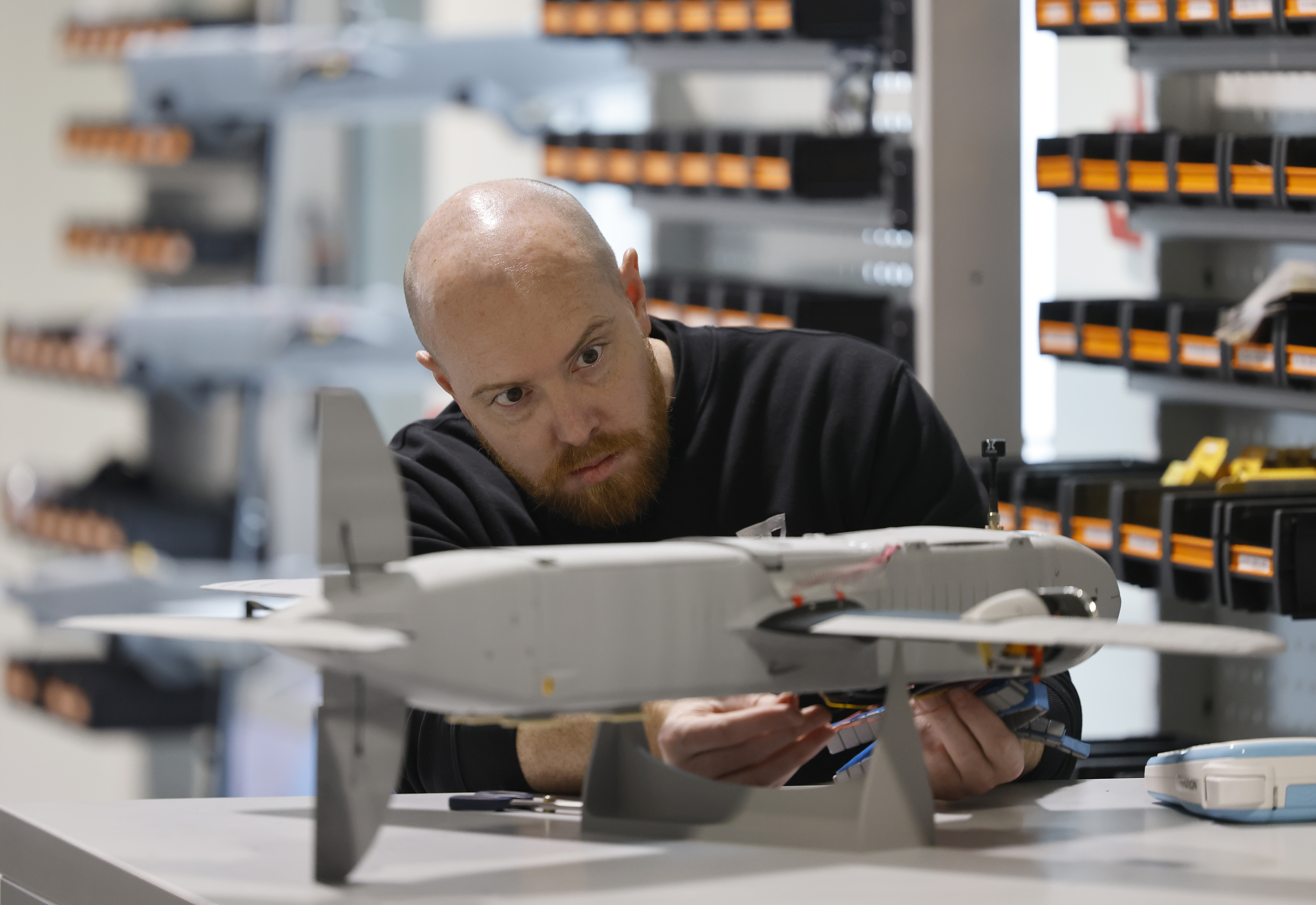
Tytan Technologies offers a range of autonomous interceptors which are powered by AI. These include: the EOS, a short-range multicopter interceptor developed to counter small drones categorized as NATO Class I unmanned threats; and the METIS, a long-range fixed-wing interceptor designed to neutralize NATO Class II drones, according to data from the company.
Jaroslaw Adamowski is the Poland correspondent for Defense News.