Dnipropetrovsk Tightens Evacuations, Nikopol Defenses
AI Analysis
Dnipropetrovsk region is bolstering defenses against increased Russian drone and missile attacks, particularly focusing on civilian protection and evacuation security. The deployment of 'anti-drone tunnels' in Nikopol and Marhanets represents a localized counter-UAS measure. Russia is employing a mix of drone types (FPV, Shahed, Gerbera) and ballistic missiles in its attacks.
Key Takeaways
- Russian forces conducted over 40 strikes on Dnipropetrovsk region, including a lethal FPV drone attack in Nikopol.
- Ukraine intercepted 114 of 130+ drones launched, alongside two intercepted Iskander-M missiles, indicating a significant drone campaign.
- Dnipropetrovsk is constructing 14km of 'anti-drone tunnels' in Nikopol and Marhanets to protect civilians and infrastructure.
- Evacuation procedures are being reinforced with armored vehicles and personal protective equipment for rescue crews.
- Separate drone attacks in Kherson and Kharkiv regions resulted in civilian casualties and infrastructure damage.
Why It Matters
The increased use of FPV drones by Russia demonstrates a shift towards precision strikes targeting civilians and critical infrastructure. The Ukrainian implementation of 'anti-drone tunnels' is a novel, localized counter-UAS tactic that may offer a model for protecting vulnerable areas. The high volume of drone launches highlights the continued importance of air defense systems and the ongoing need for improved counter-UAS capabilities.
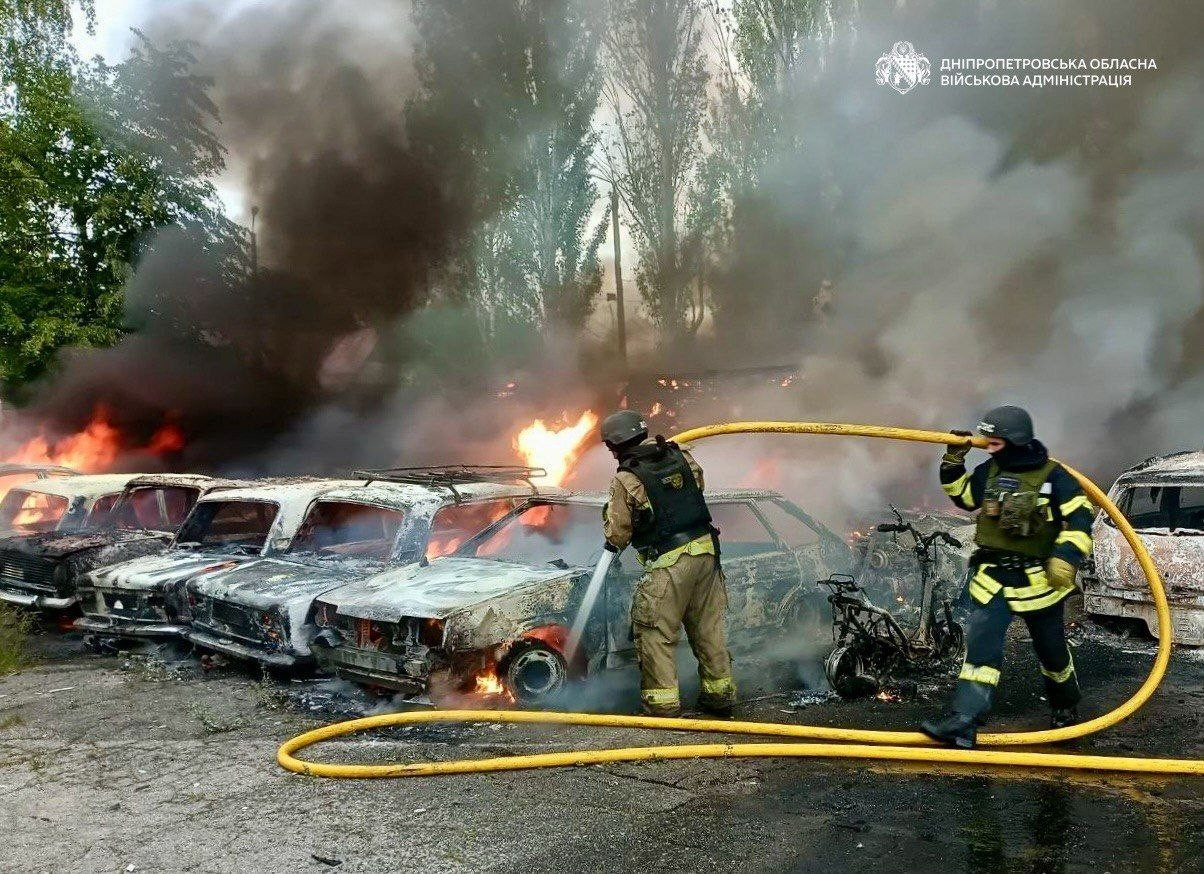
Russian forces struck five districts of Ukraine’s Dnipropetrovsk region more than 40 times on Tuesday, prompting Regional Governor Oleksandr Hanzha to convene an emergency Defense Council aimed at strengthening evacuations and reinforcing defenses across the region.
Hanzha confirmed the attacks and casualties on his official Telegram channel, outlining the region’s response during a Defense Council held Wednesday evening, with military commanders, emergency services, law enforcement, and district heads.
Follow our coverage of the war on the @Kyivpost_official.
“We must work as one first,” Hanzha said. “This is the most important thing right now.”
Among the day’s deadliest strikes, a Russian first-person-view (FPV) drone hit a group of civilians walking along a road in Nikopol, killing three people – including an 87-year old woman and her 51-year-old-son – and wounding several others across the region.
On evacuation security, Hanzha said rescue crews operating under shelling must minimize road risks for both residents and responders, while maintaining contact with the military and law enforcement.
“This is why crews have clear safety protocols,” he said, “They work in armored vehicles, use bulletproof vests and helmets.”
For Nikopol, one of the hardest-hit districts, he highlighted anti-drone tunnels as a core defense measure, with installations underway in both Nikopol and Marhanets.
“We have already covered almost 14 kilometers [8.7 miles] of roads,” Hanzha said. “Work is ongoing.”
He condemned leaders who fail to direct “maximum resources” toward the Ukrainian army. Those who don’t, he warned, are “waiting for victory somewhere on the sidelines, away from their positions.”
Ukraine’s Air Force reported on Tuesday that Russian forces had launched more than 130 drone strikes overnight, including Shahed and Gerbera types, along with two Iskander-M ballistic missiles. Air defenses neutralized 114 drones, while 16 drones and two missiles reached their targets.
In the Kherson region, a Russian drone struck a minibus in the Korabelny district, killing one man. A separate strike hit an ambulance crew responding to a call in the same area, wounding two doctors.
Overnight, Russian drones also hit the city of Balakliya in the Kharkiv region, wounding eight people – including a four-year-old girl and a 13-year-old boy – and setting four private homes on fire.
Nina Savić is a Cultural Studies graduate with a strong focus on critical analysis of discourse and media. She is particularly drawn to stories and perspectives often overlooked or erased by mainstream narratives, and is passionate about giving a voice to those pushed to the margins.