G7 Leaders Agree to Boost Air Defense and Long-Range Weapons for Ukraine
AI Analysis
G7 leaders have pledged increased air defense systems, interceptors, and long-range capabilities for Ukraine, alongside potential licensing for domestic weapons production. The commitment aims to bolster Ukraine’s defense against ongoing Russian aerial attacks and strengthen its long-term military resilience. Discussions included potential US provision of Patriot missiles and licensing for their domestic production.
Key Takeaways
- Increased delivery of air defense systems and interceptors to Ukraine is prioritized.
- G7 nations will support Ukraine's access to long-range capabilities.
- Consideration is being given to licensing arrangements enabling Ukraine to produce weapons domestically (specifically Patriot missiles discussed with the US).
- Support for Ukraine’s energy resilience is a key component of the aid package.
- G7 leaders aim to increase pressure on the Russian war economy through strengthened sanctions.
Why It Matters
This commitment signifies continued Western support for Ukraine and acknowledges the critical need for improved air defense against Russian drone and missile attacks. Domestic weapons production capability would reduce Ukraine’s reliance on external suppliers and enhance its long-term security. The focus on energy resilience is crucial given Russia’s targeting of Ukrainian infrastructure.
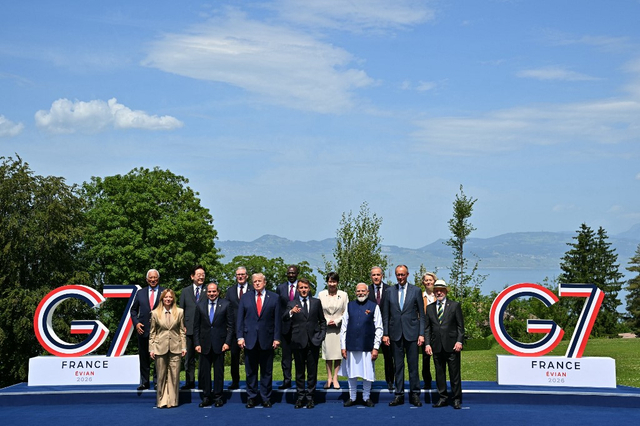
Leaders of the Group of Seven (G7) nations have agreed to significantly increase Ukraine’s air defense support and expand Kyiv’s access to long-range capabilities, according to a joint statement issued after the summit in France.
The agreement marks a renewed show of Western backing as Ukraine continues to face Russian missile and drone attacks on cities, energy infrastructure and civilian sites.
Follow our coverage of the war on the @Kyivpost_official.
In the joint statement, G7 leaders said they “stand united in our unwavering support for Ukraine in defending its freedom, sovereignty, and territorial integrity,” while also expressing solidarity with Ukrainians suffering from attacks on critical infrastructure and cultural heritage.
The leaders commended Ukraine for its “resilience and progress on the battlefield in recent months” and said there was now “a new momentum.”
“To support and accelerate this new momentum, we agree to increase the delivery of air defense capacities, additional systems and interceptors, and long-range capabilities,” the statement said.
The G7 also said it was ready to consider extending licenses to Ukraine to allow an increase in the country’s domestic military production.
Air defense expansion: Increased delivery of air defense systems and interceptors to help Ukraine protect cities and critical infrastructure.
Long-range capabilities: Additional support intended to strengthen Ukraine’s ability to disrupt Russian military operations.
Defense production: Possible licensing arrangements to expand Ukraine’s own weapons manufacturing capacity.
Energy resilience: Further support to help Ukraine withstand the coming winter amid continued Russian attacks on energy facilities.
The main focus of the pledge is Ukraine’s need to protect civilians and critical infrastructure from repeated Russian aerial attacks. Kyiv has repeatedly called for more air defense missiles, especially systems capable of intercepting ballistic missiles.
According to President Volodymyr Zelensky, US President Donald Trump responded positively to Ukraine’s request for additional Patriot air defense missiles. Zelensky also said the two discussed possible US licenses that would allow Ukraine to produce Patriot missiles domestically.
The G7 leaders also stressed the importance of Ukraine’s energy resilience “on the basis of the needs and priorities expressed by Ukrainian authorities,” saying they would “provide further support to get the country through next winter.”
The leaders vowed to “increase the pressure on the Russian war economy,” including by strengthening sanctions on Russia’s oil and gas sectors.
Zelensky said the summit showed a shared understanding that Russia is not winning the war and must be pushed toward a deal.
Kyiv Post is Ukraine’s first and oldest English news organization, reporting since 1995. Its international reach – 97% of readers are outside of Ukraine – make it truly Ukraine’s global voice.