Moscow Erects Third Air Defense Ring as Pantsir Systems Placed on Civilian Rooftops
AI Analysis
Russia is constructing a third, outer air defense ring around Moscow utilizing Pantsir systems, including modified Pantsir-SMD-E variants deployed on civilian rooftops. These systems are intended to counter increasing Ukrainian drone strikes targeting the capital and surrounding areas. The deployment raises concerns about violations of international humanitarian law and risks to civilian populations.
Key Takeaways
- Russia is deploying a third layer of air defense around Moscow, supplementing existing inner rings.
- Pantsir-SMD-E systems, optimized for missile interception and lacking cannons, are being placed on civilian buildings like the Nordstar Tower.
- At least four Pantsir systems are now permanently stationed on Moscow office buildings, including one at the Ministry of Defense.
- The deployment is a direct response to successful Ukrainian drone strikes, including one on a Moscow-region oil refinery and another impacting a residential tower.
- Analysts highlight the legal and safety risks of integrating air defense systems into civilian infrastructure, citing potential collateral damage and violation of international law.
Why It Matters
This escalation demonstrates Russia's vulnerability to drone warfare and its willingness to accept increased risk to its civilian population to protect key infrastructure and the capital. The use of civilian buildings as military assets could invite retaliatory strikes and further escalate the conflict. The shift towards missile-focused Pantsir variants suggests an adaptation to counter smaller, loitering munitions.
Russia has accelerated the militarization of its capital’s skyline, initiating the construction of a third massive, wide-area outer ring of anti-aircraft systems while air-lifting next-generation missile platforms onto civilian skyscrapers, Defence Express reported.
According to military logs and satellite data, Russian defense planners have spent recent months establishing a third, expansive outer envelope of surface-to-air missile (SAM) complexes designed to completely loop around Moscow and its dense metropolitan outskirts. This outer perimeter complements two existing structural rings of specialized anti-drone towers – modern adaptations of the historical World War II Flakturm architecture.
Follow our coverage of the war on the @Kyivpost_official.
Concurrently, the Russian military is reinforcing a dense, localized inner ring engineered specifically to protect the Kremlin fortress. This inner urban layer relies heavily on mobile short-range air defense assets placed directly into the civilian cityscape.
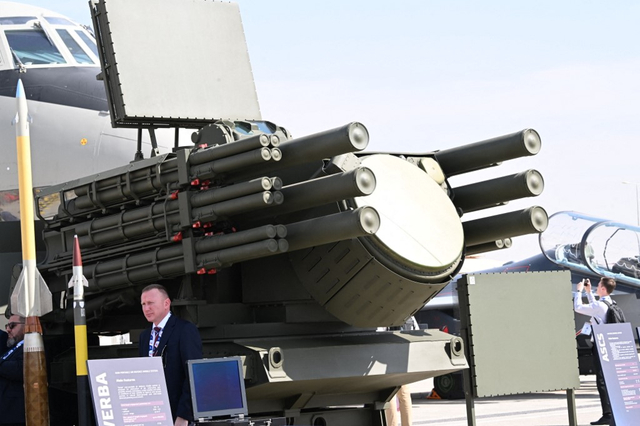
The latest escalation in the inner defense network was captured on video, showing a massive Russian Mi-26T heavy transport helicopter hoisting a Pantsir-SMD-E air defense module directly onto the roof of the Nordstar Tower business center in northern Moscow.
The deployment marks the fourth known Pantsir system permanently stationed on top of a Moscow office building. One older Pantsir-S1 system was permanently bolted onto the roof of the Russian Ministry of Defense headquarters, southwest of the Kremlin, in 2023.
A second Pantsir asset was positioned atop a commercial office building southeast of the main administrative fortress in 2023. A third unit was installed on the roof of the Main Directorate of the Ministry of Internal Affairs (MVD) to the north of the Kremlin in late 2023.
The latest addition, a specialized Pantsir-SMD-E model, was installed in late May 2026.
Unlike the older Pantsir-S1 units, the newly deployed Pantsir-SMD-E is a modified variant stripped of its standard dual automatic cannons. It relies exclusively on an expanded loadout of interceptor missiles, carrying 95Ya6 standard missiles with a 20-kilometer range alongside smaller TKB-1055 short-range interceptors specifically engineered to neutralize miniature loitering munitions.
Its onboard targeting radar is capable of tracking incoming aerial targets at distances of up to 24 kilometers.
Military analysts have strongly condemned the ongoing deployment of heavy weaponry onto non-military urban structures. Defense Express pointed out that mounting active air defense assets on top of standard civilian office blocks constitutes a direct violation of international humanitarian law.
By integrating these towers into the city’s air defense grid, the Russian military effectively transforms functioning civilian spaces into legitimate, priority military objectives under global rules of engagement.
Furthermore, the operation of these missile complexes inside a densely populated capital presents an immediate, severe physical threat to ordinary citizens. The Pantsir’s urban combat operations carry a high risk of collateral damage due to falling drone wreckage, notoriously low target tracking accuracy under heavy urban radar clutter, and the heavy spent booster stages of the interceptor missiles, which separate and plummet to the ground completely unguided after launch.
The Nordstar Tower business center sits immediately adjacent to active residential high-rises and a municipal school. In the event of an incoming Ukrainian drone strike or a mechanical interception failure, the resulting debris fields, exploding warheads, and falling missile components would rain directly down onto classrooms and neighborhood streets.
The rush to construct a multi-layered fortress inside Moscow follows severe, high-visibility frontline breakthroughs by Ukraine’s long-range drone forces. On May 17, a Ukrainian drone strike successfully compromised an oil refinery in the Moscow region, forcing a total shutdown of its processing output.
That operation followed a May 4 drone strike that directly impacted a prominent residential high-rise tower in western Moscow just days before Russia’s signature May 9 World War II military parades, exposing deep, structural vulnerabilities that the Kremlin is now desperately attempting to plug at the expense of its own civilian population.
Kyiv Post is Ukraine’s first and oldest English news organization since 1995. Its international market reach of 97% outside of Ukraine makes it truly Ukraine’s Global – and most reliable – Voice.