Italy Deploys Troops and Jets to Romania After Russian Strike
AI Analysis
Italy is accelerating a pre-planned military deployment to Romania, sending 100 troops and fighter jets to train Romanian forces in counter-drone tactics following a Russian drone strike on Romanian territory. The training will focus on detecting, tracking, and neutralizing hostile UAVs, utilizing both manned aircraft and interceptor drones. Romania is simultaneously pursuing joint drone manufacturing with Ukraine to bolster its defenses.
Key Takeaways
- Italy deploying ~100 troops and fighter jets to Mihail Kogălniceanu Air Base, Romania, starting June 15th for approximately one month.
- Training focuses on counter-UAS tactics: detection, tracking, and destruction of UAVs.
- The deployment was expedited due to a Russian drone impacting a residential building in Galați, Romania.
- Romania is accelerating joint drone manufacturing with Ukraine, leveraging Kyiv's combat experience.
- NATO supports Romania, viewing the incident as a threat to the entire alliance; Romania expelled Russian consulate staff in response.
Why It Matters
This deployment highlights the growing threat of drone warfare and the need for NATO allies to enhance their air defense capabilities, particularly on the Eastern Flank. The incident demonstrates the potential for escalation and miscalculation, even if unintentional, and underscores the importance of robust counter-UAS systems. Romania's move towards joint drone manufacturing with Ukraine signals a broader trend of regional defense cooperation and a focus on asymmetric warfare capabilities.
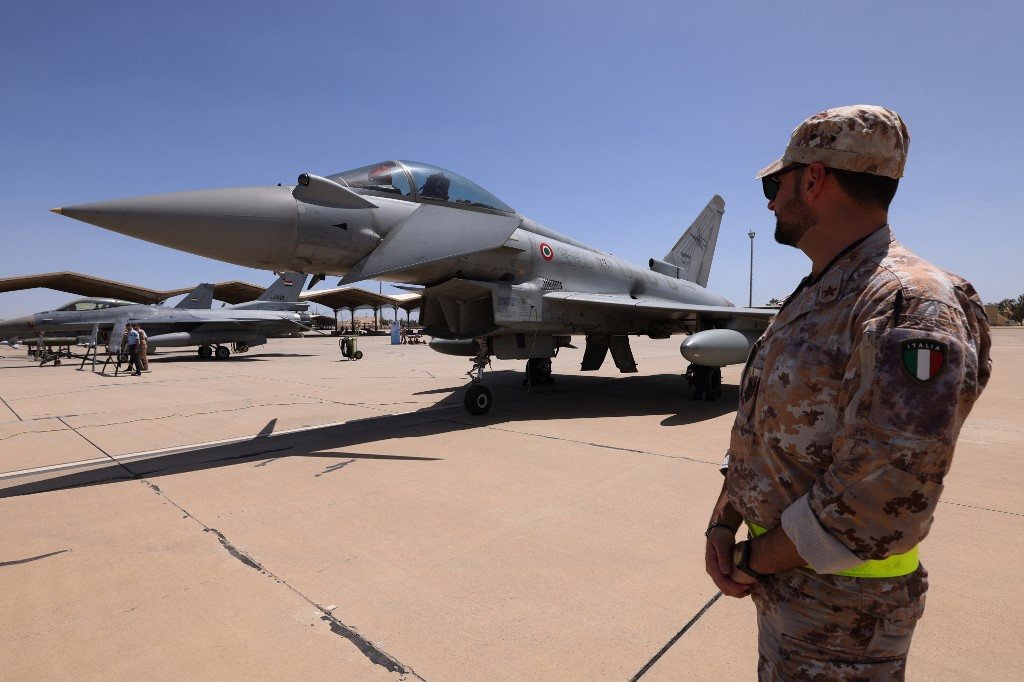
The Italian government has authorized an expedited military deployment to Romania, dispatching a specialized contingent of troops and combat aircraft to prepare Romanian forces for asymmetric aerial threats following a dangerous escalation on NATO’s eastern frontier, La Repubblica reported.
According to government sources, Italy will deploy approximately 100 military personnel alongside a detachment of fighter jets. While the rotation had been planned well in advance as a bilateral training initiative, the timeline was aggressively brought forward following a severe territorial breach on May 29.
Follow our coverage of the war on the @Kyivpost_official.
During that incident, an explosive Russian loitering munition targeted neighboring Ukrainian infrastructure but crossed into Romanian airspace, detonating directly against a 10-story residential apartment block in the city of Galați and wounding two civilians.
The high-profile strike was labeled the “most serious incident” since the 2022 invasion by Romanian President Nicușor Dan, triggering severe international condemnation and prompting Bucharest to demand immediate anti-drone reinforcements from its allies.
The incoming Italian force is scheduled to arrive in Romania on June 15, with personnel positioning at the Mihail Kogălniceanu Air Base near the Black Sea port city of Constanța. The mission is slated to last roughly one month.
Defense officials emphasized that this deployment is separate from standard, routine NATO Air Policing missions. Instead, the bilateral curriculum will focus heavily on specialized tactical training, instructing Romanian forces in the latest methods used to detect, track, and physically destroy hostile unmanned systems.
To support the intensive drills, the Italian military will deploy Combat Fighter Jets, that will provide simulated threat vectors and baseline monitoring support, as well as interceptor UAVs. The mission plans to incorporate secondary drone platforms specifically engineered to pursue, intercept, and neutralize rogue enemy aircraft mid-air.
The arrival of Italian reinforcements comes amid deep diplomatic fallout between Bucharest and Moscow. Following the strike on Galați, Romania took the unprecedented step of closing down the Russian General Consulate in Constanța and expelling the Russian consul general.
Russian Foreign Ministry spokeswoman Maria Zakharova claimed the drone allegations were unsubstantiated and warned that Moscow would issue a swift counter-response. Meanwhile, Kremlin leader Vladimir Putin attempted to deflect blame, baselessly claiming the drone was likely of Ukrainian origin.
Despite the Kremlin’s denials, NATO has firmly backed Bucharest, with Secretary General Mark Rutte explicitly calling Russia’s behavior a danger to the entire alliance and reinforcing NATO’s readiness to defend every inch of allied territory.
To insulate its borders while waiting for allied systems to arrive, Romania has also agreed with President Volodymyr Zelensky to rapidly accelerate joint, bilateral drone manufacturing, leveraging Kyiv’s vast combat experience to turn drone tech into a shared strategic asset for the entire eastern flank.
Kyiv Post is Ukraine’s first and oldest English news organization since 1995. Its international market reach of 97% outside of Ukraine makes it truly Ukraine’s Global – and most reliable – Voice.