Russian Drone in Romania Was a Deliberate Provocation, Analyst Says
AI Analysis
Analysis suggests a recent drone incursion into Romania was a deliberate Russian provocation aimed at testing NATO unity and intimidating Moldova. Putin denies Russian involvement, attributing the incident to Ukraine and requesting access to wreckage for investigation. Experts believe this denial is a tactic to sow discord and delay a unified response.
Key Takeaways
- A Russian Geran-2 drone impacted a residential building in Galați, Romania.
- Romanian investigators confirmed the drone's Russian origin, contradicting Putin's claims.
- The provocation is likely linked to Russia's concerns regarding Moldova's increasing alignment with the West and Romania.
- Putin's denial strategy aims to create doubt and hinder a collective NATO response.
- The incident highlights NATO's vulnerability to hybrid warfare tactics and the challenge of maintaining unity.
Why It Matters
This incident demonstrates Russia's willingness to directly probe NATO defenses and exploit potential divisions within the alliance. It underscores the need for enhanced air defense capabilities and a coordinated response strategy to deter future provocations and protect NATO member states. The event also highlights the importance of accurate attribution in modern warfare.
Russia’s latest drone incursion into Romanian territory was not an accident but a state-sanctioned provocation aimed at fracturing NATO unity and intimidating neighboring Moldova, according to Paul Goble, a veteran American analyst and former Soviet affairs specialist with the CIA and US State Department.
Goble told Kyiv Post that Vladimir Putin’s public denials are a predictable tactic meant to slow Western decision-making.
Follow our coverage of the war on the @Kyivpost_official.
“You would expect Mr. Putin to deny this, because he gains if people ask questions about it rather than if they unite against what is an act of aggression against a NATO country.”
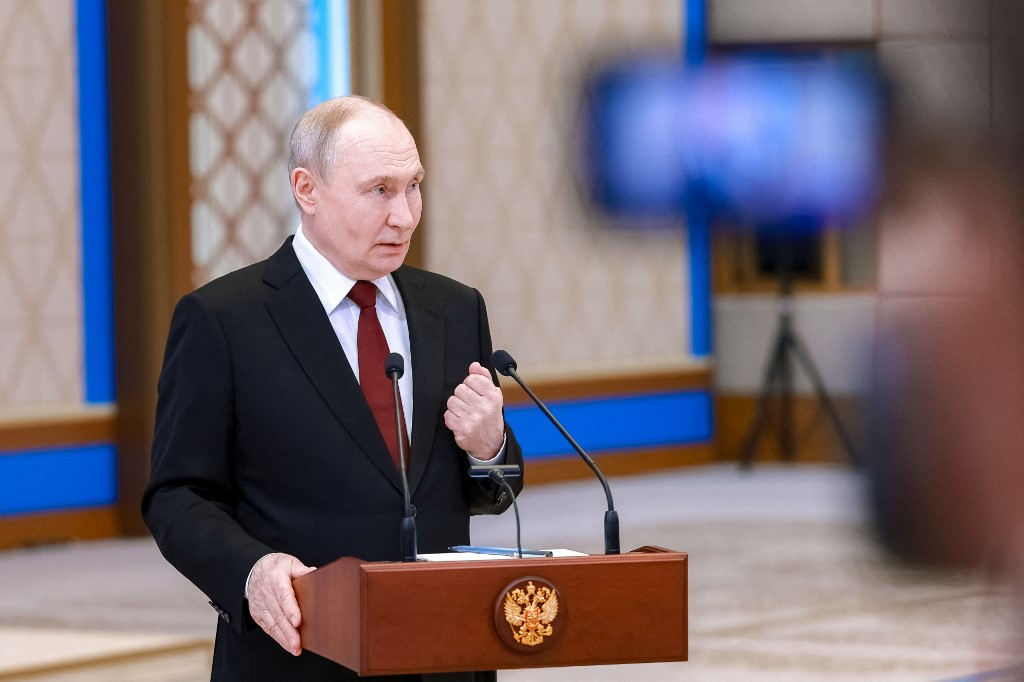
Speaking at a summit in Astana, Kazakhstan, Putin attempted to deflect blame onto Ukraine, suggesting the drone – which struck a residential building in Galați – had strayed off course because of a technical failure.
“Who in Romania says that this is a Russian drone?” Putin asked. “No one can say what the origin of this or that drone is until an examination has been carried out.”
He scoffed at the “Russians are coming” reaction and suggested Bucharest hand over the wreckage for a Russian investigation.
However, Romanian investigators and President Nicușor Dan said the wreckage belonged to a Russian Geran-2 drone tracked from Russia. Goble dismissed Putin’s defense, saying the evidence speaks for itself.
“So, I’m not surprised that Putin said that,” Goble said. “It’s fairly clear from what the Romanians who examined the drone have said that it couldn’t have come from somewhere else.”
While Putin feigned surprise, Goble said he was certain the Russian president had authorized the operation.
“I don’t know whether he personally knew all the details,” Goble said. “But I’m absolutely certain that he signed off on the idea that Russian drones could be used against Romania.”
Goble said the motive is tied to Russia’s anxiety over Moldova, whose pro-Western government is forging close ties with Bucharest. Moscow, he said, is using border friction as a tool of intimidation.
The Kremlin risks incursions, Goble said, “especially now when Russia is locked in a rather tense relationship with the Moldovan government, which is ever closer to Bucharest.”
For NATO, the incident highlights a key challenge: responding to hybrid threats without falling into the public division Putin is gambling on.
Kyiv Post is Ukraine’s first and oldest English news organization since 1995. Its international market reach of 97% outside of Ukraine makes it truly Ukraine’s Global – and most reliable – Voice.