US Army to receive thousands of Barracuda-500M cruise missiles in Anduril deal
AI Analysis
Anduril Industries secured a contract to supply the U.S. Army with at least 3,000 Barracuda-500M surface-launched cruise missiles beginning in 2027, as part of the Pentagon’s Low-Cost Containerized Missiles (LCCM) program. The program aims to procure over 10,000 low-cost cruise missiles from multiple vendors within three years, emphasizing affordability and rapid scalability.
Key Takeaways
- Anduril will deliver a minimum of 1,000 Barracuda-500Ms annually to the Army starting in 2027.
- The Barracuda-500M has a range exceeding 500 nautical miles and carries a 100-pound payload.
- Missiles are packaged in standard 20-foot shipping containers, holding up to 16 rounds, facilitating easy transport and deployment.
- The design allows for rapid assembly (30 hours) with minimal tools, enabling large-scale production.
- The LCCM program includes CoAspire, Leidos, and Zone 5, with an assessment phase scheduled for June 2024.
Why It Matters
This procurement signals a shift towards prioritizing quantity and affordability in long-range strike capabilities, directly addressing the threat posed by mass-produced drones and cheaper enemy munitions. The emphasis on low-cost, rapidly deployable missiles aims to overwhelm potential adversaries and create a more sustainable approach to modern warfare. This also highlights the Army’s intent to leverage commercial-style manufacturing and AI-enabled software for increased operational efficiency.
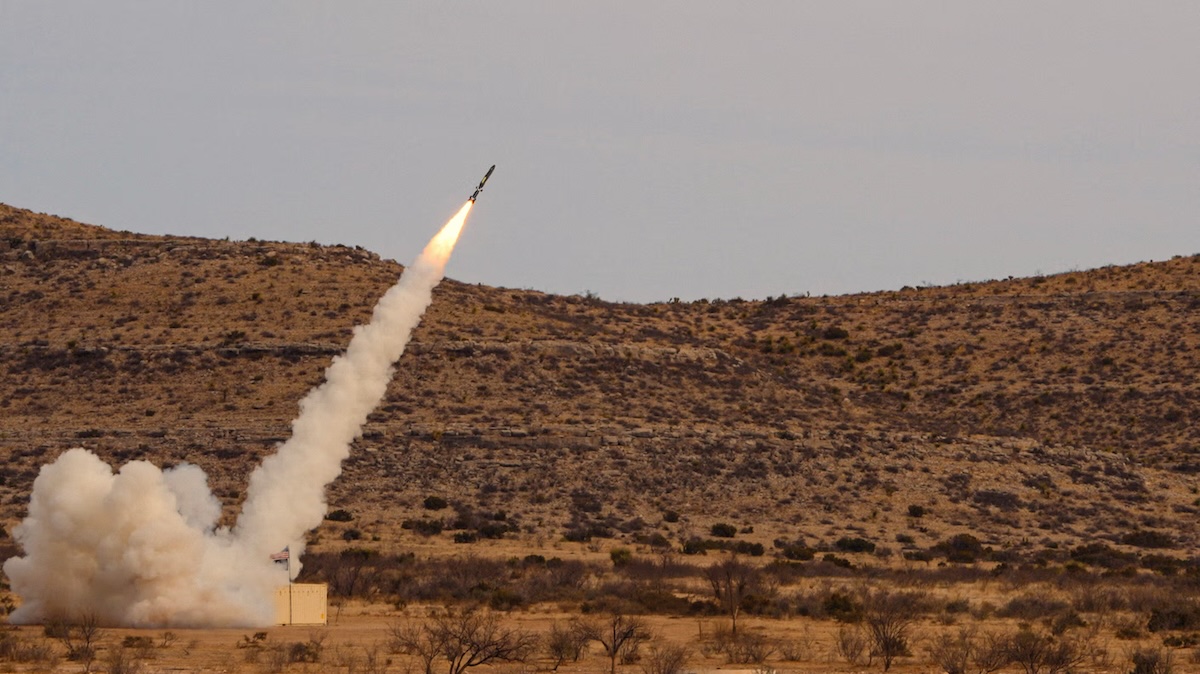
HONOLULU — Anduril is slated to deliver at least 3,000 surface-launched cruise missiles to the U.S. Army beginning in 2027, part of an effort to quickly advance affordable munitions procurement at scale.
Over the course of the three-year framework agreement, Anduril will supply the Army with a minimum of 1,000 surface-launched Barracuda-500Ms per year, according to a company release.
“Long-range precision fires and stand-off strike weapons are fundamental to America’s ability to deter our adversaries, but existing solutions are too expensive, too exquisite and too hard to produce at scale,” the release states.
Meant for long-range strikes and designed for a variety of land and maritime targets, SLB-500Ms have a range of over 500 nautical miles and are equipped with a 100-pound munition payload.
The munitions are built into standard 20-foot shipping containers that can be loaded with up to 16 all-up rounds, per the announcement. It can then be transported and placed at the desired launch point, where an operator can use Anduril’s AI-enabled Lattice software or other fire control tech to select targets, munition combinations and coordinate launches.
The “simple” design of the missiles, meanwhile, permits a 30-hour assembly using only 10 common hand tools, furthering the ease of large-scale production, the release states.
Speaking with reporters this week at the 2026 Land Forces of the Pacific Symposium and Exposition in Hawaii, U.S. Army Lt. Gen. Matthew McFarlane, commanding general of I Corps and Joint Base Lewis-McChord, Washington, said that developing these types of low-cost munitions is vital to adapting to modern warfare.
“The massive drones we’re seeing be produced around the world — we need to drive down that cost curve so we can make sure we have the lethal means at a lower cost,” McFarlane told reporters.
Discussing the balance between costly Pentagon contracts and lower-cost, emerging technology, McFarlane said that the department needs to continue working with industry partners to drive down cost, emphasizing that the current price points “can only go lower.”
“We got to get it lower if we’re going to prevail against the numbers of things that we think will be thrown our way,” he said.
Anduril is expected to increase production to “single-digit thousands” of Barracuda-500s by the end of 2026, according to the release. Production of the munitions will soon commence at the company’s new 5-million-square-foot facility in Columbus, Ohio.
Alongside Anduril, defense companies CoAspire, Leidos and Zone 5 comprise the Pentagon’s Low-Cost Containerized Missiles program. The program’s assessment phase, which includes the purchasing of test missiles from the companies, is set for June, according to the Pentagon agreement with the four firms.
Through the LCCM program, the Pentagon is aiming to obtain over 10,000 low-cost cruise missiles from the four companies, according to a Pentagon statement.
Cristina Stassis is a reporter covering stories surrounding the defense industry, national security, military/veteran affairs and more. She previously worked as an editorial fellow for Defense News in 2024 where she assisted the newsroom in breaking news across Sightline Media Group.