What We Know: Russian Drones ‘Deliberately’ Target UN Aid Convoy in Kherson
AI Analysis
Russian forces deliberately targeted a UN humanitarian convoy in Kherson with First-Person View (FPV) drones, despite prior coordination of movement with both Ukrainian and Russian forces. This is not an isolated incident, with a similar attack occurring last October and a pattern of drone-based targeting identified by Human Rights Watch. The attacks demonstrate a disregard for international humanitarian law and a willingness to target clearly marked aid workers.
Key Takeaways
- Russian forces used FPV drones to strike a UN convoy delivering aid in Kherson's Korabelnyi district.
- The UN team, led by Andrea De Domenico, was unharmed but the incident is being investigated as a potential targeted attack.
- Human Rights Watch (HRW) has documented a pattern of Russian forces using camera-equipped quadcopter drones to indiscriminately target civilians in Kherson.
- Russian state-linked sources attempted to justify the attack by claiming the UN vehicle was 'dual-use transport'.
- The UN had coordinated the convoy's movements with both Ukrainian and Russian military forces prior to the attack.
Why It Matters
The deliberate targeting of humanitarian aid workers and clearly marked vehicles represents a significant escalation in tactics and a violation of international law. This demonstrates a calculated effort to disrupt aid delivery and potentially terrorize the civilian population, hindering stabilization efforts. The increasing reliance on FPV drones for targeting highlights the growing threat they pose to both military and civilian assets.
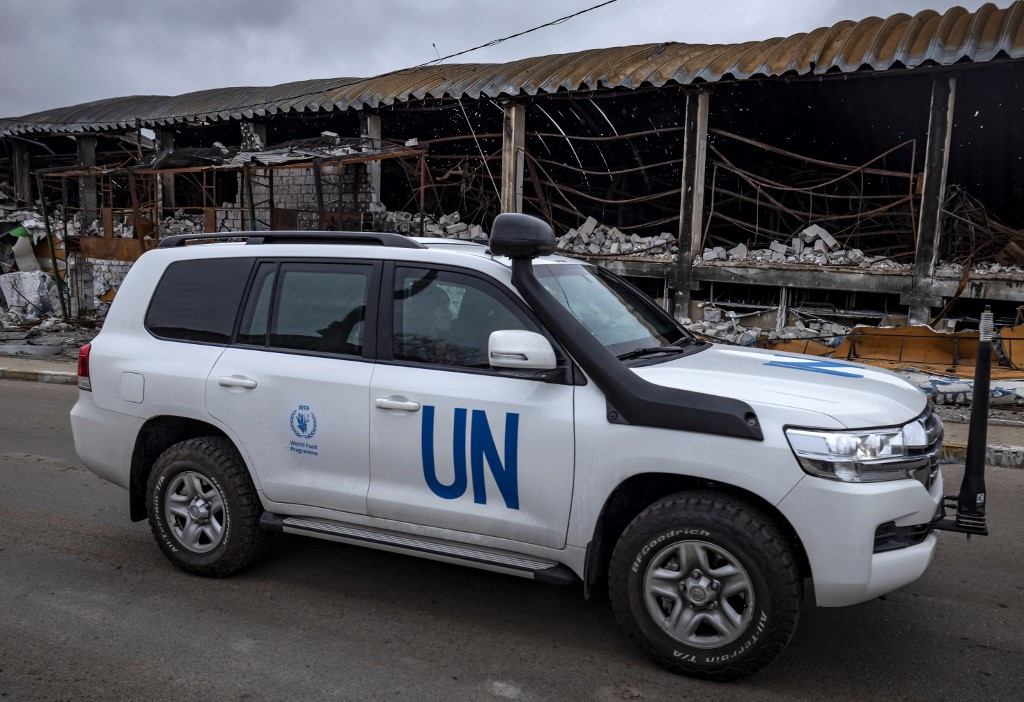
Russian military drones twice targeted a clearly marked United Nations humanitarian convoy in southern Ukraine on Thursday, prompting condemnation from Kyiv and the UN.
The attack took place in Kherson’s heavily targeted Ostriv area, within the Korabelnyi district, while the mission was delivering food and solar lamps to local civilians.
Follow our coverage of the war on the @Kyivpost_official.
According to President Volodymyr Zelensky, the targeted vehicle was carrying Andrea De Domenico, head of the UN Office for the Coordination of Humanitarian Affairs in Ukraine, along with eight other agency staff members.
“The Russians could not have failed to know which vehicle they were targeting,” Zelensky wrote on Telegram, adding that the team was safely evacuated and no injuries were reported.
Speaking at the Washington Foreign Press Center on Thursday, UN humanitarian chief Tom Fletcher described the incident as a possible “targeted attack.”
“Our people were very, very lucky to escape with their lives,” Fletcher said, adding that the UN was “furious” and would demand “full investigations and accountability,” RFE/RL reported.
President Zelensky said Russia attacked the vehicle with first-person-view drones.
Oleksandr Prokudin, head of the Kherson Regional Military Administration, said UN humanitarian vehicles were hit in the city’s Korabelnyi district.
“In violation of all norms of international law, the Russians attacked vehicles of the humanitarian mission in the Korabelnyi district of Kherson using a drone,” Prokudin wrote on Telegram.
Prokudin described the strike as “absolutely deliberate,” saying Russian state-linked sources later tried to deflect blame by calling the clearly marked UN vehicle “dual-use transport.”
The United Nations said humanitarian personnel and their assets are strictly protected under international humanitarian law. It also said the mission’s movements had been coordinated in advance with both Ukrainian and Russian forces.
The strike in Kherson was not an isolated incident. Last October, a clearly marked UN inter-agency convoy carrying World Food Programme supplies came under direct attack while delivering emergency relief to Bilozerka, a front-line town in the Kherson region.
Human rights organizations warn that these incidents fit a broader strategy of intentional terror. Following a year-long investigation into the region – which included interviewing survivors and analyzing hundreds of strike videos – Human Rights Watch (HRW) confirmed that Russian forces are utilizing real-time, camera-equipped quadcopter drones to wage a “brutal, devastating campaign” across Kherson.
Because these FPV drones transmit live video feeds directly to their pilots, Russian operators can explicitly see their targets before striking. HRW reports that the victims are targeted indiscriminately in their homes, while harvesting crops, or – as seen in this latest assault – while wearing the clearly identifiable markings of international humanitarian missions.
Sevinj Osmanqizi is a journalist covering US foreign policy, security, and geopolitics, with a focus on the broader post-Soviet space. She reports on Washington’s decision-making and its implications for Ukraine and regional stability.