Latvia’s Defense Minister Steps Down After Ukrainian Drones Hit Oil Tanks
AI Analysis
Latvia’s Defense Minister resigned following Ukrainian drone strikes on Latvian oil facilities, attributed to Russian electronic warfare interference. The incident highlighted vulnerabilities in Latvia’s air defenses and prompted calls for increased NATO support. Ukraine has offered to assist in bolstering Baltic air security, acknowledging the drones originated from Ukrainian operations.
Key Takeaways
- Two Ukrainian drones struck an oil storage facility in Rēzekne, Latvia, after reportedly crossing the Russian border.
- Latvian Prime Minister Evika Siliņa criticized the slow deployment of counter-UAS systems, leading to the Defense Minister’s resignation.
- Ukraine claims Russian electronic warfare (EW) deliberately diverted the drones from their intended targets in Russia.
- Latvia and Lithuania have requested increased NATO air defense support in the Baltic region.
- Ukraine is considering sending experts to assist with strengthening air security in the Baltic states.
Why It Matters
This incident demonstrates the potential for escalation and unintended consequences of drone warfare, particularly near NATO borders. It underscores the increasing sophistication of electronic warfare tactics and the challenges of attributing drone strikes. The event will likely accelerate discussions regarding NATO’s air defense posture in the Baltic region and the need for improved counter-UAS capabilities.
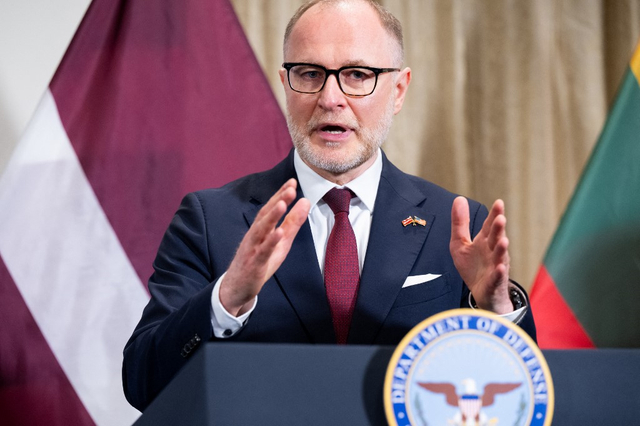
Latvian Defense Minister Andris Sprūds resigned on Sunday, after two Ukrainian drones on Thursday flew in from Russia and hit oil storage facilities.
On May 7, according to a preliminary investigation by Latvia’s State Police, two drones struck an empty oil storage facility in Rēzekne in the east of the country after crossing the Russian border.
Follow our coverage of the war on the @Kyivpost_official.
The incident was the latest in a series of airspace incursions by Ukrainian drones in the Baltic states and Finland as Kyiv continues to attack Russia’s oil exporting facilities on the Baltic coast.
Earlier on Sunday, Latvian Prime Minister Evika Siliņa demanded Sprūds resignation, saying anti-drone systems had not been deployed fast enough.
Party politics
In a public statement, Sprūds said that he had stepped down from the role to “protect Latvia’s army from divisive political campaigning,” Latvia’s public broadcaster LSM reported.
He said that a lot of work had taken place to improve the country’s defenses, including in air defense.
The politician claimed that calls for his resignation were part of a “systematic campaign” against his Progressives political party because it refused to toe the line and questioned long-established norms, LSM wrote.
Sprūds also said his party would meet soon to consider its future in the three-party ruling coalition.
Siliņa has appointed Latvian army colonel Raivis Melnis as the new defense minister. LSM said he has been acting as an adviser to the prime minister since February.
Baltics ask NATO for help
Latvia and Lithuania on Thursday called on NATO to boost air defenses in their region after the drones came over the Russian border and exploded at an oil storage facility in Latvia.
Ukrainian foreign minister Andrii Sybiha on Sunday said on X that the drones were Ukrainian, and flew into Latvia as a result of “Russian electronic warfare deliberately diverting Ukrainian drones from their targets in Russia.”
I just had another exchange with @Braze_Baiba about the recent drone incidents in Latvia.The investigations proved that this was the result of Russian electronic warfare deliberately diverting Ukrainian drones from their targets in Russia. I reaffirmed Ukraine’s willingness…
In response to the drone incidents, Ukraine is considering sending experts to help strengthen air security over the Baltic states, Sybiha said on Friday.