Russia Expands Alabuga Drone Factory by 340 Hectares and Begins Re-Exporting to Iran
AI Analysis
Russia is rapidly expanding its primary drone manufacturing facility at Alabuga SEZ, increasing production capacity significantly. This expansion includes new construction sites and recruitment of foreign labor, and notably, Russia is now re-exporting refined 'Geran' drones (based on Iranian Shahed designs) *back* to Iran. The facility is linked to Russian security services and is a critical component of Russia's ongoing military efforts.
Key Takeaways
- Alabuga SEZ expanded by 340 hectares between May 2025 and May 2026, with an additional 450-hectare site under construction.
- The facility is the primary production center for 'Geran' strike drones, refined from Iranian Shahed technology.
- Russia is re-exporting improved 'Geran' drones to Iran, potentially bolstering Tehran's drone capabilities.
- Recruitment of young women from South Africa, Asia, and Africa for drone assembly is occurring, often under false pretenses.
- Plant management has ties to the Russian FSB, indicating a high level of state control and security.
Why It Matters
The expansion of Alabuga demonstrates Russia's commitment to sustained, large-scale drone production despite sanctions. Re-exporting drones to Iran suggests a deepening military partnership and potential for coordinated drone operations in the Middle East. The reliance on foreign labor raises ethical concerns and potential vulnerabilities within the supply chain.
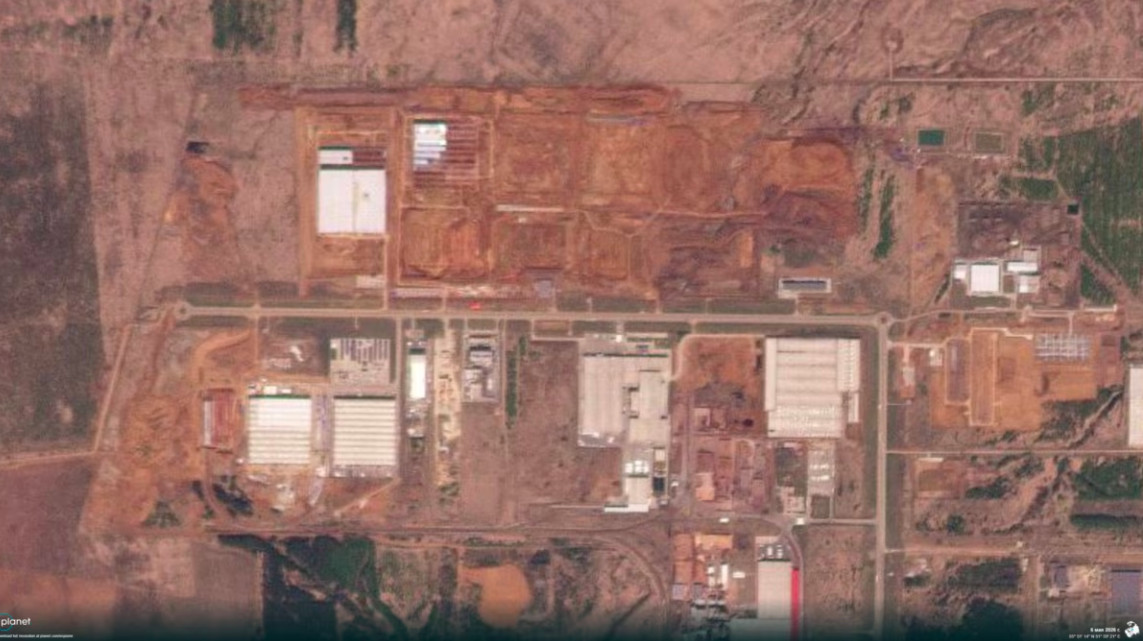
Russia has significantly accelerated the physical expansion of its most critical drone manufacturing hub, the Alabuga Special Economic Zone, over the past 12 months.
According to satellite imagery analysis published by Radio Liberty, the facility’s footprint grew by 340 hectares between May 2025 and May 2026.
Follow our coverage of the war on the @Kyivpost_official.
The expansion includes the construction of massive new hangars in the northern sector and the completion of new residential and production buildings in the central complex.
Further intelligence reveals that the Kremlin began active construction on an additional 450-hectare site south of the federal M-12 “Vostok” highway in April 2026.
This new territory is linked to the main economic zone via a dedicated road currently under construction.
Alabuga has become the primary production center for the “Geran” strike drones, which were originally designed based on Iranian Shahed technology. Russian engineers have reportedly refined these models so extensively that they are now being re-exported to Iran to support Tehran’s operations in the Middle East.
In 2025, Russia has leveraged BRICS organizations and social media influencers to recruit young women (ages 18–22) from South Africa, Asia, and other African nations. Many were initially promised jobs in construction or hospitality before being funneled into drone assembly lines.
Plant Director Timur Shagivaleyev – who is currently charged in absentia by Ukraine’s Security Service (SBU) – claims Alabuga is the “world’s largest” and “most secretive” drone factory. The plant is reportedly on track to manufacture nine times more aircraft compared to its 2024 output.
Investigative journalists have identified over 2,000 employees at the site and uncovered ties between high-level management and Russia’s Federal Security Service (FSB).
The drones produced at Alabuga are a mainstay of Russia’s aerial campaign against Ukraine. The continued expansion of the Tatarstan site suggests that Moscow is prioritizing long-term, high-volume production as part of its broader military strategy.
Kyiv Post is Ukraine’s first and oldest English news organization since 1995. Its international market reach of 97% outside of Ukraine makes it truly Ukraine’s Global – and most reliable – Voice.