Russia Strengthens Moscow Shield With Dozens of New Air Defense Towers
AI Analysis
Russia is rapidly expanding its air defense network around Moscow with dozens of new towers and system deployments, driven by increased Ukrainian drone strikes reaching the capital. This includes redeploying systems from other regions and authorizing private security companies to engage drone threats with military-grade weaponry. Mobile internet restrictions are also in place to mitigate drone navigation capabilities.
Key Takeaways
- Approximately 43 new air defense towers have been constructed around Moscow in 2025, forming an expanded defensive perimeter.
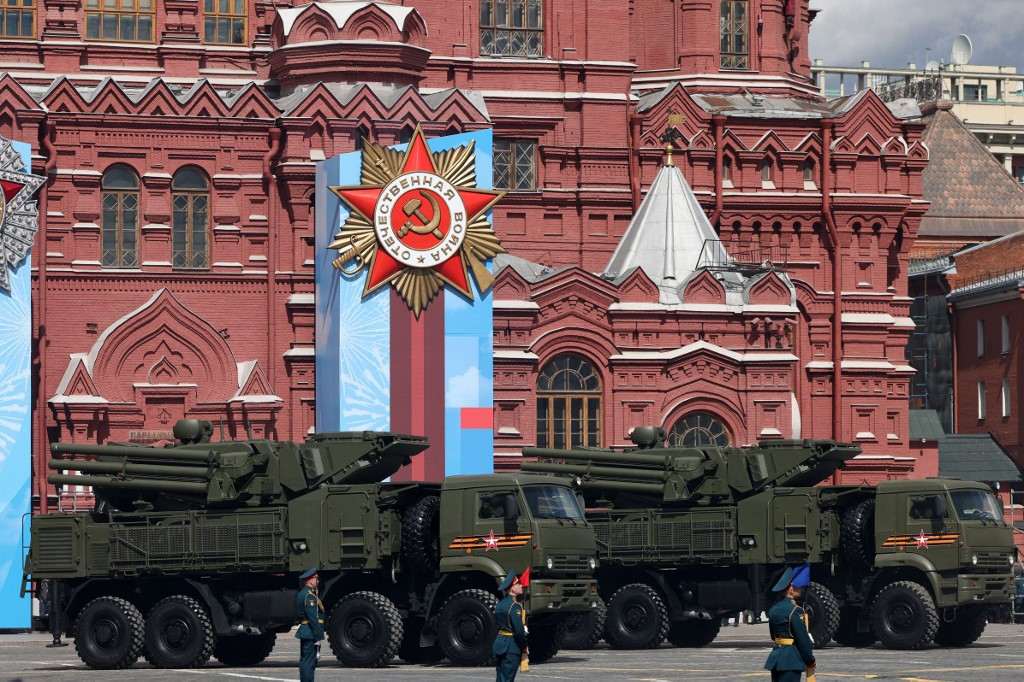
- Systems deployed include Pantsir-S1 (on rooftops and near infrastructure), S-300, and S-400, often mirroring historical Soviet-era defensive layouts.
- Ukraine has successfully struck targets within Moscow, including a residential building 6km from the Kremlin, and threatens further attacks during the May 9th Victory Day parade.
- Russia is restricting mobile internet access in Moscow and St. Petersburg to disrupt drone navigation.
- Private security companies are now authorized to use military-grade small arms to protect critical infrastructure from drone attacks.
Why It Matters
The intensified air defense build-up demonstrates Russia's vulnerability to drone warfare and its prioritization of protecting its capital, potentially at the expense of other regions. The authorization of private security forces signals a broadening of Russia’s defense strategy and a recognition of the escalating drone threat. These developments highlight the evolving nature of modern warfare and the increasing importance of counter-UAS capabilities.
Russia is rapidly reinforcing air defenses around its capital, Moscow, building what appears to be a new protective ring as fears of Ukrainian drone strikes grow.
According to the Bild report based on satellite imagery circulating online, around 43 new air defense towers have been installed around Moscow in 2025 alone, forming an expanded defensive perimeter.
Follow our coverage of the war on the @Kyivpost_official.
These towers are believed to host anti-aircraft systems designed to counter long-range drone threats.
The move comes as Ukrainian drones increasingly reach targets deep inside Russian territory. Even Moscow is no longer seen as fully secure.
A Ukrainian drone struck a residential high-rise in western Moscow early Monday, damaging apartments and scattering debris, according to Russian officials and media.
Moscow Mayor Sergei Sobyanin said the drone hit a building near Mosfilmovskaya Street around 1 a.m. Russian Telegram channels reported that the strike hit a high-rise complex, destroying walls in three rooms on the 36th floor. Part of the facade collapsed onto a parked car, with debris and shattered glass scattered below.
According to Astra, the building is located about 6 kilometers (3.7 miles) from the Kremlin.
Security concerns are particularly acute ahead of the May 9 parade on Red Square, marking the Soviet victory over Nazi Germany. Due to fears of drone attacks, this year’s event is expected to take place without heavy military equipment.
Authorities have also taken unprecedented steps to limit potential threats. Mobile internet has reportedly been restricted – and in some cases shut down – in Moscow and St. Petersburg until May 9, amid concerns that drones could use cellular networks for navigation.
The disruptions are already affecting daily life, causing issues with messaging, taxis, and banking apps.
Alexei Zhuravlyov, deputy head of the State Duma’s defense committee, described the parade as a “dangerous event,” warning of possible Ukrainian drone swarm attacks.
President Volodymyr Zelensky said on Monday that Ukrainian drones could potentially target Russia’s May 9 Victory Day parade in Moscow.
Speaking at the opening of the 8th Summit of the European Political Community in Yerevan, Zelensky suggested that Russia is no longer capable of showcasing the same level of military strength as in previous years.
He noted that Russia had announced a May 9 parade but emphasized, “there will be no military equipment at this parade,” calling it the first time in many years that Moscow “cannot afford the presence of weapons.”
Zelensky added that Ukrainian drones could also strike the event, saying this demonstrates that Russia is “no longer as strong as before.”
At the same time, a European intelligence assessment suggests that Kremlin leader Vladimir Putin fears not only external attacks but also internal threats, including a possible assassination attempt or coup – with drones seen as a potential method.
As Moscow strengthens its defenses, the Bild report indicate that air defense systems may be redeployed from other regions, raising concerns that protection is being concentrated around the capital at the expense of broader coverage.
In parallel, the Kremlin is expanding who can respond to drone threats. In late March 2026, Putin signed amendments to Russia’s weapons law allowing private security companies to use military-grade small arms, including combat rifles and ammunition.
The stated goal is to protect critical infrastructure, particularly in the energy sector, from drone attacks – marking a significant shift in Russia’s long-standing policy that such security functions are handled exclusively by the military.
Earlier reports in August of 2025 indicated that Russia had been rapidly reinforcing air defenses around Moscow, effectively rebuilding its Soviet-era layered system in response to repeated Ukrainian drone strikes.
An investigation by Radio Liberty, based on satellite imagery and OSINT data, found that more than 50 new surface-to-air missile (SAM) positions had been constructed after Ukrainian drones first reached Moscow in May 2023.
Many of the new positions feature Pantsir-S1 systems deployed on rooftops, landfill mounds, and near key infrastructure, often alongside larger S-300 and S-400 batteries.
Notably, several sites have been installed on or near former positions of the Soviet-era S-25 Berkut, indicating a deliberate revival of Cold War defensive layouts.
Satellite data shows construction continuing into 2025, with new Pantsir positions concentrated along key transport routes such as the Central Ring Road (TsKAD) and the so-called “small concrete road.”
Analysts say this reflects an effort to create overlapping defensive “rings” around the capital, with some newer layers positioned even closer to Moscow than the original Soviet lines.
However, the modernization comes with risks. Many systems are now located near dense urban areas, increasing the likelihood that falling debris or unexploded ordnance from intercepted drones will cause civilian damage.
At the same time, reports suggest air defenses are being concentrated around Moscow and other major cities – as well as elite residences – potentially leaving frontline regions like Kursk, Bryansk, and Belgorod with reduced protection.
Julia is a Deputy Head of News and correspondent for Kyiv Post who has previously worked as a parliamentary editor, journalist, and news editor. She has specialized in covering the work of the Ukrainian parliament, government, and law enforcement agencies.