Russian Forces Increasingly Target Gas Stations With Long-Range FPV Drones
AI Analysis
Russian forces are escalating their targeting of Ukrainian gas stations using long-range First-Person View (FPV) drones, prioritizing range over explosive payload. Ukrainian officials are advising gas station operators to implement physical defenses and electronic warfare units to focus on specific signal characteristics. Recent attacks have resulted in damage to infrastructure, civilian vehicles, and injuries.
Key Takeaways
- Russian forces are employing FPV drones with ranges of 20-25km to strike fuel infrastructure.
- Drones are utilizing smaller explosive payloads to achieve extended range.
- Attacks are typically occurring from above due to signal limitations at lower altitudes.
- Recommended countermeasures include protective netting, shielding fuel tanks, and covering entry/exit points.
- Ukrainian officials advise EW units to focus on vertically polarized antennas operating at lower frequencies.
Why It Matters
This tactic demonstrates a shift in Russian strategy towards targeting critical civilian infrastructure deeper within Ukrainian territory, aiming to disrupt logistics and morale. The use of long-range FPV drones highlights the increasing sophistication and adaptability of drone warfare, requiring enhanced defensive measures. The vulnerability of fuel infrastructure necessitates immediate implementation of recommended protective measures.
Russian forces are increasingly attempting to target Ukrainian gas stations using long-range FPV drones, a Ukrainian defense official said on Wednesday, May 6.
Serhii Beskrestnov, an advisor to Ukraine’s defense minister known by the callsign “Flash,” said in a Telegram post that Russian forces are using drones with smaller explosive payloads to extend their range to 20-25 kilometers.
Follow our coverage of the war on the @Kyivpost_official.
According to him, these drones are designed to travel farther at the cost of reduced explosive power, allowing them to strike fuel infrastructure deeper behind the front lines.
Beskrestnov warned that such attacks typically come from above, as long-range FPV drones cannot fly low without losing signal. He advised gas station operators in at-risk areas to install protective netting over vulnerable sections and shield fuel and gas storage tanks.
He also suggested covering entry and exit points and urged electronic warfare units to pay attention to control antennas with vertical polarization and lower frequencies.
Russian drone strikes have already targeted fuel infrastructure in Ukraine in recent days.
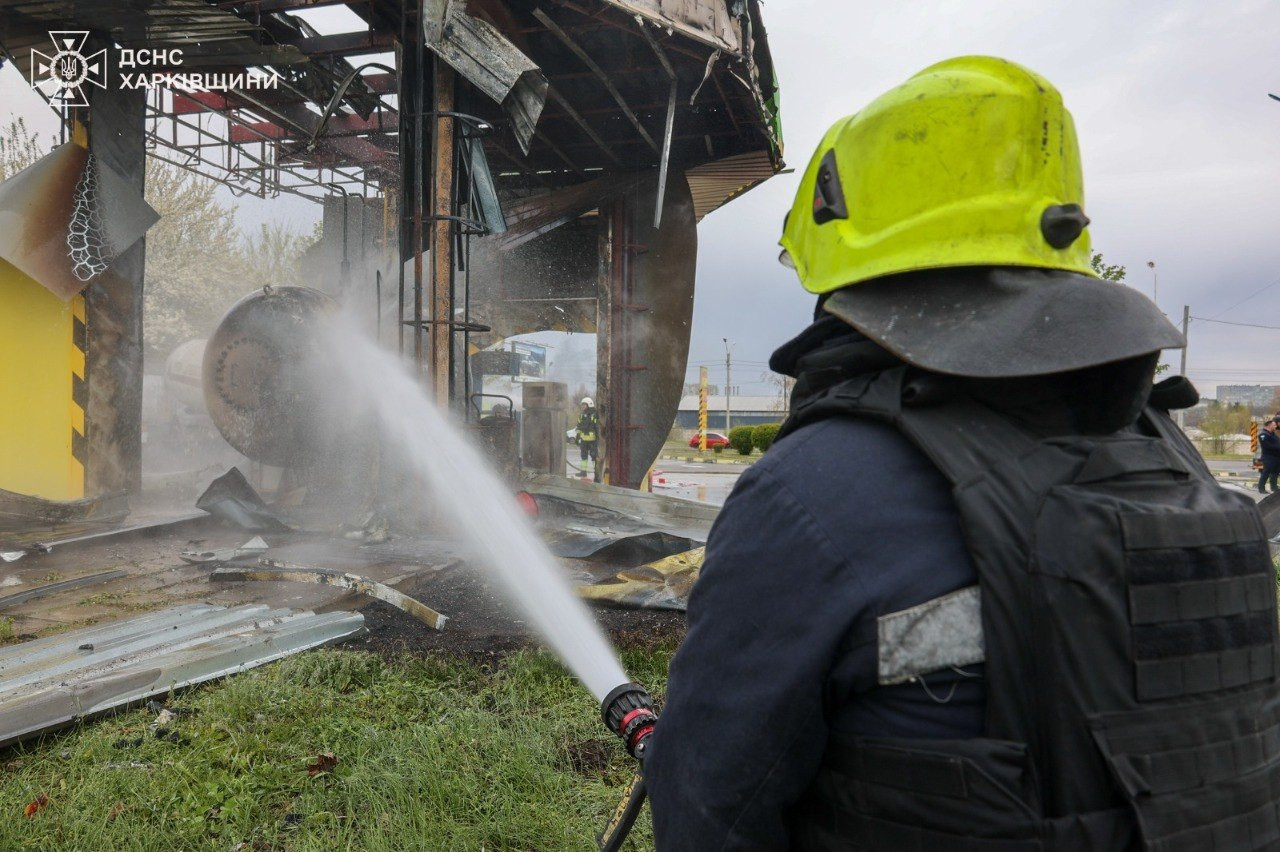
Earlier on Wednesday Ukraine’s State Emergency Service reported strikes on fuel infrastructure in the Kharkiv region. Drone hits were recorded at five gas stations. Fires broke out at two of them – in the Slobidskyi district of Kharkiv and in Chuhuiv – and were quickly extinguished.
Explosions damaged fueling equipment, 10 civilian vehicles, and a car wash building. Two men, born in 1970 and 1989, were injured, one of whom was hospitalized. Emergency responders, medics, and law enforcement worked at the scene.
On May 2, a large-scale drone attack hit multiple districts of Kharkiv, including several gas stations. Fires broke out at fuel sites, damaging equipment, vehicles, and nearby residential buildings.
At least six people were injured in the attack, according to regional authorities. Earlier the same day, additional drone strikes hit gas stations in other parts of the city, wounding three civilians and damaging a car dealership.
Ukrainian officials say such strikes are part of a broader pattern of Russian attacks on civilian and energy infrastructure.
Kyiv Post is Ukraine’s first and oldest English news organization since 1995. Its international market reach of 97% outside of Ukraine makes it truly Ukraine’s Global – and most reliable – Voice.