Ukraine Downs Russia's New Geran-4 Jet-Powered Drone
AI Analysis
Ukrainian forces have reportedly downed a Russian Geran-4 jet-powered drone, marking a potential first confirmed use of this upgraded model. The interception was achieved using a Ukrainian-made remote control system (Hornet Vision CTRL) by the 1020th Anti-Aircraft Missile Artillery Regiment. The Geran-4 boasts increased speed, range, and payload compared to previous models, and has been observed equipped with air-to-air missiles.
Key Takeaways
- Russia is deploying jet-powered drones, specifically the Geran-4, which represent an evolution from earlier, slower designs.
- The Geran-4 has a cruising speed of up to 500 km/h, a range of up to 850 km, and carries a 50kg warhead.
- Some Geran-4 drones have been observed carrying Soviet R-60 air-to-air missiles, potentially as a defensive measure against interceptors, though some may be decoys.
- Ukraine claims a high (90%) interception rate against Russian drones overall, despite the increased capabilities of the Geran-4.
- Despite development dating back to 2025, jet-powered drones still represent a smaller portion of Russia's overall drone launches, with propeller-driven models remaining dominant.
Why It Matters
The deployment of jet-powered drones like the Geran-4 signals a Russian effort to overcome Ukrainian air defenses with faster, more difficult-to-intercept platforms. Ukraine's success in countering these drones, utilizing domestically produced systems, demonstrates a growing indigenous defense capability. The use of air-to-air missiles on drones introduces a new layer of complexity to the drone warfare landscape.
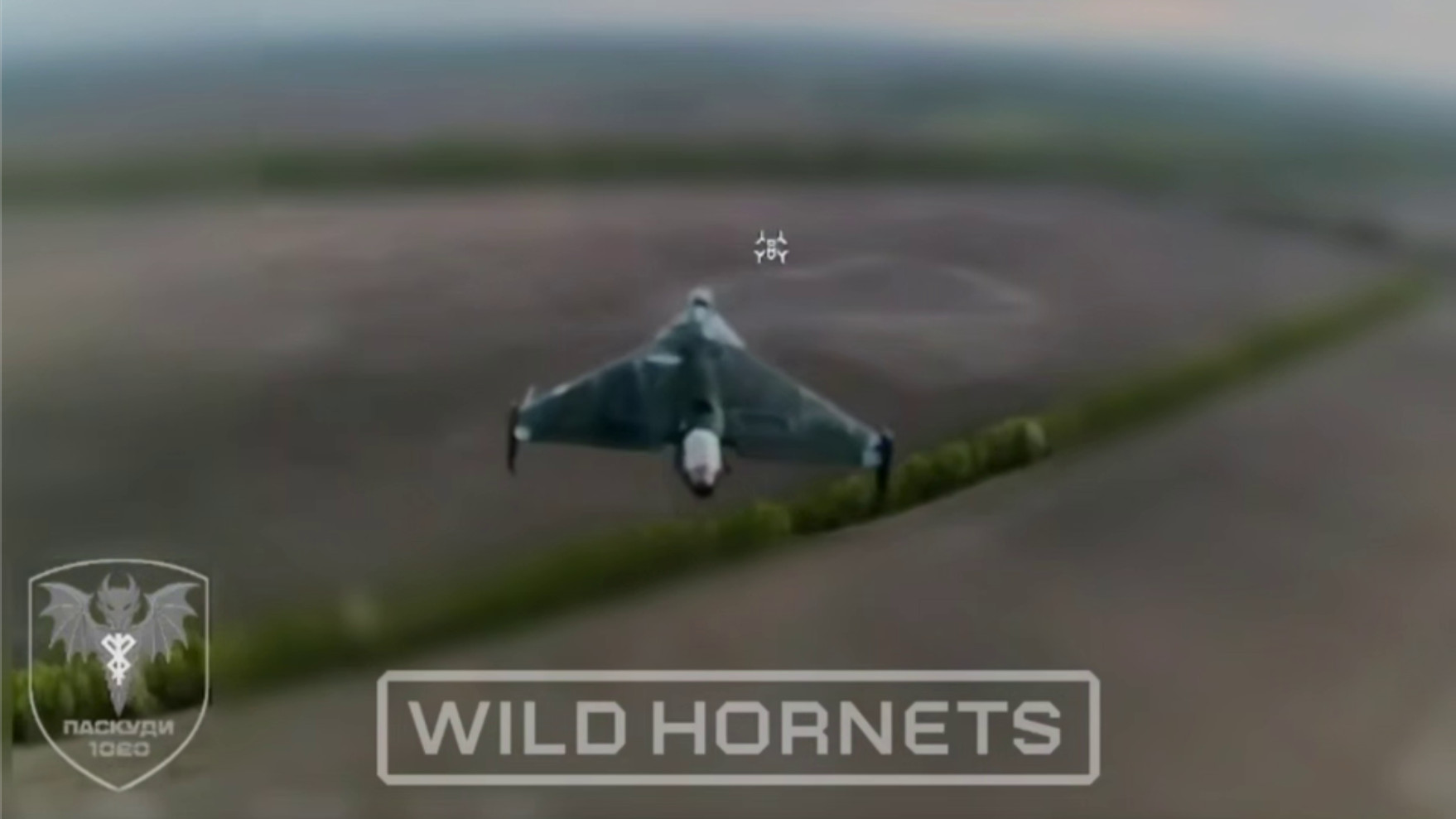
Ukraine has intercepted a Russian Geran-4 jet-powered drone, according to Wild Hornets, a Ukrainian drone maker.
In a Sunday Telegram update, the company shared footage of the interception and said it was carried out by the crew of the 1020th Anti-Aircraft Missile Artillery Regiment.
Follow our coverage of the war on the @Kyivpost_official.
Wild Hornets said it was the second jet-powered drone downed by the unit in a week, following an April 27 update that showed a visually different jet-powered drone. The company added that the crew used its Hornet Vision CTRL remote-control system to guide the interceptor from long range.
In the video, filmed from the interceptor drone’s first-person perspective, it can be seen hovering above the Russian drone before closing in. The footage cuts out moments later, presumably as the interceptor detonates near its target.
The company did not specify the date and location of the incident.
Defense outlet Militarnyi identified the drone as the Geran-4, an upgraded version of its predecessor Geran-3 with a more powerful engine and improved fuselage for high-speed flights.
The outlet also claimed the incident marked Russia’s first confirmed use of the Geran-4. However, a January report by RBC Ukraine, citing the 413th Raid Battalion of the Unmanned Systems Forces, suggests otherwise.
At the time, the downed Geran-4 is said to be equipped with a Soviet R-60 air-to-air missile to fend off Kyiv’s interception efforts.
The use of R-60 missiles on Russian drones surfaced as early as late 2025, when it was found on other Russian drones. But later reports suggest that at least some were mock-ups aimed to confuse Ukrainian air defense.
RBC Ukraine said the Geran-4 features a cruising speed of up to 500 km/h (311 mph), a more powerful engine, improved aerodynamics, and an extended range of up to 850 km (528 miles). It also has a takeoff weight of 450 kg (992 lb) with a 50-kg (110-lb) warhead and could, in theory, be air-launched from a Su-25 acting as a carrier.
Russia began using jet-powered drones in the summer of 2025, while reports of their development – modeled on Iranian designs – dated back months earlier.
Range and speed vary across models as Moscow continues to refine the designs. Compared to the two-stroke engine-powered variants dubbed “lawnmowers” in Ukraine, jet-powered drones are generally faster and harder to intercept, albeit with a shorter range.
However, Ukraine said it maintained a roughly 90% interception rate against Russian drones in late April, according to President Volodymyr Zelensky, while a newly formed private air defense unit also reported downing a jet-powered drone that month.
Although Russia’s drone launches reached record levels in April, on-the-ground reports suggest older propeller-driven variants remain the mainstay, with jet-powered versions used less frequently.
Kyiv Post is Ukraine’s first and oldest English news organization since 1995. Its international market reach of 97% outside of Ukraine makes it truly Ukraine’s Global – and most reliable – Voice.