Production Of AH-64 Apache’s New Counter-Drone Cannon Shell Ammunition Ramping-Up
AI Analysis
The U.S. Army is ramping up production of the XM1225 APEX rounds for AH-64 Apache helicopters to enhance their counter-drone capabilities. Northrop Grumman is increasing production to meet a five-fold procurement increase, reflecting the Army's focus on counter-UAS operations.
Key Takeaways
- The XM1225 APEX rounds are designed for the AH-64 Apache's M230 cannon.
- These rounds detonate near targets, making them effective against drones.
- The Army plans a five-fold increase in procurement of these rounds.
- Northrop Grumman is the manufacturer tasked with boosting production.
- The rounds require minimal additional training due to similar ballistics to existing ammunition.
Why It Matters
The increased production of XM1225 APEX rounds signifies the U.S. Army's strategic emphasis on counter-drone warfare, enhancing the Apache's role in air defense. This development reflects a broader trend of adapting existing platforms to address emerging threats, such as unmanned aerial systems.
The TWZ Newsletter
Weekly insights and analysis on the latest developments in military technology, strategy, and foreign policy.
Terms of Service and Privacy Policy
Bottom line: The U.S. Army is significantly increasing production of XM1225 APEX rounds for AH-64 Apaches to enhance their counter-drone capabilities. These versatile rounds have proven effective in tests and require minimal additional training for crews, marking a tactical advancement in battlefield capability.
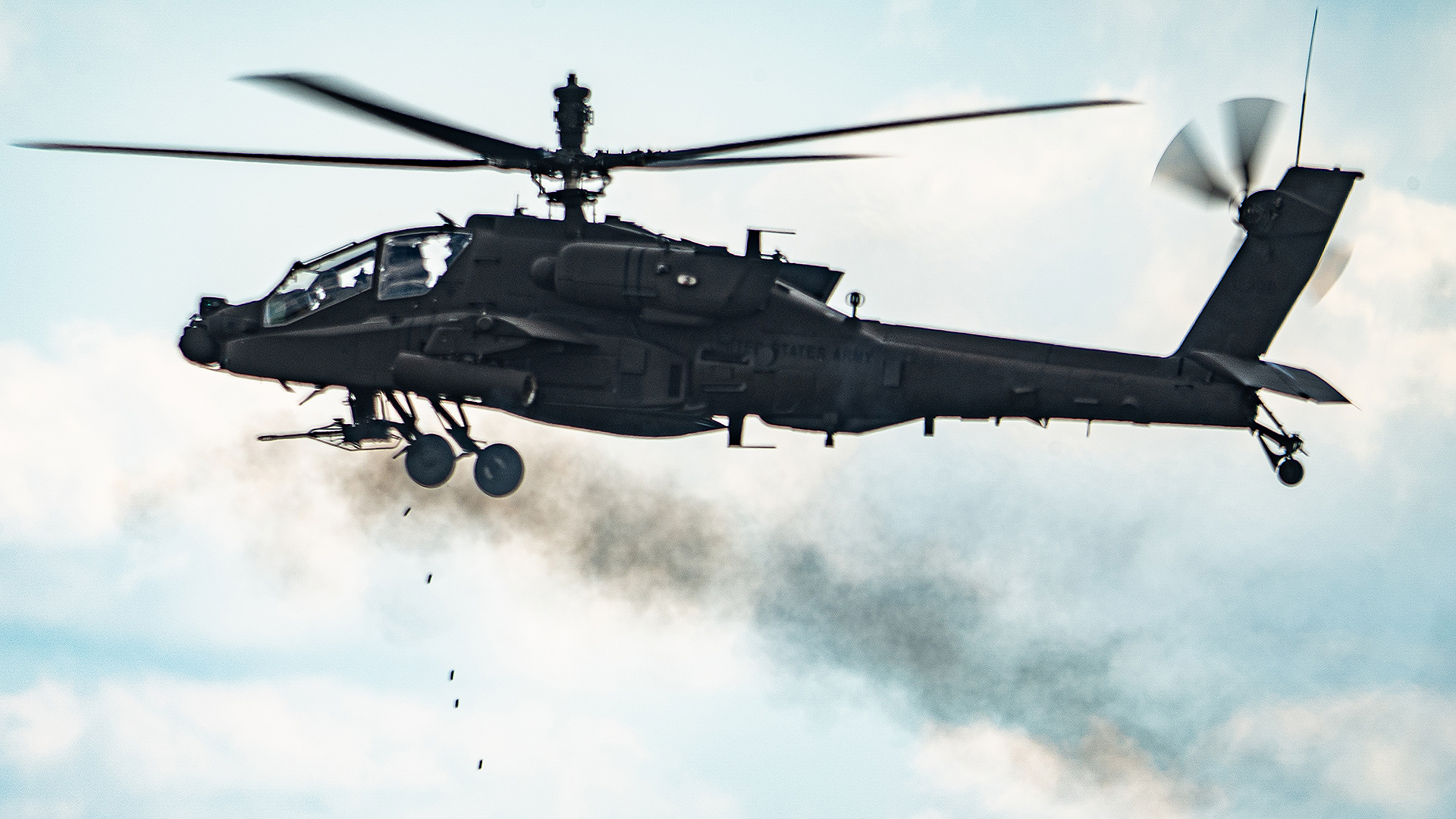
The Army is accelerating procurement of 30x113mm XM1225 Aviation Proximity Explosive (APEX) rounds for its fleet of AH-64 Apache attack helicopters. The move comes as the service is looking to enhance the aircraft’s burgeoning role as a counter-drone platform, something The War Zone has covered frequently. These shells, fired by the Apache’s chin-mounted M230 cannon, will add to its drone-killing arsenal, giving it a cheaper and more plentiful engagement option than some of the alternatives. You can read all about the XM1225 APEX round in our previous coverage here.
Seeing a growing need for these rounds, the Army went to Northrop Grumman, which makes them, and asked them to boost production, said Maj. Gen. Clair A. Gill, commander of the U.S. Army Aviation Center of Excellence at Fort Rucker, Alabama. He was speaking during the Army Aviation Association of America’s Army Aviation Warfighting Summit in Nashville, Tennessee, which TWZ was in attendance.
“We had had 600 rounds total,” Gill explained. “They produced 1,000 already this month and can produce another 1,000 and will ramp their rate up to probably five times that.”
The company could not immediately comment about this effort.
The specialized APEX ammunition works by detonating only when it is close to an object, then it explodes in a spray of shrapnel. This is critical to shooting down drones, which are small, independently moving targets. These rounds could also be used against surface targets like personnel, soft-skinned vehicles, and small boats, where they would provide unique area effects compared to the Apache’s standard impact-detonating, high-explosive ammunition.
Earlier this year, we reported that Apaches live-fire tested the ammo last December at the service’s sprawling Yuma Proving Ground (YPG) in southern Arizona.
“The Apache Attack Helicopter AH-64 has reached a new milestone in battlefield capability with the successful live fire test” of the APEX ammunition, the Army said in a February news release. “In December 2025, the Apache demonstrated its first-ever air-to-air engagement using 30mm proximity ammunition against unmanned aircraft systems targets at various ranges, showcasing the precision, versatility, and lethality of this advanced ammunition.”
The Army added that the Apex cartridge “is designed to counter modern threats, including UAS, exposed personnel and small boats, without requiring modifications to the Apache’s M230 Area Weapon System or fire control system.”
As we have pointed out in the past, these rounds require little additional training for Apache crews, because their ballistic properties are nearly identical to the M789 high-explosive dual-purpose (HEDP) rounds already fielded, which use an impact/grazing fuze to command detonation.
An additional benefit is that self-destructing proximity fuzed rounds mitigate some of the dangers of attacking drones with ammunition that will keep traveling for long distances if it doesn’t hit a target. This is a frequent occurrence with standard high-explosive or incendiary cannon rounds.
While the Israeli Air Force pioneered the counter-drone role for the AH-64 for years, the U.S. Army has formally codified it and added new capabilities in the process. A five-fold boost in procurement is a strong indication that the Army sees the value of the APEX rounds for these missions.
Contact the author: howard@thewarzone.com.
Already building launched effects vehicles for the Marine Corps, L3Harris now wants to bring these capabilities to U.S. Army rotorcraft.
By Thomas Newdick
The XM1225 APEX ammo will offer another arrow in the Apache's growing anti-drone quiver.
By Tyler Rogoway
Weekly insights and analysis on the latest developments in military technology, strategy, and foreign policy.
By signing up you agree to our Terms of Service and Privacy Policy.
By Thomas Newdick
By Tyler Rogoway
By Thomas Newdick
By Thomas Newdick
By Thomas Newdick
By Thomas Newdick
By Thomas Newdick
By Tyler Rogoway
By Thomas Newdick
By Hope Hodge Seck
By Howard Altman
By Tyler Rogoway
By Howard Altman, Tyler Rogoway
By Thomas Newdick
By Joseph Trevithick
By Thomas Newdick
By Joseph Trevithick, Howard Altman
By Thomas Newdick
By Thomas Newdick
By Tyler Rogoway
By Howard Altman
By Joseph Trevithick
By Thomas Newdick
By Joseph Trevithick, Howard Altman