Anduril: new factory will start making drone wingman in just ‘days’
AI Analysis
Anduril is set to begin production of its YFQ-44A Fury drone at its new Arsenal-1 facility in Ohio, ahead of schedule. This facility will support the Air Force's collaborative combat aircraft competition and aims to leverage a broad commercial supply chain to maintain cost-effectiveness.
Key Takeaways
- Anduril's Arsenal-1 facility in Ohio is opening ahead of schedule.
- The facility will produce the YFQ-44A Fury drone for the Air Force.
- Anduril is competing with General Atomics and Northrop Grumman in the Air Force's collaborative combat aircraft competition.
- The company is utilizing a broad commercial supply chain to keep costs low.
- Anduril has completed armed flight testing and semi-autonomous flight switching between software suites.
Why It Matters
This development signifies a strategic push for domestic manufacturing in the defense sector, aligning with government policy to bolster national security through local production. Anduril's advancements in drone technology and cost-effective production could enhance the U.S. Air Force's capabilities in drone warfare, offering scalable solutions for future combat scenarios.
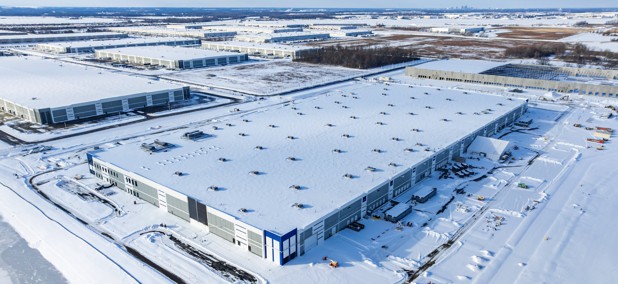
Arsenal-1 plant in Columbus, Ohio
Anduril
Stay Connected
Thomas Novelly
Anduril will soon start making its robot drone wingman offering for the Air Force at its new Ohio factory months ahead of schedule, a company official told Defense One in an exclusive interview.
The private defense contractor announced last year that it would build its manufacturing facility, dubbed Arsenal-1, in Columbus, Ohio, and “the first products will be manufactured beginning in July 2026.” But Jason Levin, the company’s senior vice president of engineering for air dominance & strike, said on Wednesday that production was imminent. The first product made at the facility will be the YFQ-44A Fury, the drone that the company is pitching in the Air Force’s collaborative combat aircraft competition.
“We're moving production of YFQ-44 into our Arsenal facility in Columbus, Ohio, in a matter of days, actually, we're gonna start production there,” Levin said in a soon-to-be released Defense One video series. “We'll be able to produce YFQ-44s at rate, but also many other Anduril products as well.”
Anduril’s investment in the American heartland comes amid the Trump's administration push to have defense companies invest in domestic manufacturing. Levin said the facility is “5 million square feet”; last year, the company boasted of Arsenal-1’s location next to a local airport providing access to two 12,000-foot runways and a 75-acre private apron “capable of supporting military-scale aircraft, ensuring rapid delivery of components and systems.”
A company spokesperson did not immediately provide the date when Fury production would start at the Ohio facility. Anduril, General Atomics, and Northrop Grumman are all in the running to build the Air Force’s first collaborative combat aircraft.
When first established, the CCA concept was defined by affordability and attritability. Levin said Anduril has been keeping costs low on its drone wingman offering leaning on a broad commercial supply chain for the aircraft’s key components such as the engine, avionics, and landing gear.
"We can go out to multiple vendors. That actually gives some price leverage as well, but also allows us to scale if the demand were to come,” Levin said. “So, if we need to build hundreds, multiple, of these aircraft, we can get that done by going out to a broader supply base, not just kind of bottlenecked by one or two vendors."
Last month, Anduril started armed flight testing with its CCA offering. It closely followed an Air Force announcement that the service validated its government-owned Autonomy Government Reference Architecture to integrate RTX Collins software aboard General Atomics’ YFQ-42 CCA aircraft and Shield AI’s technology on Anduril's YFQ-44 CCA.
Anduril, in another milestone, announced late last month it had completed its first semi-autonomous flight and was able to switch between Shield AI and its own mission autonomy software suites mid-air.
The Air Force has said a competitive Increment 1 production decision is expected in fiscal year 2026.
NEXT STORY:
Lawmakers press SOUTHCOM on Hegseth’s ‘no quarter’ rhetoric