Azerbaijan Vows Response After Iran Drone Attack, but Not Everyone Agrees on Next Steps
AI Analysis
Azerbaijan has vowed a response after Iranian drones attacked the Nakhchivan exclave, injuring four people. The incident has heightened tensions between Azerbaijan and Iran, with internal debates on the appropriate level of retaliation.
Key Takeaways
- Iranian drones attacked Azerbaijan's Nakhchivan exclave, injuring four people.
- Azerbaijani President Ilham Aliyev labeled the attack a 'terrorist act' and placed the military on high alert.
- Azerbaijan's ties with Israel, a major arms supplier, contribute to tensions with Iran.
- The Azerbaijani population in Iran is a sensitive issue, potentially fueling regional instability.
- Opinions in Azerbaijan are divided between advocating for a strong military response and exercising caution to avoid escalation.
Why It Matters
The drone attack on Azerbaijan underscores the growing complexity of regional conflicts involving drone warfare and highlights the strategic importance of Azerbaijan's alliances, particularly with Israel. The incident could further destabilize the region, potentially drawing Azerbaijan into broader Middle Eastern conflicts and impacting its domestic and foreign policy strategies.
Azerbaijan became the first post-Soviet country hit by spillover from the war in the Middle East.
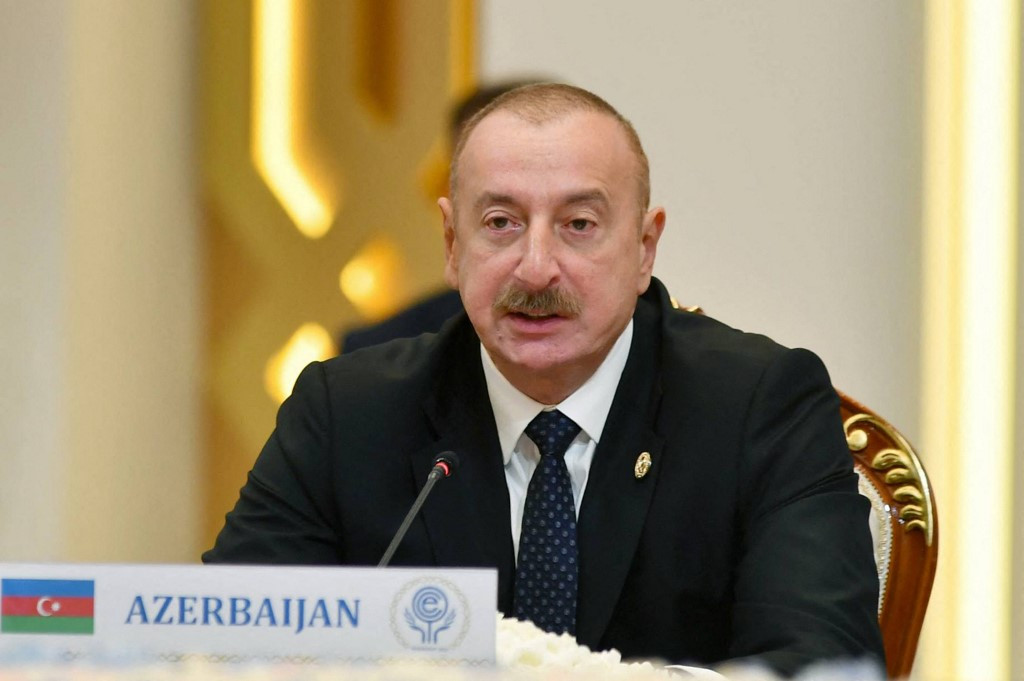
On Thursday, Baku said Iranian drones crossed into the Nakhchivan exclave, hitting the airport area and landing near a school. Four people were injured. Azerbaijani President Ilham Aliyev called the attack a “terrorist act,” put the military on high alert, and demanded an apology from Iran.
Follow our coverage of the war on the @Kyivpost_official.
“Our Armed Forces have been instructed to prepare and implement appropriate retaliatory measures,” Aliyev told a meeting of his Security Council.
The strike immediately raised fears in Azerbaijan that the country could be dragged deeper into the regional escalation. Over the years, Azerbaijan has faced repeated threats from Iran’s clerical elite over Baku’s close ties with the West.
In October 2022, Iran staged a large military exercise called “Mighty Iran” along the Azerbaijani border. During the drills, Iranian forces practiced crossing the Aras River with pontoon bridges and heavy equipment.
Azerbaijan’s close relationship with Israel is one of the main reasons ties with Iran have been tense for years. Israel was one of the first countries to recognize Azerbaijan’s independence, and the two established diplomatic relations in 1992. Azerbaijan waited until March 2023 to open its embassy in Tel Aviv, showing how carefully it had tried for years to manage the regional balance.
Security ties have been even more sensitive. Israel has been a major arms supplier to Azerbaijan, including drones and loitering munitions. One of the best-known systems is the Harop, which became closely linked to Azerbaijan’s battlefield strength during the 2020 Karabakh war with Armenia.
The relationship is also important in energy. Azerbaijan reportedly supplied 46.4% of Israel’s oil imports in 2025.
Another sensitive issue is the large Azerbaijani population inside Iran.
The exact number is debated, but the political importance of the issue is not. Tehran has long treated any closer connection between the two communities with concern, fearing it could encourage separatism. Aliyev referred directly to that issue on Thursday, saying the Azerbaijani state is “a source of hope for many Azerbaijanis in Iran.”
That sensitivity has deep roots. Tabriz, the main city of Iran’s Azerbaijani region, was one of the early centers of protest before Shah Mohammad Reza Pahlavi was overthrown in 1979. Iranian leaders have long seen the area as politically sensitive in times of crisis.
Thursday’s strike has sparked strong reactions in Azerbaijan, though opinions differ over what the response should be. Speaking in a recent episode of the Osmanqizi podcast, military expert Elkhan Nuriyev said many in Azerbaijan see the drone attack as a direct assault on the country’s sovereignty and support a tough reply. They argue that a weak response would only invite more pressure from Iran.
Others are calling for caution. In the same podcast, Isa Sadigov, a former deputy defense minister, said that although strong language may be understandable after such an attack, the leadership must also consider the risks of escalation, civilian safety, and the possibility of miscalculation.
Sevinj Osmanqizi is a journalist covering US foreign policy, security, and geopolitics, with a focus on the broader post-Soviet space. She reports on Washington’s decision-making and its implications for Ukraine and regional stability.