LUCAS Kamikaze Drones Lauded As “Indispensable” By U.S. Admiral In Charge Of Iran War
AI Analysis
The U.S. military has successfully deployed LUCAS kamikaze drones, modeled after the Iranian Shahed-136, in the ongoing Operation Epic Fury against Iran. These drones are praised for their cost-effectiveness and advanced capabilities, including swarm tactics and network-centric strikes.
Key Takeaways
- LUCAS drones are based on the Iranian Shahed-136 and have been used effectively in Operation Epic Fury.
- Adm. Brad Cooper described LUCAS drones as 'indispensable' due to their low cost and scalable capabilities.
- LUCAS drones cost approximately $35,000 each, offering a cheaper alternative to traditional long-range systems.
- The drones feature autonomous coordination and can be used for swarm tactics and dynamic targeting.
- The U.S. aims to balance cost and capability in drone warfare, reducing reliance on expensive munitions.
Why It Matters
The deployment of LUCAS drones highlights a shift towards more cost-effective and scalable drone warfare solutions, which could redefine military strategies and procurement priorities. This development underscores the importance of adapting to new technologies to maintain operational effectiveness while managing defense budgets.
The TWZ Newsletter
Weekly insights and analysis on the latest developments in military technology, strategy, and foreign policy.
Terms of Service and Privacy Policy
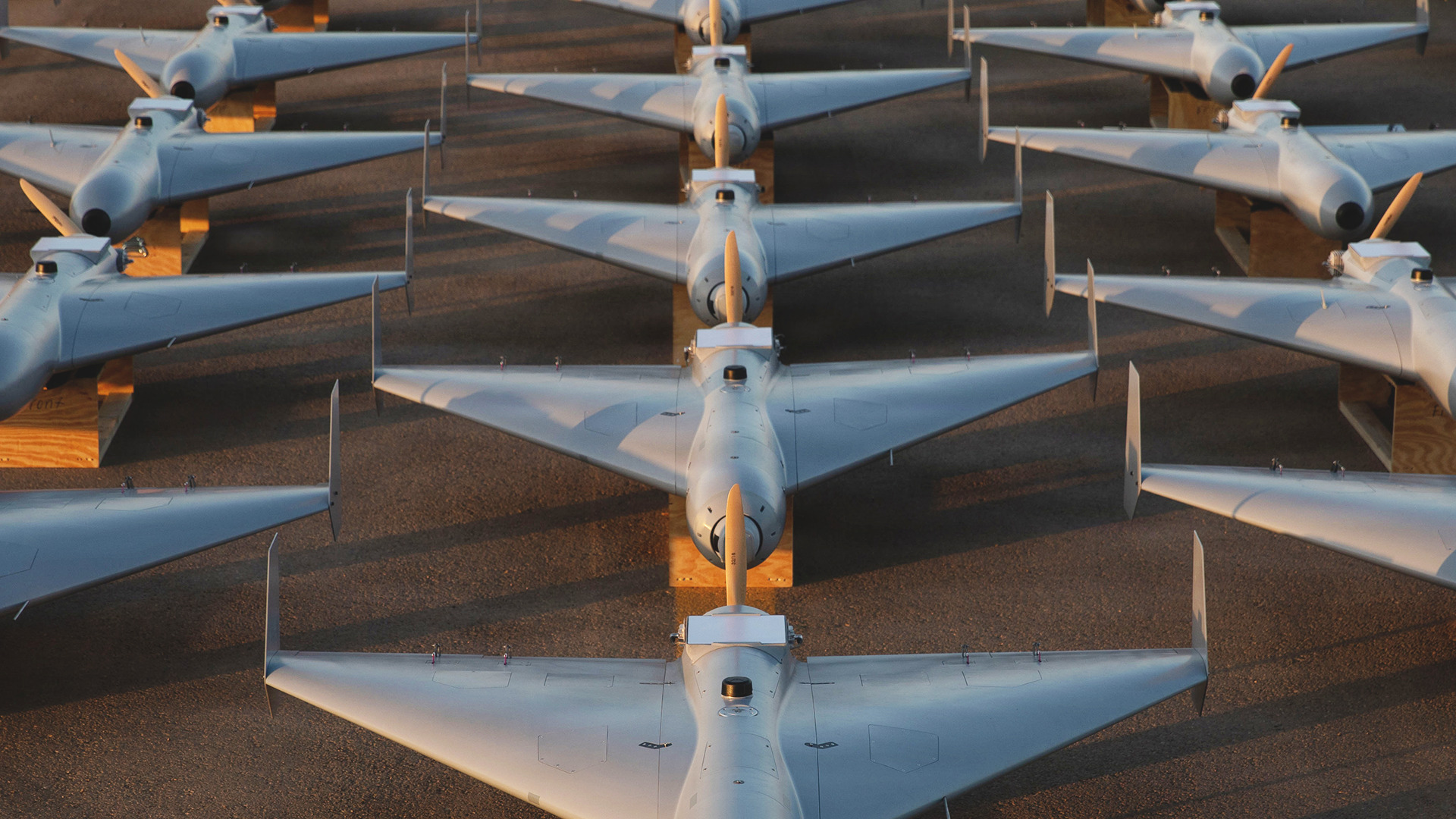
Responding to a question from The War Zone at a press conference at CENTCOM headquarters in Tampa, Florida, the admiral leading the war against Iran praised the Low-Cost Uncrewed Combat Attack System (LUCAS) kamikaze drone. Based on the Iranian Shahed-136, these weapons were used in combat for the first time just six days ago. They were fired against unspecified Iranian targets in the opening salvos of the Operation Epic Fury joint U.S.-Israeli attack on Iran and repeatedly since.
The War Zone has advocated for the procurement of this exact class of drone by the American military and today, Adm. Brad Cooper backed up that assessment.
“LUCAS, indispensable,” Cooper told us when we asked how effective they have been and how much they’ve helped preserve magazine depth, given their comparative low cost and faster and easier production.
CENTCOM Commander Brad Cooper on LUCAS:LUCAS is indispensable. pic.twitter.com/VaLXmjawA6
America’s stockpile of offensive and defense munitions remains a concern as Epic Fury drags on, even though War Secretary Pete Hegseth, who also spoke at the press conference, downplayed it. More on that later in this story.
A Tomahawk cruise missile cost roughly between $2 million to $2.5 million a piece. Air launched cruise missiles currently in service cost over a million a piece, although work is being done to reduce that number considerably. There is still a tradeoff in warhead size, response time, and survivability, but cheaper weapons in greater quantities that can deliver a payload over hundreds of miles are badly needed as part of a arsenal mix that includes more advanced types.
“Costing approximately $35,000 per platform, LUCAS is a low-cost, scalable system that provides cutting-edge capabilities at a fraction of the cost of traditional long-range U.S. systems that can deliver similar effects,” Navy Capt. Tim Hawkins, a CENTCOM spokesperson, told TWZ back in December. “The drone system has an extensive range and the ability to operate beyond line of sight, providing significant capability across CENTCOM’s vast operating area.”
Moreover, the LUCAS design includes features that allow for “autonomous coordination, making them suitable for swarm tactics and network-centric strikes,” a U.S. official told us in December. As we have explained in detail in the past, the swarming capabilities combined with some of the drones being equipped with Starlink terminals, means extremely advanced cooperative tactics and dynamic targeting are possible, all while keeping humans in the loop.
The video below is said to show a LUCAS drone, recovered largely intact in Iraq. Its beyond-line-of-sight satellite datalink can be seen detached and hanging by a cable.
Locals in Iraq appear to have recovered a crashed and almost entirely intact Low-Cost Unmanned Combat Attack System (LUCAS), an American copy of the Iranian Shahed-136 Attack Drone, which is confirmed to have been used recently by Task Force Scorpion Strike during U.S. attacks on… pic.twitter.com/SEqO6627en
Cooper highlighted how the U.S. has reworked the Iranian Shahed, which have been wreaking havoc during this conflict, killing six U.S. troops and causing destruction across the Middle East.
“We captured it, pulled the guts out, sent it back to America, put a little ‘Made in America on it,’ brought it back here and we’re shooting it at the Iranians.”
In a video message earlier this week, Cooper said that the U.S. has fired “countless one-way attack drones” to great effect.
Update from CENTCOM Commander on Operation Epic Fury: pic.twitter.com/epEohq64Vf
Thursday, we asked him what kinds of targets LUCAS drones have been used against and he offered a short response.
“Good ones,” he said.
We asked Cooper to respond to stories that have emerged saying the Pentagon and at least one Gulf ally are talking to Ukraine about procuring their low-cost Shahed interceptors. He deferred to Cooper.
Gulf states had been using expensive Patriot missiles to defend themselves from Iranian Shahed drones. But their stocks are declining, and they are looking to Kyiv’s experience for cheaper defence. https://t.co/y5sCa0AcTB pic.twitter.com/J911oWV8o9
“I’m not familiar with the particular offer, but the interceptors in general, we’ve had a number of new capabilities being fielded,” the CENTCOM commander explained. “Obviously, I’m not going to talk about it from the operational perspective of what those are, but I think you have seen over a period of time us kind of get on the other side of this cost curve on drones in general.”
“If I just walk back a couple of years, remember what you used to always hear, we’re shooting down a $50,000 drone with a $2 million missile,” he added. “These days, we’re spending a lot of time shooting down $100,000 drones with $10,000” weapons.
Before Cooper answered our questions, Hegseth repeated the Pentagon’s assertion that it has the weapons it needs to outlast Iranian missile and drone barrages.
“We’ve got no shortage of munitions,” Hegseth proclaimed. “Our stockpiles of defensive and offensive weapons allow us to sustain this campaign as long as we need to again, our munition status only increases as our advantage increases our capabilities.”
LIVE: @SecWar and @CENTCOM commander, Adm. Brad Cooper, conduct a press conference at U.S. Central Command in Tampa, Fla. https://t.co/f0KGGCvMQY
As we recently pointed out, Iran’s ability to launch missiles and drones at U.S., Israeli, and other allied targets in the Middle East has been severely degraded, curbing concerns, even if to just a small degree, about America’s magazine depth.
However, as we have often noted, one of the big concerns about Epic Fury is whether Iranian missile and drone barrages would outlast the ability of the U.S. and allies to defend against them. Despite six days of intensive attacks, Tehran still possesses thousands of missiles and drones, though a significant number of these weapons and their launchers — specifically the longer range ballistic missile types —have been destroyed or prevented from being accessed by crews.
The effort to eliminate the Iranian regime's mobile missile launch capabilities continues. We are finding and destroying these threats with lethal precision. pic.twitter.com/AkGRYOjnOz
Though Iran has been severely pummeled by both the U.S. and Israel, it is unknown how much longer the conflict will grind on. President Donald Trump had stated that it could last four or five weeks. Now the time table is very murky, with the administration indicating it could last much longer. Regardless, the more it drags out, the more munitions the U.S. will expend, but at least it knows it can quickly build more LUCAS drones, if need be.
Contact the author: howard@thewarzone.com
There are new risks as the U.S. expands its air campaign deeper into Iran, and meanwhile Iran has begun to strike Azerbaijan with drones.
By Howard Altman, Joseph Trevithick
While there are areas where air superiority exists over Iran, total air supremacy has not been achieved, which should be no surprise.
By Tyler Rogoway
Weekly insights and analysis on the latest developments in military technology, strategy, and foreign policy.
By signing up you agree to our Terms of Service and Privacy Policy.
By Howard Altman
By Howard Altman
By Tyler Rogoway
By Howard Altman
By Joseph Trevithick
By Thomas Newdick
By Howard Altman
By Thomas Newdick
By Howard Altman
By Howard Altman
By Tyler Rogoway
By Thomas Newdick
By Joseph Trevithick
By Howard Altman, Tyler Rogoway
By Howard Altman
By Howard Altman
By Thomas Newdick
By Joseph Trevithick, Howard Altman
By Joseph Trevithick
By Joseph Trevithick, Howard Altman
By Howard Altman
By Joseph Trevithick
By Joseph Trevithick, Howard Altman
By Howard Altman, Tyler Rogoway
By Thomas Newdick
By Tyler Rogoway
By Joseph Trevithick
By Joseph Trevithick
By Joseph Trevithick, Howard Altman
By Tyler Rogoway
By Joseph Trevithick, Tyler Rogoway
By Joseph Trevithick