US Air Force awards contract for drone wingman engines
AI Analysis
The U.S. Air Force has awarded Honeywell a contract to adapt its SkyShot 1600 engine for use in autonomous drone wingmen as part of the Collaborative Combat Aircraft program. This development aims to enhance the capabilities of unmanned systems in various combat missions.
Key Takeaways
- Honeywell awarded contract for SkyShot 1600 engine adaptation.
- Engine to be used in U.S. Air Force's Collaborative Combat Aircraft program.
- SkyShot 1600 offers turbofan and turbojet propulsion options.
- Collaborative Combat Aircraft designed to operate alongside manned fighters.
- U.S. Navy also exploring similar drone technologies.
Why It Matters
This contract signifies a strategic advancement in integrating autonomous drones with manned aircraft, enhancing the U.S. military's operational flexibility and combat capabilities. The development of such technologies could lead to more efficient and versatile air combat strategies, potentially reshaping future warfare dynamics.
The U.S. Air Force has awarded a prototype contract to Honeywell for a small engine to be used on the service’s autonomous drone wingmen, the company announced in a Feb. 23 release.
Honeywell will adapt its design for its existing SkyShot 1600 engine to fit unmanned aircraft in the Air Force’s Collaborate Combat Aircraft program as well as other uncrewed systems, according to a company statement.
The SkyShot is a compact engine designed for use in autonomous aircraft. It delivers powerful thrust capability with either turbofan or turbojet propulsion. Turbofan distributes airflow more evenly and quietly, while turbojet is typically used for supersonic military jet engines and missiles.
“We’ve combined decades of proven technologies with the latest advancements to create an engine that can keep pace with cost, speed and performance demands of next-generation platforms,” Dave Marinick, president of Engines and Power Systems at Honeywell, said in the statement.
“We look forward to supporting the U.S. Air Force in the next phase of collaborative combat aircraft and unmanned aircraft systems propulsion efforts.”
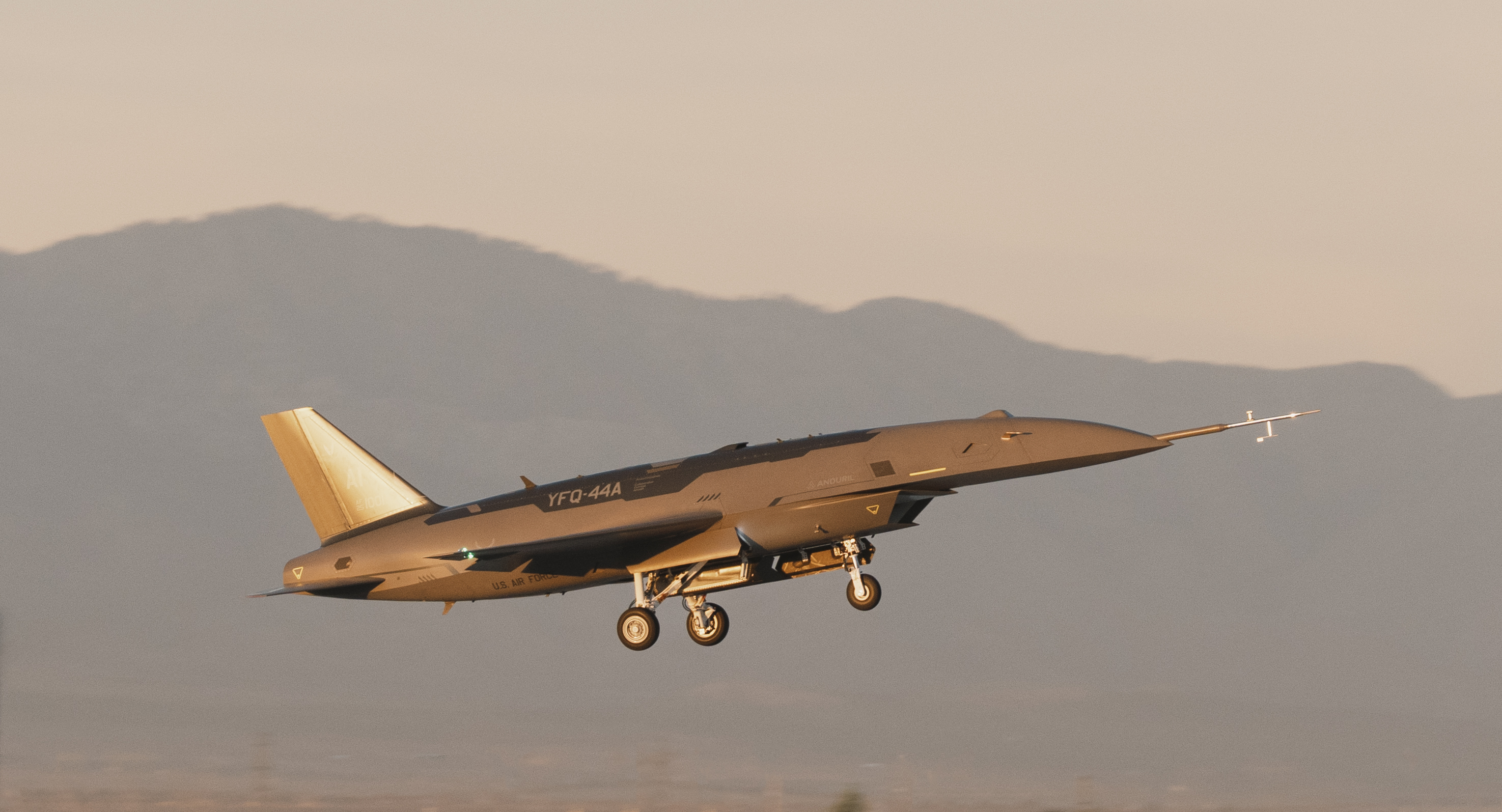
The CCA aircraft are unmanned systems powered by jet engines that are designed to maneuver and fly alongside human pilots performing a variety of mission sets, including reconnaissance, air-to-ground and air-to-air combat.
Last July, the Air Force carried out an exercise in which fighter pilots maneuvered two Kratos XQ-58A Valkyrie drones in cohesion with an F-16C Fighting Falcon and an F-15 Strike Eagle.
The U.S. Navy is also exploring CCA technology, awarding contracts to Anduril, Lockheed Martin, General Atomics, Boeing and Northrop Grumman to develop drone aircraft capable of being launched from aircraft carriers.
Zita Ballinger Fletcher previously served as editor of Military History Quarterly and Vietnam magazines and as the historian of the U.S. Drug Enforcement Administration. She holds an M.A. with distinction in military history.