US Army to debut FPV Bumblebee V2 drone interceptor next month
AI Analysis
The U.S. Army will begin testing the Bumblebee V2 drone interceptor in March, following a $5.2 million contract with Perennial Autonomy. This first-person view drone uses AI to identify and physically neutralize enemy drones, offering a low-collateral, cost-effective counter-UAS solution for urban and battlefield environments.
Key Takeaways
- The U.S. Army’s Global Response Force will assess the Bumblebee V2 drone interceptor starting in March 2024.
- The Bumblebee V2 is a first-person view (FPV) drone equipped with AI for autonomous drone-on-drone interception via physical collisions.
- The $5.2 million contract with Perennial Autonomy was awarded on January 30, 2024, with deliveries beginning next month.
- The system is NDAA-compliant, ensuring it meets U.S. regulations for foreign component restrictions.
- Testing will take place at the Lt. Gen. James M. Gavin Joint Innovation Outpost at Fort Bragg, a facility for military, academic, and private sector collaboration.
Why It Matters
The Bumblebee V2 represents a significant advancement in counter-UAS technology, providing a kinetic, low-collateral solution to neutralize drone threats in urban and battlefield settings. Its NDAA compliance and cost-effectiveness make it a viable option for immediate deployment, addressing the growing threat of small unmanned aerial systems in modern warfare.
The U.S. Army’s Global Response Force will begin assessing the Bumblebee V2 drone interceptor in March following a $5.2 million contract award inked on January 30 by the Pentagon.
The Defense Department’s Joint Interagency Task Force 401 announced the agreement with Perennial Autonomy on February 4, which will see deliveries of the Bumblebee V2 start next month.
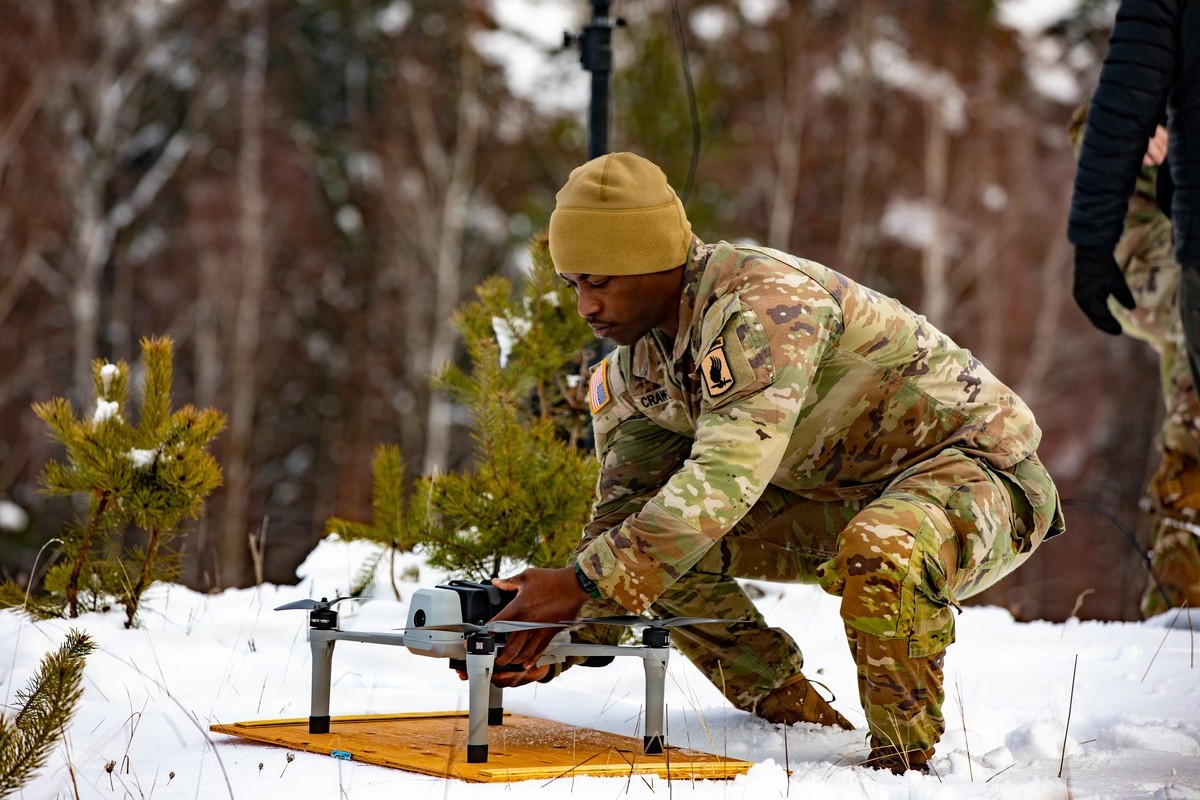
The Bumblebee V2, a first-person view drone with four rotors, acts as its own drone hunter-killer system. Advanced artificial intelligence software enables it to identify other unmanned aerial vehicles and engage them in combat. It attacks other drones and knocks them out of the sky with a direct physical collision.
“This decision puts kinetic [counter-small] UAS capability into the hands of our troops immediately,” Army Brig. Gen. Matthew Ross, JIATF-401 director, said in a statement.
“The Bumblebee V2 provides a cost-effective, reliable interceptor that can neutralize threats without endangering our own forces or surrounding infrastructure. On the modern battlefield, where drones are a constant threat, having a low-collateral kinetic option is not just an advantage; it is increasingly becoming essential for protecting our forces.”
Direct physical strikes on unmanned aerial vehicles, known as “hard kills,” can produce a blast radius and scatter sharp debris when munitions are used.
With a drone-on-drone strike, the Bumblebee minimizes these risks. Having one flying drone tackle another eliminates the need for bullets and potentially harmful explosions. This potential could see the Bumblebee used efficiently in urban areas.
Additionally, the system is compliant with updated regulations in the National Defense Authorization Act, which has strict requirements for the use of foreign components. Drones with NDAA compliance, such as the HANX drone developed by the U.S. Marines, can be adopted for military use with immediate effect.
The Army’s Global Response Force will assess the system in support of the Lt. Gen. James M. Gavin Joint Innovation Outpost, a new facility opened at Fort Bragg on Jan. 3 to bring together soldiers, academics and private industry to develop and test new technology.
Zita Ballinger Fletcher previously served as editor of Military History Quarterly and Vietnam magazines and as the historian of the U.S. Drug Enforcement Administration. She holds an M.A. with distinction in military history.