Pentagon let CBP use anti-drone laser before FAA closed El Paso airspace: Report
AI Analysis
The Pentagon authorized U.S. Customs and Border Protection (CBP) to deploy an anti-drone laser near Fort Bliss, Texas, to counter cartel drone incursions, prompting the FAA to temporarily close El Paso airspace. The incident highlights coordination challenges between the FAA and the Department of Defense (DoD) in managing counter-UAS operations near civilian airspace.
Key Takeaways
- The Pentagon allowed CBP to use an anti-drone laser system near Fort Bliss without prior FAA coordination.
- The FAA temporarily closed El Paso airspace, citing safety concerns for commercial flights.
- The closure was linked to countering Mexican cartel drones, which are increasingly used for drug trafficking and surveillance.
- Cartel drone incursions along the U.S.-Mexico border are frequent, with over 27,000 detected in six months of 2024.
- The incident underscores ongoing coordination issues between the FAA and DoD in managing airspace and counter-UAS operations.
Why It Matters
This incident highlights the growing threat of cartel drones along the U.S.-Mexico border and the need for effective counter-UAS measures. It also reveals critical gaps in interagency coordination, which could have broader implications for national security and airspace management during counter-drone operations.
The Pentagon allowed U.S. Customs and Border Protection to use an anti-drone laser earlier this week, leading the Federal Aviation Administration to suddenly close the airspace over El Paso, Texas, on Wednesday, according to two people familiar with the situation who spoke on the condition of anonymity to discuss sensitive details.
The confusing arc of events began as the FAA announced it was shutting down all flight traffic over the city on the U.S.-Mexico border for 10 days, stranding some travelers, but the closure ended up only lasting a few hours. The Trump administration said it stemmed from the FAA and Pentagon working to halt an incursion by Mexican cartel drones, which are not uncommon along the southern border.
One of the people said the laser was deployed near Fort Bliss without coordinating with the FAA, which decided then to close the airspace to ensure commercial air safety. Others familiar with the matter said the technology was used despite a meeting scheduled for later this month between the Pentagon and the FAA to discuss the issue.
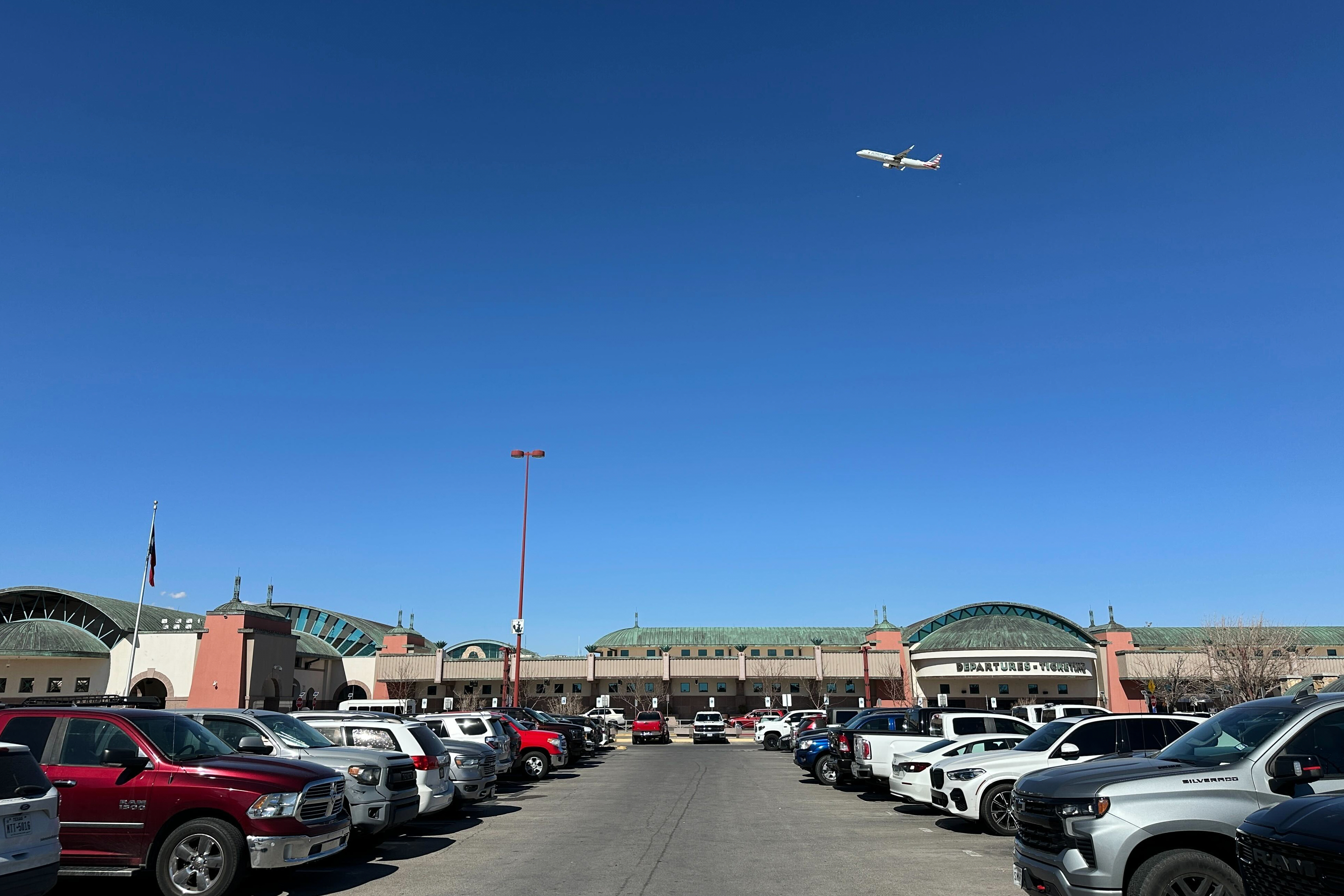
While the restrictions were short-lived in the city of nearly 700,000 people, it is unusual for an entire airport to shut down even for a short time. Stranded travelers with luggage lined up at airline ticket counters and car rental desks before the order was lifted.
Normal flights resumed after seven arrivals and seven departures were canceled. Some medical evacuation flights also had to be rerouted.
Jorge Rueda, 20, and Yamilexi Meza, 21, of Las Cruces, New Mexico, had their morning flight to Portland, Oregon, canceled, so they were losing part of their Valentine’s Day weekend trip.
Rueda said he was glad that “10 days turned into two hours.” They were booked on an evening flight out of El Paso.
The investigation into last year’s midair collision near Washington, D.C., between an airliner and Army helicopter that killed 67 people highlighted how the FAA and Pentagon have not always worked well together.
The National Transportation Safety Board said the FAA and the Army did not share safety data with each other about the alarming number of close calls around Reagan National Airport and failed to address the risks.
Democratic Sen. Tammy Duckworth of Illinois, a former Army helicopter pilot who serves on committees focused on aviation and the armed services, said the issue Wednesday was the latest example of “the lack of coordination that’s endemic in this Trump administration.”
Senate Commerce Committee Chairman Ted Cruz, R-Texas, said he would request a briefing from the FAA on the incident.
Rep. Veronica Escobar, a Democrat whose district includes El Paso, said neither her office nor local officials received any advance notice of the closure. After it was lifted, she said “the information coming from the federal government does not add up.”
“I believe the FAA owes the community and the country an explanation as to why this happened so suddenly and abruptly and was lifted so suddenly and abruptly,” Escobar said at a news conference.
Transportation Secretary Sean Duffy said earlier that the airspace was closed as the Defense Department and the FAA halted an incursion by Mexican cartel drones and “the threat has been neutralized.”
Officials at the Department of Homeland Security, FAA and Department of Transportation did not immediately respond to requests for comment. A Trump administration official insisted the agencies were in lockstep to protect national security and pointed to Duffy’s statement. The Pentagon said it had nothing to add to its statement that largely mirrored Duffy’s.
Republican Rep. Tony Gonzales, whose congressional district covers an area that stretches about 800 miles (1,300 kilometers) along Texas’ border with Mexico, said cartel drone sightings are common.
“For any of us who live and work along the border, daily drone incursions by criminal organizations is everyday life for us. It’s a Wednesday for us,” Gonzales said.
Steven Willoughby, deputy director of the counter-drone program at the Department of Homeland Security, told Congress in July that cartels are using drones nearly every day to transport drugs across the border and surveil Border Patrol agents. More than 27,000 drones were detected within 500 meters (1,600 feet) of the southern border in the last six months of 2024, he said, mostly at night.
What is “extremely rare” is the closure of an entire airport over a security issue, according to a former chief security officer at United Airlines.
Officials usually will try to take security measures to isolate the risk if a specific plane or airline is threatened rather than shut down the airport, said Rich Davis, now a senior security adviser at risk mitigation company International SOS.