Major Lukoil Refinery in Volgograd Catches Fire as 108 Drone Barrage Strikes Russia
AI Analysis
A massive drone attack involving 108 UAVs targeted Russia, with significant damage reported at the Lukoil Volgograd refinery. This marks the ninth attack on the facility since the start of the war, highlighting Ukraine's continued focus on degrading Russian energy infrastructure.
Key Takeaways
- A 108-drone barrage struck multiple regions in Russia, including Volgograd and Rostov.
- The Lukoil Volgograd refinery, a key oil processing facility, caught fire due to the attack.
- This is the ninth recorded drone strike on the refinery since the start of the war.
- Russia's Ministry of Defense claimed to have destroyed all 108 drones, with 49 intercepted over Volgograd.
- Ukraine has systematically targeted Russian oil infrastructure, significantly impacting refining output and pipeline supplies.
Why It Matters
The attack underscores the increasing use of UAVs to target critical infrastructure, a tactic aimed at disrupting Russia's energy production and logistics. It also highlights the challenges faced by Russian air defense systems in countering large-scale drone swarms, raising questions about their effectiveness and adaptability.
Lukoil’s Volgograd oil refinery in Russia was reportedly damaged in an overnight drone attack on Wednesday, Feb. 11.
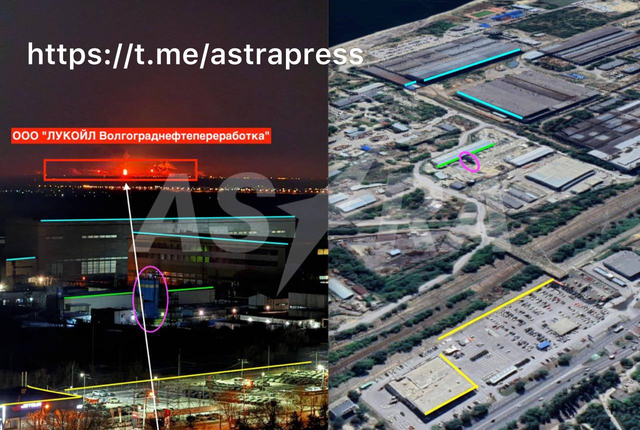
The Telegram channel Astra conducted an OSINT analysis of eyewitness footage.
Follow our coverage of the war on the @Kyivpost_official.
Early Wednesday morning residents of Volgograd reported multiple explosions. Regional Governor Andrei Bocharov later confirmed a fire at a refinery in the southern part of the city.
“Russian Ministry of Defense air defense units are repelling a massive terrorist attack by unmanned aerial vehicles (UAVs) on energy and civilian infrastructure facilities in the Volgograd Region,” Bocharov wrote.
He said there were no casualties from the refinery fire.
“Emergency services and municipal authorities are searching for and eliminating possible UAV wreckage,” he added.
According to Astra’s analysis, the Lukoil-Volgogradneftepererabotka refinery in Volgograd’s Krasnoarmeysky District was struck and caught fire.
The facility is the largest oil refinery in the Volgograd Region and one of Lukoil’s key assets. It processes more than 15 million tons of oil annually and specializes in deep refining, producing gasoline, diesel and aviation fuel, fuel oil, bitumen, and other petroleum products.
The refinery has previously been targeted multiple times. ASTRA estimates this was at least the ninth attack on the site since the start of Russia’s full-scale war.
Earlier strikes were recorded in February 2024, and in 2025 in January (twice), February, March, August 14, August 16, and November.
Rostov Region Governor Yuri Slyusar also reported damage across 12 cities and districts, including a power line support and a residential building, with no casualties.
Russia’s Ministry of Defense claimed that 108 drones were destroyed overnight, including 49 over the Volgograd Region and 29 over the Rostov Region.
Ukraine has not commented on the attack.
Ukraine began systematically targeting Russian refineries and oil infrastructure in August 2025. Bloomberg estimates Ukrainian forces carried out around 120 such attacks last year alone.
Amid these strikes, Russian media report that pipeline oil supplies to refineries have fallen to a 15-year low. Total refining in Russia in 2025 dropped by 1.7% to 262.3 million tons. According to insurance broker Mains, Russian oil producers have suffered losses exceeding 1 trillion rubles.
Julia Struck is a Deputy Head of News and correspondent for Kyiv Post who has previously worked as a parliamentary editor, journalist, and news editor. She has specialized in covering the work of the Ukrainian parliament, government, and law enforcement agencies.