Russia Repurposes Gerbera Drone as FPV Carrier for First Time
AI Analysis
Russia has repurposed the Gerbera drone as a carrier for FPV attack drones, potentially extending the range of kamikaze drone strikes and complicating Ukrainian air defense. This adaptation highlights Russia's ongoing efforts to test low-cost unmanned platforms for operational flexibility.
Key Takeaways
- Russia modified the Gerbera drone to carry FPV attack drones, marking its first recorded use in this role.
- The Gerbera drone is lightweight, cost-effective, and typically used as a decoy, attack drone, or for electronic intelligence tasks.
- This adaptation could increase the range of kamikaze drones by conserving battery power during transit.
- Russia continues to test and deploy low-cost unmanned systems to challenge Ukrainian air defenses.
- In January, Russia also introduced the Geran-5 attack drone and repurposed RM-48U target missiles to overwhelm Ukrainian defenses.
Why It Matters
The repurposing of the Gerbera drone as an FPV carrier demonstrates Russia's ability to innovate with low-cost solutions to extend operational reach and strain Ukrainian air defenses. This development underscores the evolving nature of drone warfare and the increasing complexity of counter-UAS operations in the conflict.
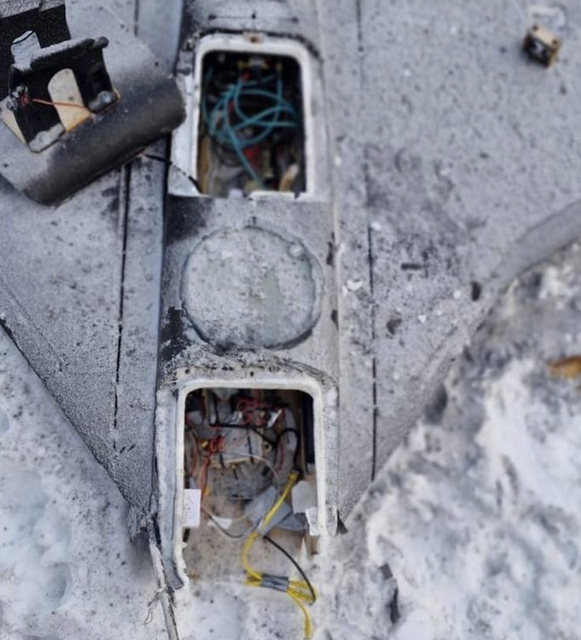
Russia has modified the multifunctional Gerbera drone to use it as a carrier for a first-person view (FPV) drone, Serhii Beskrestnov, the Ukrainian military radio-technology expert and Defense Ministry advisor said.
On Tuesday, Feb. 3, Beskrestnov, also known as “Flash,” posted images of the wreckage and said that it was the first recorded usage of the Gerbera Unmanned Aerial Vehicle (UAV) for such purposes.
Follow our coverage of the war on the @Kyivpost_official.
He said the system may have been set up either to conduct strikes or to carry out reconnaissance. The drone itself was not recovered at the crash site.
The Gerbera drone, built around a lightweight foam airframe, is typically deployed as a decoy to strain Ukrainian air defenses, as a one-way attack drone carrying an explosive payload, or for electronic intelligence tasks such as identifying air defense positions and documenting the results of other UAV strikes.
The platform is cheap, simple to produce and launch, and entered service in 2024.
The adaptation could enable Russia to send kamikaze drones over significantly longer ranges without depleting battery power during transit.
It also underscores Russia’s ongoing testing of low-cost unmanned platforms to expand operational reach and further challenge air defense systems.
“It is unclear how widely this case will be applied going forward, but everyone should be informed,” Beskrestnov wrote on Telegram.
In January, Ukraine’s military intelligence revealed that Russia had debuted a new attack drone, the Geran-5, describing it as a faster, longer-range jet-powered weapon relying on foreign parts.
The drone, which had been used in combined aerial attacks for the first time in early 2026, weighs some 850 kilograms (1,874 pounds) and can fly at speeds of 600 kilometers (373 miles) per hour, a drastic improvement compared to earlier Geran drones.
It can also stay airborne for two hours at altitudes of up to 6 kilometers (3.7 miles) and strike targets almost 1,000 kilometers (620 miles) away.
It was also reported in January that Russia was using decommissioned RM-48U target practice missiles as offensive weapons to add volume to Russian bombardments in an effort to overwhelm Kyiv’s air defenses.
Kyiv Post is Ukraine’s first and oldest English news organization since 1995. Its international market reach of 97% outside of Ukraine makes it truly Ukraine’s Global – and most reliable – Voice.