Russian cargo plane arrives in Cuba, echoing frantic Caracas buildup
AI Analysis
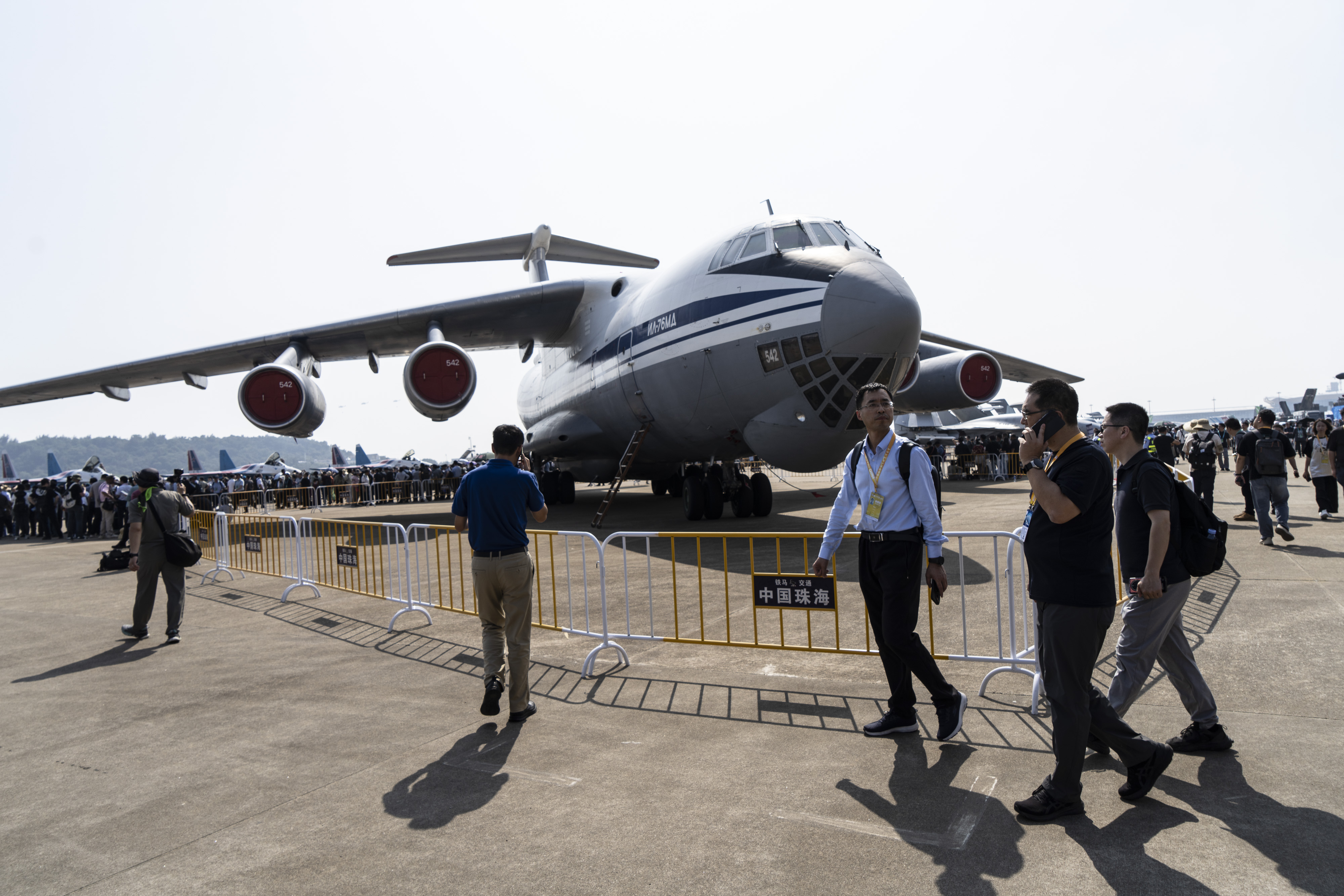
A Russian Il-76 cargo plane, operated by a sanctioned airline, has arrived in Cuba, potentially delivering military equipment amidst rising geopolitical tensions. The mission mirrors a previous operation in Venezuela, where Russian air defense systems failed to repel a U.S. raid.
Key Takeaways
- A Russian Il-76 cargo plane landed at San Antonio de los Baños Air Base near Havana, Cuba, after a multi-stop journey from Russia.
- The aircraft is operated by Aviacon Zitotrans, a Russian government-affiliated airline sanctioned for transporting military equipment globally.
- The same aircraft previously delivered Pantsir-S1 and Buk-M2E air defense systems to Venezuela during heightened tensions with the U.S.
- Russia and Cuba signed a military cooperation agreement in 2025, enabling joint operations and equipment transfers.
- Russian-made air defenses in Venezuela failed to repel a U.S. raid, highlighting potential weaknesses in their deployment and operation.
Why It Matters
This development underscores Russia's continued military support for its allies in Latin America, potentially escalating tensions with the U.S. The delivery of air defense systems or other military equipment to Cuba could signal preparations for bolstering regional defenses or deterring U.S. influence, raising concerns about the proliferation of advanced systems in the Western Hemisphere.
GRAZ, Austria — A heavy Russian cargo plane that previously brought air defense systems to Venezuela arrived at a military airfield near Havana, Cuba’s capital, late on Sunday, flight records seen by Defense News show.
The Ilyushin Il-76, operated by the Russian government-affiliated airline Aviacon Zitotrans, made several stops on its way to Cuba, including in the Dominican Republic, Mauritania, and Algeria, after departing from St. Petersburg by way of Sochi, Russia, in late January. It landed at the San Antonio de los Baños Air Base in Cuba, about 50 kilometers south of Havana, on Sunday evening local time.
The same aircraft, registered RA-78765, flew to Venezuela, Nicaragua, and Cuba in late October 2025 amid brewing tensions between Caracas and Washington. After the U.S. military intervention in Venezuela on Jan. 3, Cuba has increasingly found itself in the crosshairs of U.S. President Donald Trump. The pressure intensified on Jan. 29, when Trump issued an executive order declaring Cuba a “national emergency” and imposing tariffs on any country supplying Cuba with oil unless Havana aligns with U.S. national security and foreign policy.
An Il-76 can transport up to 50 tons of cargo or up to 200 people. Aircraft of this type are known to have delivered small arms, military supplies and even mercenaries on Russia’s behalf in the past. Aviacon Zitotrans is well-documented as flying military cargo and has been sanctioned by multiple countries for these activities. The U.S., Canada and Ukraine have all sanctioned the company for its role in supporting Russia’s military adventures.
“Aviacon Zitotrans has shipped military equipment such as rockets, warheads, and helicopter parts all over the world,” the U.S. Treasury Department said in January 2023, when it added the company to the American sanctions list. “Aviacon Zitotrans has shipped defense materiel to Venezuela, Africa, and other locations,” the agency continued. It has also been involved in exporting Russian-made weapons to buyers globally for the state-owned company Rosoboronexport.
It is unclear what cargo the aircraft is carrying on its current journey. When the same aircraft flew to Venezuela in advance of the U.S. strikes, it delivered Pantsir-S1 short-range and Buk-M2E medium-range air defense systems to Caracas, according to Russian lawmaker Alexei Zhuravlev and Russian state-owned media. Dimensions and weight of both systems make this plausible, although the Buk would likely have to be disassembled due to its height.
The Il-76’s current mission has striking similarities to its earlier flight to Venezuela, including several stops along the way in northern Africa and the backdrop of rapidly rising geopolitical tensions surrounding a Russian-aligned country in Latin America.
In Venezuela, Russian-made air defenses failed to protect against the U.S. raid that captured strongman president Nicolás Maduro, which experts have attributed to user error, lack of preparation and overwhelming U.S. capabilities.
Russia and Cuba signed and ratified a new military cooperation agreement in March 2025, which established the legal framework for joint military operations, training exercises, the exchange of military specialists, consultations, and the supply of military equipment.
Linus Höller is Defense News' Europe correspondent and OSINT investigator. He reports on the arms deals, sanctions, and geopolitics shaping Europe and the world. He holds a master’s degrees in WMD nonproliferation, terrorism studies, and international relations, and works in four languages: English, German, Russian, and Spanish.