Russian Missile Bombardment Exploits Ukraine Air Defense Ammo Shortages
AI Analysis
Ukraine's air defense capabilities are being severely strained due to ammunition shortages, leading to reduced interception rates of Russian cruise missiles and drones. This has allowed Russia to inflict significant damage on Ukraine's power grid and heating infrastructure during winter, exacerbating civilian hardships.
Key Takeaways
- Ukraine's air defense interception rates for Russian cruise missiles have dropped from 93% in mid-2025 to approximately 33% in January 2026.
- Russian missile and drone strikes have severely damaged Ukraine's power grid, leaving millions without heating during winter.
- Ukraine faces critical shortages of PAC-3 interceptor missiles for Patriot systems and AIM-9/AIM-120 missiles for F-16 fighters.
- Russia launched 3,847 Shahed drones in January 2026, with Ukraine intercepting 93% of them, but missile interception rates remain far lower.
- Delays in NATO and European payments for US-manufactured air defense munitions are contributing to Ukraine's ammunition shortages.
Why It Matters
The reduced effectiveness of Ukraine's air defense systems highlights the critical role of sustained ammunition supplies in countering missile and drone threats. This situation underscores the strategic importance of timely international support and the vulnerability of civilian infrastructure in modern warfare.
Russia’s ongoing missile and drone bombardment has shut down much of Ukraine’s power grid and heating infrastructure because air defense units are short of ammunition to shoot back with, especially at usually easy-to-destroy cruise missiles, a Kyiv Post review of Ukrainian Air Force intercept data found.
Kyiv Post analysis of published Ukrainian Air Force records for January 2026 found totals of Russian attack weapons detected by Ukraine’s air defenses, as well as the numbers claimed destroyed or otherwise neutralized.
Follow our coverage of the war on the @Kyivpost_official.
These figures paint a picture of a Ukrainian national air defense network capable of knocking down about one of three incoming Russian missiles, and a very high percentage of attacking drones:
Jan. 1-Jan. 31, 2026:
Ballistic missiles (ground-launched Islander-M, NK-23 + S-300/400 anti-aircraft) – 54 fired, 21 stopped
Zircon hypersonic missiles (air-launched) – three fired, none stopped
Oreshnik ICBM/heavy ballistic missile (ground-launched) – one fired, none stopped
Iskander-K cruise missiles (ground-launched) – seven fired, five stopped
X-22 and X-32 cruise missiles (air-launched) – 13 fired, nine stopped
X-59 cruise missiles (air-launched) – one fired, one stopped
X-101/X-55 cruise missile (air-launched) – 15 fired, one stopped
Kaliber cruise missiles (ship-launched) – 22 fired, 10 stopped
Shahed kamikaze drones – 3,847 launched, 3,559 stopped
Unidentified drones – 93 launched, 93 stopped
In the worst sustained Russian attack on Ukrainian civilian infrastructure of the war, waves of Kremlin weapons penetrating Ukraine’s air defenses had, by early February, knocked off-line roughly half of Ukraine’s national power grid, and left millions of civilians in unheated apartments, particularly in the capital Kyiv.
As damaging as it was, the strike packages in that month-long January Kremlin campaign to force the maximum number of Ukrainians to live in cold, unheated homes, during the coldest months of the winter, contained about half the missiles and drones launched by Russia in its most intense bombardments of Ukrainian infrastructure in the past.
The single most savage long-term Russian missile and drone assault of the war, per reported figures, took place from Aug. 21, 2025, through mid-Sept. 20, 2025. Over that 30-day bombardment window, according to figures published by the Air Force, the Kremlin launched a reported 244 missiles of all types at targets inside Ukraine - more than twice the number of weapons launched by Russia against Ukraine (114) in January 2026.
The single biggest one-night strike of the entire war – 823 attack drones and 13 missiles of various types, took place at the peak of that campaign, on Sept. 7, 2025.
Long-range Russian drone attacks, likewise, were almost twice the volume in the 30-day August-September 2025 period, as compared with January 2026 (5,685 vs. 3,847). Overall, open-source numbers for that attack period, compiled and reviewed by Kyiv Post, bore out the basic reality that the Kremlin bombardment campaign in summer 2025 was about twice as big as the one currently in progress:
Aug. 21-Sept. 20, 2025:
Ballistic missiles (ground-launched Islander-M, NK-23 + S-300/400 anti-aircraft) – 43 fired, 15 stopped
Iskander-K cruise missiles (ground-launched) – 13 fired, eight stopped
Aeroballistic Kinzhal missile (air-launched) – two fired, one stopped
X-22 and X-32 cruise missiles (air-launched) – 13 fired, nine stopped
X-59 cruise missiles (air-launched) – one fired, one stopped
X-101/X-55 cruise missile (air-launched) – 158 fired, 133 stopped
Kaliber cruise missiles (ship-launched) – 14 fired, 12 stopped
Unknown missile (launch means UNK) – one fired, none stopped
Shahed kamikaze drones – 3,847 launched, 3,559 stopped
Unidentified drones – 119 launched, 118 stopped
The main difference between summer 2025 and winter early 2026, Kyiv Post review of Air Force and OSINT data shows, was the efficiency with which Armed Forces of Ukraine (AFU) units stopped incoming Russian weapons, particularly Russian cruise missiles.
In the August-September 30-day engagement period, Ukrainian air defense success at intercepting ballistic missiles was roughly 33%: Russia launched close to 60 missiles, and the Ukrainians shot down or decoyed about one out of three of them. The Ukrainian intercept rate for cruise missiles carrying, on average, half-ton warheads, over the same period, was, however, a comparatively excellent 93%.
In January 2026, on the ballistic missile front, Ukraine’s air defense units, as six months before, managed to shoot down a little less than one in three incoming ballistic missiles.
However, the numbers for cruise missiles had shifted dramatically and sharply in Russia’s favor. In August-September, only a little more than one in 20 Russian cruise missiles was able to break through Ukrainian air defenses. In January 2026, the shoot-down/intercept rate had fallen to about 33-35% of all cruise missile engagements, according to the data.
Ukrainian President Volodymyr Zelensky, in January, repeatedly made clear that his country’s air defenders don’t have enough ammunition with which to engage incoming Russian ballistic and cruise missiles.
In Jan. 20 comments to Ukrainian media, he singled out the US-made PAC-3 interceptor missile, one of the few missiles in the world capable of engaging a ballistic missile, and said his country has the Patriot air defense systems that launch the PAC-3 but faces a critical shortage of the actual interceptor missiles.
In Jan. 15 comments to Kyiv media following meetings with Czech President Petr Pavel, Zelensky said: “Until this morning, we had several air defense systems without missiles at all.”
On Jan. 29, Zelensky explicitly blamed delays in deliveries of US-manufactured air defense munitions – including PAC-3 interceptor missiles for Patriot systems but also smaller US-made ground-to-air and air-to-air missiles widely used to engage incoming cruise missiles – on European/NATO countries failing to make timely payments to the US for new missile deliveries.
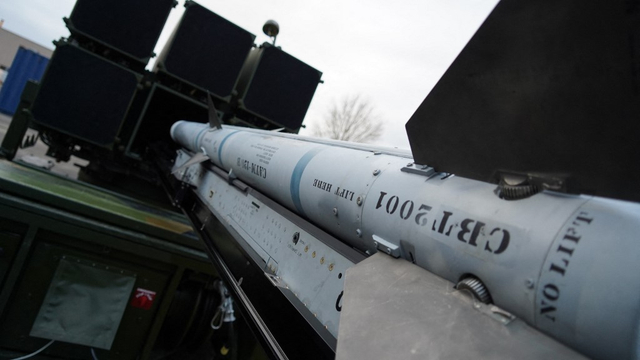
US-made F-16 fighter jets operated by the Ukrainian Air Force have, for months, suffered shortages of the efficient and relatively cheap AIM-9 missile and the longer-range AAMRAM missile, the main weapons with which Ukrainian Air Force elements had engaged incoming slow-flying Russian cruise missiles in the past. In a series of engagements in December 2024, a Ukrainian F-16 pilot reportedly achieved a record single-sortie kill count, destroying six cruise missiles using four air-to-air missiles and the aircraft’s onboard cannon.
Stefan Korshak is the Kyiv Post Senior Defense Correspondent. He is from Houston Texas, is a Yalie and since the mid-1990s has worked as correspondent/photographer for newswire, newspapers, television and radio. He has reported from five wars but most enjoys doing articles on wildlife and nature. You can read his weekly blog on the Russo-Ukraine War on Facebook, Substack and Medium. His new book on the 2022 Siege of Mariupol is available on Amazon UK and Amazon US.