More Russian Drones Spotted with Starlink
AI Analysis
Russia is reportedly equipping more drones, including BM-35 UAVs, with Starlink satellite terminals to extend their range and improve navigation, bypassing electronic warfare measures. This development raises concerns about the potential adaptation of Starlink for Shahed-style drones, which could enhance Russia's strike capabilities in Ukraine.
Key Takeaways
- Russian drones, including BM-35 UAVs, are being equipped with Starlink satellite terminals to extend operational range and improve navigation.
- Starlink-enabled drones are reportedly resistant to electronic warfare, posing a significant challenge to Ukrainian defenses.
- Russia has previously used Starlink on Molniya drones, extending their range from 50 km to over 230 km.
- Concerns are rising about the potential adaptation of Starlink for Shahed-style drones, which are widely used against Ukrainian infrastructure.
- Russia is acquiring Starlink terminals through third countries, bypassing SpaceX's restrictions and international sanctions.
Why It Matters
The integration of Starlink technology into Russian drones significantly enhances their range and operational effectiveness, potentially neutralizing electronic warfare countermeasures. This development could escalate the drone warfare threat to Ukrainian forces and infrastructure, requiring urgent counter-UAS innovations and policy responses to address this emerging capability.
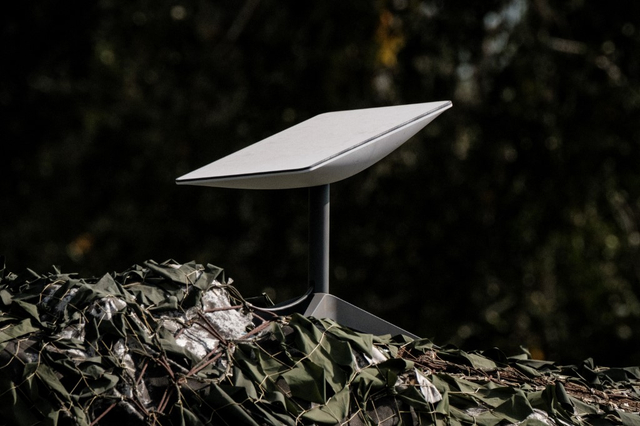
Russia is reportedly equipping more drones with Starlink satellite terminals to extend their range.
Russia’s use of Starlinks – owned by US firm SpaceX – has long been a source of concern. Space X has denied operating in Russia and enforces geolocation restrictions blocking access there.
Follow our coverage of the war on the @Kyivpost_official.
However, Ukrainian mil-blogger Serhii “Flash” Beskrestnov wrote on Thursday that more Russian unmanned aerial vehicles (UAVs) are now being spotted with the terminals.
“Today, for the first time, the fact of controlling a BM-35 UAV via Starlink was recorded,” he wrote, attaching images that show a downed drone connected to the drone’s Styrofoam body.
Beskrestnov described the report as a “big problem” for Ukrainian troops as he claimed Starlink-aided navigation is “not susceptible to electronic warfare.”
“This is a big problem for us. UAVs with this type of control are not susceptible to electronic warfare and accurately hit the target under the control of an operator from the Russian Federation,” he added.
Beskrestnov cautioned that similar combinations were seen on Russia’s Molniya fixed-wing drone, and Moscow’s expanding use of Starlink means they could soon be used to enhance Shahed-style drones, Russia’s weapon of choice against Ukrainian infrastructure.
“Before that, Starlink was only found on the Molniya UAV. When Shaheds will fly on Starlink, it is only a matter of time and, perhaps, even days, not months,” he wrote.
The Institute for the Study of War (ISW), in its Jan. 13 update, noted that reports of Molniya drones equipped with Starlink began surfacing in December 2025, saying the combination extended the drones’ range from 50 kilometers (31 miles) to over 230 kilometers (143 miles).
The ISW called it part of Russia’s effort to “scale up the production and innovation of inexpensive strike drones that have succeeded in generating favorable battlefield effects for Russian forces.”
Recent reports also indicate that Russian infantry began strapping Starlink terminals to horses.
Starlink, which allows users to access the internet via satellites in orbit, has been a key tool for Ukrainian troops operating in frontline areas without cell tower coverage.
Moscow has been able to bypass international sanctions and acquire Starlink terminals for its war effort in Ukraine by purchasing them from third countries, despite SpaceX repeatedly denying that it does business in Russia.
“Starlink is not active in Russia, meaning service will not work in that country. SpaceX has never sold or marketed Starlink in Russia, nor has it shipped equipment to locations in Russia. If Russian stores are claiming to sell Starlink for service in that country, they are scamming their customers,” the company wrote in a February 2024 update.
Leo Chiu is a journalist and editor based in Eastern Europe since 2015. He has witnessed two presidential elections in Belarus and traveled widely to conflict zones and contested regions, producing reporting that bridges the gap between major developments and local realities.