Fishing Rod: Meet Ukrainian Paratroopers’ MacGyvered Drone Interceptor
AI Analysis
Ukrainian paratroopers have developed an improvised counter-drone method by attaching fishing rods to their UAVs to physically intercept Russian drones. This highlights the growing trend of innovative and low-cost solutions in drone warfare as both sides adapt to evolving threats on the battlefield.
Key Takeaways
- Ukrainian troops are using fishing rods attached to drones to physically intercept Russian UAVs.
- Footage shows successful interceptions of both fixed-wing and quadcopter drones using this method.
- The tactic reflects a shift toward physical interception as electronic warfare becomes less effective against advanced drones.
- Ukrainian manufacturers are experimenting with drone-mounted shotguns and other physical countermeasures.
- Kyiv and London have partnered to produce OCTOPUS interceptor drones for larger strategic threats like Iranian Shahed drones.
Why It Matters
This development underscores the importance of adaptability and innovation in modern drone warfare, where low-cost, improvised solutions can effectively counter advanced threats. It also highlights the growing reliance on physical interception methods as electronic warfare faces limitations against newer drone technologies.
Ukrainian troops are now fishing for Russian drones – with a fishing rod attached to their own drones.
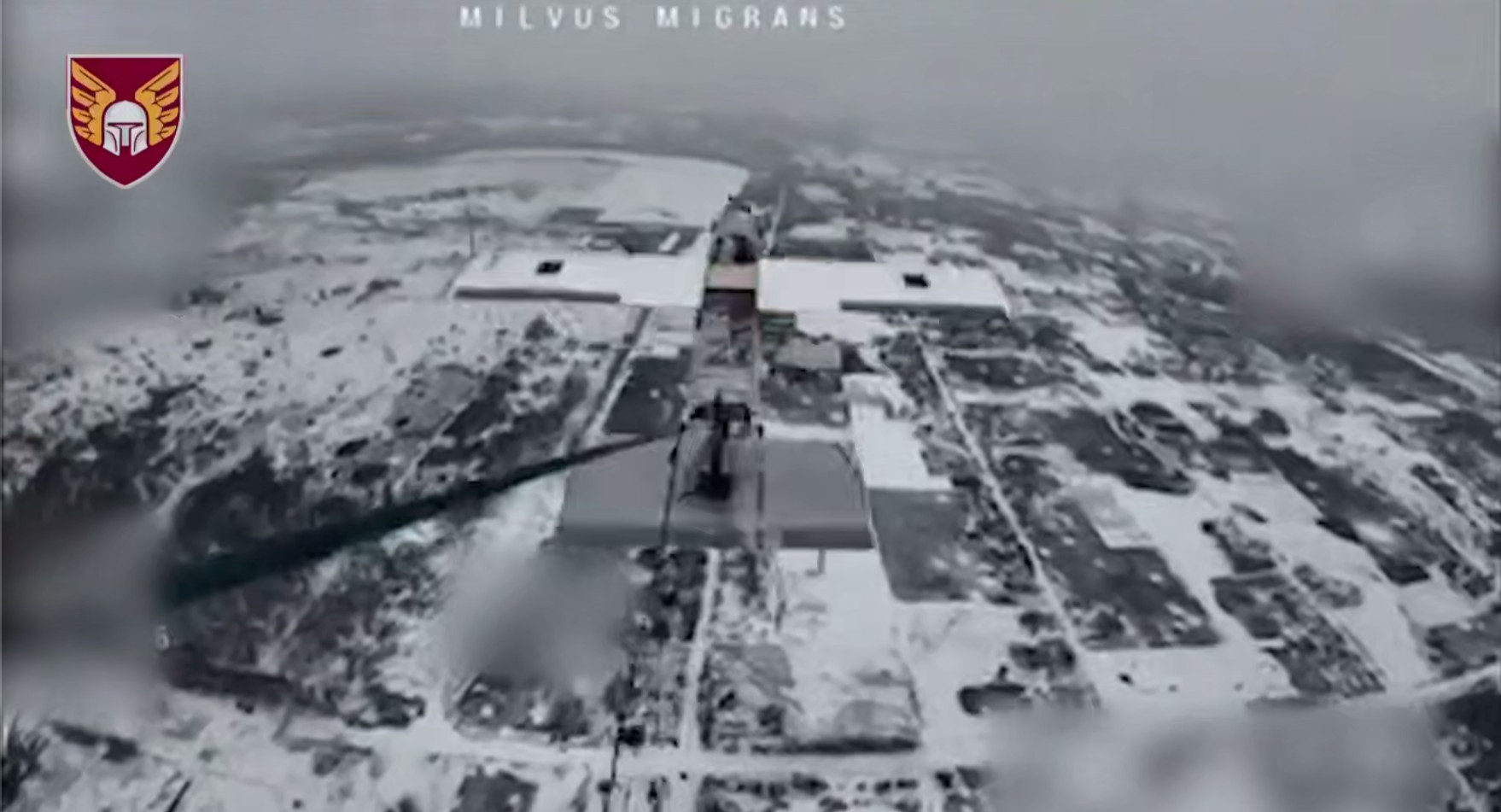
In footage released by Ukraine’s 46th Separate Airmobile Podilskaya Brigade on Sunday, the unit could be seen intercepting at least two Russian drones – one fixed-wing and one quadcopter – using a fishing rod attached to their own drones.
Follow our coverage of the war on the @Kyivpost_official.
Filmed through the drone’s first-person view (FPV) camera, the footage shows a fishing rod mounted on the drone, with a dangling cord that resembles a paracord rather than a standard nylon line. The Ukrainian drone then flies above its Russian target, the cord tangling with it and apparently causing it to crash.
“We would like to separately note the new capture of enemy drones in the air and the defeat of enemy armored vehicles,” the brigade wrote in its update accompanying the video.
The drone intercept footage was preceded by numerous clips showing the brigade’s FPV drones hitting Russian troops and equipment, including quad bikes and troops in concealment in the white, wintry Ukrainian countryside.
As drones proliferated on the Ukrainian battlefield, both Ukraine and Russia have come up with ways to counter the threat.
Earlier in the war, both sides relied on electronic warfare (EW) systems to either jam or spoof the drones’ electronics and communication systems. However, with the arrival of fiber-optic drones that are nearly immune to jamming and improved counter-EW measures, physically intercepting them became more widespread.
On the tactical level, the interceptor drones are roughly divided into expendable and reusable types. The former often functions by ramming itself into the threat, exploding and destroying in the process, whereas the latter often works by shooting down the threats.
3DTech, a Ukrainian manufacturer, experimented with a six-barreled recoilless shotgun put underneath a regular FPV quadcopter, while another manufacturer, Besomar, fitted their fixed-wing models with shotgun barrels.
Technari, an Odesa-based company, experimented with a jet-powered fixed-wing drone, also using shotguns to take down the drones.
In November 2025, Kyiv and London agreed to begin licensed production – estimated at 2,000 units per month for delivery – of the OCTOPUS interceptor drone at British industrial facilities, with the drones likely designed to engage larger, strategic-level drones such as the Iranian Shahed-type drones.