Dutch to cobble together mobile anti-drone system to plug C-UAS hole
AI Analysis
The Netherlands is developing a mobile counter-UAS system using off-the-shelf components to address immediate drone threats ahead of the delivery of Rheinmetall's Skyranger 30 in 2028. The initiative is part of a broader investment in counter-drone technologies, including radars, interceptor drones, and maritime hard-kill systems, in response to lessons learned from the Ukraine conflict and increasing drone incursions in Europe.
Key Takeaways
- The Netherlands is creating a mobile anti-drone system using wheeled armored vehicles and remote-controlled weapon stations as a stop-gap measure.
- This initiative is part of a €1 billion to €2.5 billion investment in counter-drone capabilities, including radars, interceptor drones, and vehicle-mounted systems.
- The Dutch Ministry of Defence is also planning to procure hard-kill C-UAS systems for naval vessels to address medium-range drone threats.
- The first delivery of Rheinmetall's Skyranger 30 systems is expected in 2028, but the mobile systems will remain in service afterward.
- European nations are increasingly concerned about unidentified drone activity, with incidents linked to Russian drones and threats to critical infrastructure.
Why It Matters
This development highlights the urgency among European nations to address the growing threat of drones, particularly in light of lessons from the Ukraine conflict. By investing in both interim and long-term counter-UAS solutions, the Netherlands is enhancing its ability to protect critical infrastructure, military assets, and personnel from evolving drone threats, while also contributing to NATO's collective defense posture.
PARIS – The Netherlands plans to cobble together an air-defense system by fitting a remote-controlled weapon system on wheeled armor to provide its infantry units with mobile anti-drone capacity, plugging a capability gap ahead of the first delivery of Rheinmetall’s Skyranger 30 in 2028.
The Dutch need counter unmanned aerial systems or C-UAS that can be delivered quickly in response to the growing drone threat, State Secretary for Defence Gijs Tuinman wrote in a letter to parliament on Monday. The new systems are part of €1 billion to €2.5 billion of additional spending on counter-drone equipment.
With drones now reportedly accounting for the majority of front-line casualties in Ukraine, European countries are scrambling for stop-gap measures to protect ground troops from the growing threat, ahead of the arrival of specialized equipment such as the Skyranger. France recently developed the Proteus anti-drone system, using a 1970s era 20mm anti-air cannon mounted on a 1980s four-wheel truck.
“The importance of counter-UAS capabilities for combating unmanned systems is considerable,” Tuinman wrote. “The Ministry of Defence is therefore investing in additional C-UAS resources and in this is incorporating lessons from the war in Ukraine.”
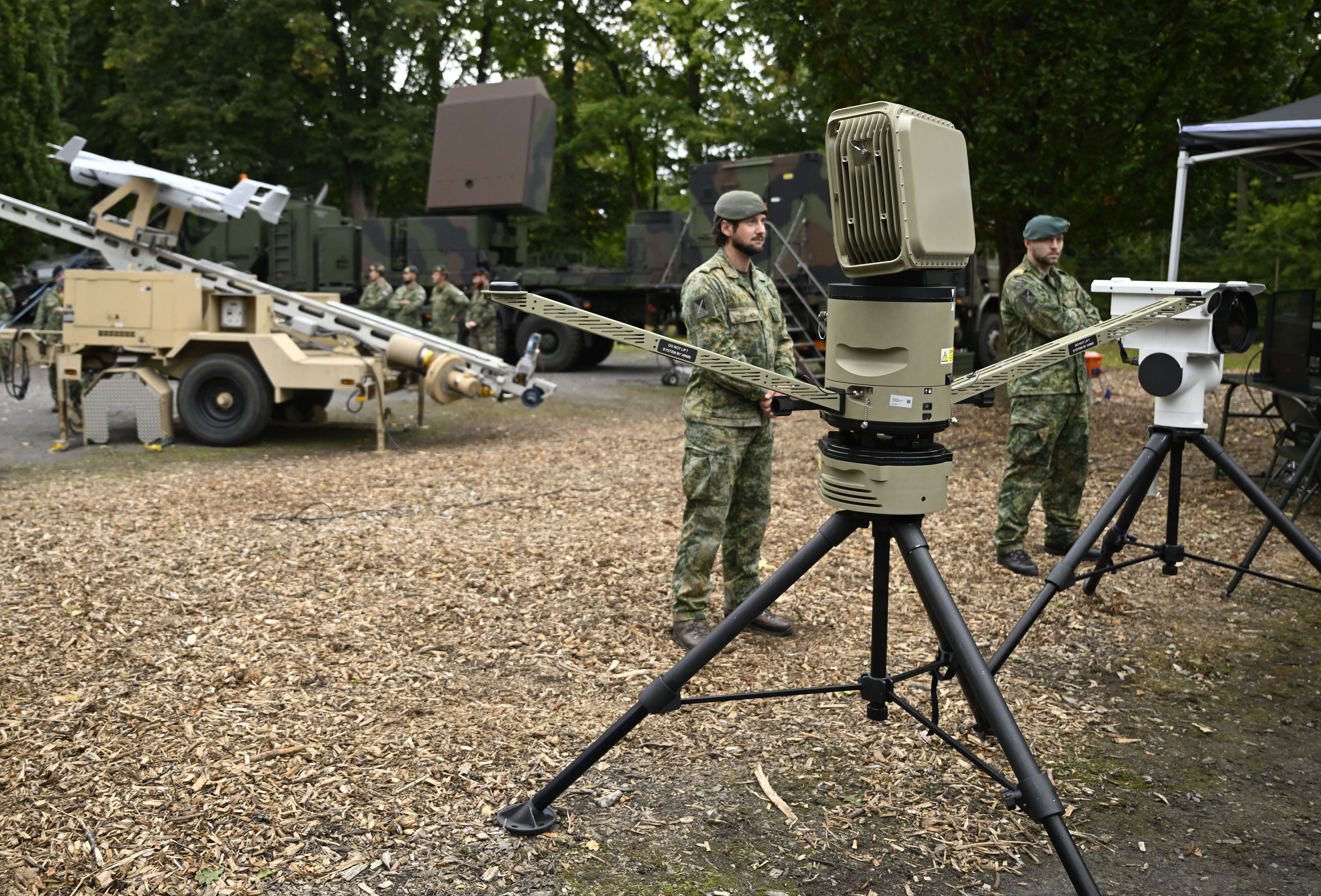
The new Dutch mobile anti-drone systems will be put together from various military off-the-shelf components including a wheeled armor vehicle, remote-controlled weapon station, ammunition and combat management systems, the Ministry of Defence said.
The MoD declined to comment on delivery dates or planned numbers, citing operational security, in response to questions from Defense News. The ministry will buy new systems and components but won’t comment on suppliers for now, and is still investigating which company will integrate the system, said Jiska Post, a spokesman for the state secretary for defence.
The Netherlands has ordered 22 Skyranger 30 systems, with the first deliveries planned for 2028. The additional mobile anti-drone systems will remain in service after delivery of the Rheinmetall air-defense cannons, the MoD said.
Europe faces growing unidentified-drone activity, and recent incidents with Russian drones in Romania and Poland, as well as small and cheap drones spotted over critical infrastructure in NATO partners are “worrisome developments,” Tuinman said.
The Netherlands over the weekend reported unidentified drones flying over Volkel Air Base and Eindhoven Airport, joining around a dozen of European countries that have reported unidentified drones, incursions or airspace violations in recent months, with Russia linked to a number of them.
The Dutch also plan to buy IRIS anti-drone radars, all-terrain patrol vehicles with an integrated remote-controlled weapon system, additional man-portable and vehicle-mounted C-UAS systems, as well as invest in interceptor drones, the MoD said.
The ministry also plans to invest in hard-kill C-UAS for the Royal Netherlands Navy, Tuinman wrote in a separate letter to parliament. Most of the current maritime anti-drone systems are either based on soft-kill measures such as jamming, or use expensive kinetic counters such as missiles, the state secretary said.
“There is therefore a capability gap between, on the one hand, protecting units that do not themselves have a kinetic system for taking out unmanned aerial systems and, on the other hand, building up a layered self defense of naval vessels to supplement the close-in weapon and soft-kill systems,” Tuinman said.
The planned capability would fall somewhere between small-caliber short-range self defense and long-range missiles, with the latter an expensive capability available in only a limited number, according to the MoD. The planned investment is between €250 million and €1 billion, with details expected to be provided to parliament in the spring of 2026, the ministry said.
“A defense system against medium-range threats from unmanned systems is therefore an urgent need that will increase the survivability of our sailing units,” Tuinman said.
Rudy Ruitenberg is a Europe correspondent for Defense News. He started his career at Bloomberg News and has experience reporting on technology, commodity markets and politics.